How Does the Commonwealth Address Global Crises?
TL;DR
The Commonwealth can address shared global challenges through connected networks, consensus, goodwill, and practical cooperation among governments, civil society groups, educational institutions, and citizens. Its diverse family of independent sovereign countries has evolved through changing circumstances, while common commitments to friendship, loyalty, freedom, and peace provide a foundation for work on climate change, violent extremism, inequality, and violence against women and girls.
Transcript
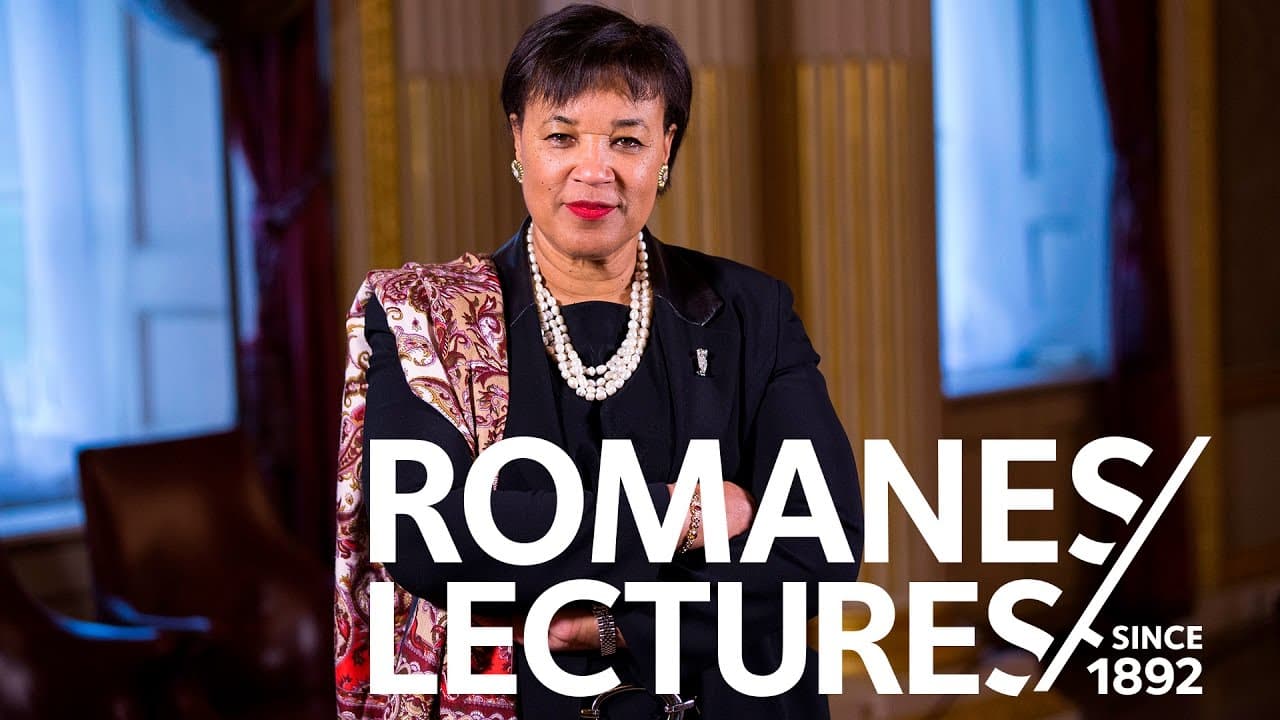
good evening ladies and gentlemen and welcome I'm delighted to have this opportunity to welcome you to this year's Roman's lecture we are honored that our lecture this evening will be given by a truly exceptional speaker the right honorable Patricia Scotland QC about whom you'll hear more in a moment at the romanas lectures is is the University's m... Read More
Key Insights
- The Commonwealth is a family of independent sovereign countries whose relationships extend beyond governments to civil society organizations, educational institutions, communities, friends, and families. These overlapping connections give international cooperation a personal dimension and create a sense of kinship among people living across every continent and ocean.
- The Commonwealth's major global challenges are interconnected and include climate change, violent extremism, and violence against women and girls. Patricia Scotland stresses that their effects fall disproportionately on people living at society's margins or within disadvantaged communities, making inclusion central to any credible collective response.
- The Commonwealth works through connectedness, consensus, and goodwill rather than through a rigid central blueprint. Scotland presents these characteristics as sources of practical influence because they support cooperation among diverse countries while respecting their status as independent and sovereign members of a free and voluntary association.
- The Commonwealth is described as a living organism that develops by responding to changing circumstances and immediate practical issues. Its gradual evolution has depended on difficult and courageous decisions by statesmen from many regions, producing relationships that feel like natural growth rather than an artificially imposed structure.
- The Commonwealth's shared values include friendship, loyalty, freedom, and peace. These qualities, identified by the Queen early in her reign, form the moral foundation of an association that transformed the Crown from an emblem of dominion into a symbol of free and voluntary cooperation.
- The Queen's contribution is presented as a source of continuity, unity, wise counsel, and encouragement for positive change. Scotland notes that the Commonwealth's diverse and expanding family had one woman serving as the emblem of its unity for 65 years, an arrangement described as historically unprecedented.
- The Commonwealth's population is notably young, with the transcript stating that 60 percent of its 2.4 billion people are under 30. The description gives slightly different figures, saying 2.2 billion citizens and almost two thirds under 30, but both portray youth as central to its future.
- The Commonwealth's sense of togetherness has been strengthened through shared sacrifice and comradeship. Scotland points to the Commonwealth Memorial Gates near Hyde Park as a tribute to Commonwealth men and women who died in global conflicts and as testimony to experiences that shaped national identity and mutual awareness.
Install to Summarize YouTube Videos and Get Transcripts
Explore YouTube Video Summarizer or Get YouTube Transcript Extractor
Questions & Answers
Q: How can the Commonwealth address global challenges?
The Commonwealth can address global challenges by mobilizing relationships among governments, civil society organizations, educational institutions, communities, and individual citizens. Patricia Scotland argues that its connectedness, consensus, goodwill, and shared values support practical cooperation among diverse sovereign countries. This structure is particularly relevant to interconnected problems such as climate change, violent extremism, and violence against women and girls, which disproportionately affect marginalized and disadvantaged communities.
Q: What makes the Commonwealth different from other international associations?
The Commonwealth is distinctive because it is connected by much more than formal relationships among governments. Its networks include civil society organizations, educational institutions, families, friends, and communities across every continent and ocean. Scotland describes it as a free and voluntary association with a sense of kinship and human recognition. Its gradual development, practical cooperation, shared values, and goodwill give its international role the character of an evolving family rather than an artificial construct.
Q: Why is the Commonwealth described as a living organism?
The Commonwealth is described as a living organism because it developed gradually in response to changing circumstances, needs, and practical problems. Quoting its first Secretary General, Arnold Smith, Scotland says it did not grow according to a written constitution or central plan. Instead, its development resulted from a long series of courageous and sometimes difficult decisions made by statesmen from many parts of the world, allowing its relationships to evolve and adapt naturally.
Q: What values hold the Commonwealth together?
The values emphasized in the lecture are friendship, loyalty, freedom, and peace. The Queen described these as high qualities of the human spirit when discussing the Commonwealth early in her reign. Scotland presents them as the foundation for a diverse, free, and voluntary association. Alongside connectedness, consensus, and goodwill, these values help sustain mutual support among sovereign countries and encourage cooperation while allowing members to retain their own national identities.
Q: Why are young people important to the Commonwealth?
Young people are important because they form a substantial share of the Commonwealth's population and are beginning their careers while major global challenges are already present. The transcript states that 60 percent of 2.4 billion Commonwealth citizens are under 30, while the description says almost two thirds of 2.2 billion citizens are under 30. Although the source figures differ, both accounts establish that the Commonwealth's future depends heavily on its younger citizens.
Q: How does the Commonwealth help marginalized communities?
The Commonwealth's relevance to marginalized communities comes from its capacity to coordinate action on challenges that affect them disproportionately. Scotland identifies people living on the margins and in disadvantaged communities as especially exposed to interconnected global threats. Its government, civil society, education, and community networks can connect policy with human experience. The lecture therefore places inclusion within the Commonwealth's broader work on climate change, violent extremism, and eliminating violence against women and girls.
Q: What role did the Queen play in the Commonwealth?
The Queen is presented as an emblem of Commonwealth unity and a major source of continuity. Scotland credits her with offering wise counsel and a sympathetic ear to generations of leaders, encouraging positive change and fresh thinking, and showing unwavering dedication to Commonwealth values and goals. Her role also represented the Crown's transformation from an emblem of dominion into a symbol of free and voluntary association, friendship, loyalty, freedom, and peace.
Q: What do the Commonwealth Memorial Gates represent?
The Commonwealth Memorial Gates near Hyde Park represent sacrifice, comradeship, togetherness, nationhood, and national identity. Scotland describes them as a tribute to the Commonwealth men and women who gave their lives in the global conflicts of the previous century. She also identifies Baroness Shreela Flather as the initiative's driving figure and recalls participating, as a millennium commissioner, in decisions to fund the memorial as an overdue recognition of Commonwealth service.
Summary & Key Takeaways
-
Patricia Scotland presents the Commonwealth as an evolving family of independent sovereign countries connected through governments, civil society organizations, educational institutions, personal relationships, and shared history. These overlapping networks give the association a human character and enable cooperation across a diverse membership spanning every continent and ocean while preserving national identity and voluntary participation.
-
The Commonwealth faces interconnected challenges including climate change, violent extremism, and violence against women and girls. These problems disproportionately affect marginalized and disadvantaged communities. Scotland argues that the association's connectedness, consensus, goodwill, continuity, and practical relationships make it well placed to coordinate responses and offer hope amid an increasingly turbulent international environment.
-
The lecture emphasizes gradual institutional development rather than construction from a fixed political blueprint. Drawing on Arnold Smith's description of the Commonwealth as a living organism, Scotland explains that it has adapted through difficult, practical decisions. The Queen's long service represents continuity, voluntary association, unity, and support for friendship, freedom, loyalty, and peace.
Read in Other Languages (beta)
Share This Summary 📚
Summarize YouTube Videos and Get Video Transcripts with 1-Click
Try YouTube Summary with ChatGPT & Claude or YouTube Transcript Generator