How China Is Influencing the Global Silver Market
TL;DR
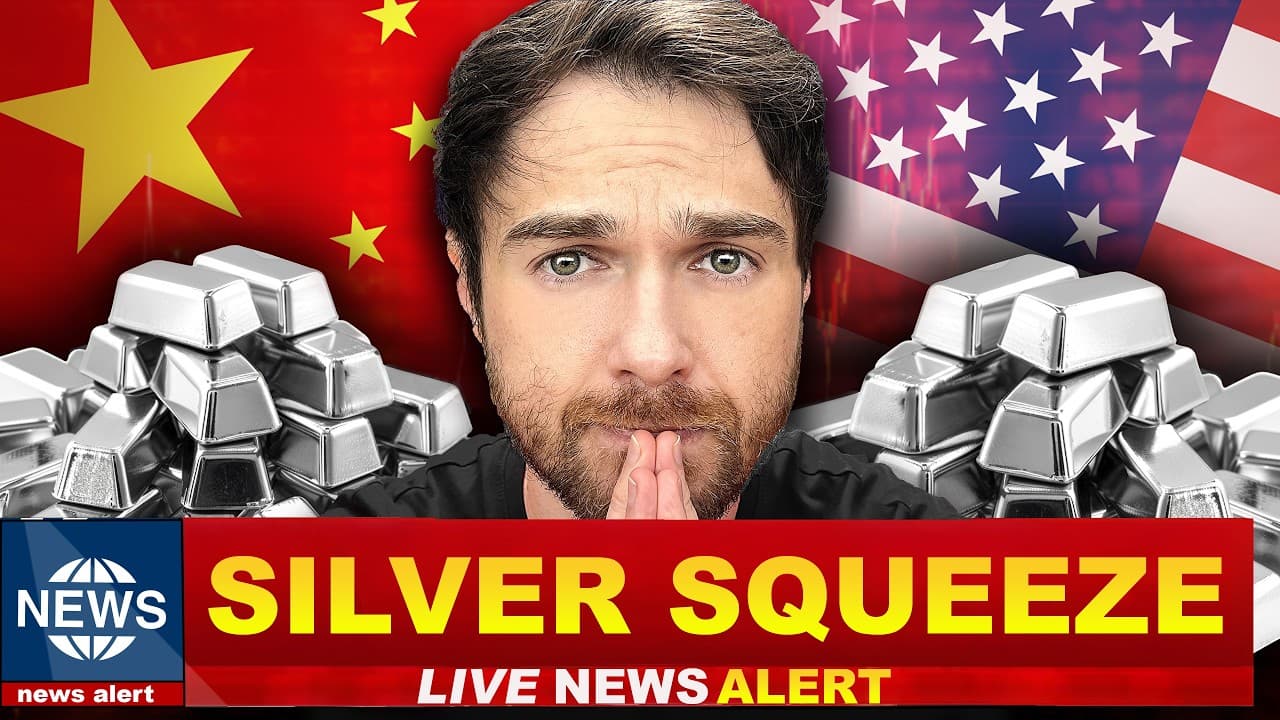
China has strategically stopped selling silver, impacting global markets by reclassifying it under dual-use export control rules, which can restrict exports. This move gives China significant leverage over the global silver supply chain, affecting industries reliant on silver for various technologies. The situation highlights China's broader strategy to control key resources and influence global economic dynamics.
Transcript
So silver just crushed everything this year. It just became the third most valuable asset in the world. And China just did something very strategic. They stopped selling silver. Why? So let me just zoom out and explain this from the context of gold and silver. So gold is about bringing back the trust in money. It's about the reserve currencies and ... Read More
Key Insights
- China has stopped selling silver, impacting global supply.
- Silver plays a crucial role in many industries, including electronics and solar panels.
- China's reclassification of silver as dual-use gives it control over exports.
- The Shanghai market reflects higher physical silver prices than COMX.
- Arbitrage gaps indicate constrained physical silver supply.
- Historically, China's economy was heavily reliant on silver.
- China's strategy mirrors its past actions with rare earth elements.
- Silver's inelastic supply means price increases won't easily boost production.
Install to Summarize YouTube Videos and Get Transcripts
Explore YouTube Video Summarizer or Get YouTube Transcript Extractor
Questions & Answers
Q: How does China's halt in silver sales affect global markets?
China's halt in silver sales can significantly impact global markets by constraining the supply of a critical industrial metal. This move can lead to increased silver prices and affect industries reliant on silver, such as electronics and renewable energy. By controlling silver exports, China gains leverage in geopolitical and economic negotiations.
Q: Why is silver important in modern industries?
Silver is vital in modern industries due to its excellent electrical conductivity and use in various applications like solar panels, electric vehicles, and electronics. Its unique properties make it indispensable in technologies that drive innovation and energy efficiency, making it a strategic resource for economic and technological development.
Q: What is the significance of the Shanghai silver market?
The Shanghai silver market is significant because it reflects the true cost of physical silver delivery within China, often showing higher prices than Western markets like COMX. This price difference highlights the demand for physical silver and indicates potential supply constraints, impacting global silver pricing and availability.
Q: How does arbitrage affect silver prices?
Arbitrage affects silver prices by allowing traders to exploit price differences between markets. They buy silver where it's cheaper and sell it where it's more expensive, typically reducing price gaps. However, significant and persistent gaps suggest issues like constrained supply, which can lead to market instability and price volatility.
Q: What historical role did silver play in China's economy?
Historically, silver was central to China's economy, serving as the primary monetary standard for taxes and large transactions. Its role stabilized the economy but also left it vulnerable to external price manipulation, as seen in the 1930s when the U.S. Silver Purchase Act drove prices up, leading China to shift to a paper currency standard.
Q: Why did China reclassify silver under dual-use export control?
China reclassified silver under dual-use export control to gain strategic leverage by regulating its export. This classification allows China to control who can access silver, framing it as a strategic resource for both civilian and military applications, thus enhancing its geopolitical influence without overtly banning exports.
Q: What parallels exist between China's strategy with silver and rare earth elements?
China's strategy with silver parallels its approach to rare earth elements by controlling production, refining, and export. In both cases, China reclassified these resources as strategic, imposed export controls, and gained significant influence over global supply chains, affecting industries reliant on these critical materials.
Q: How does silver's inelastic supply impact its market dynamics?
Silver's inelastic supply means that even if prices rise, production doesn't automatically increase because most silver is a byproduct of mining other metals. This rigidity can lead to significant price spikes when demand surges, as industries can't easily reduce usage, impacting market stability and pricing strategies.
Summary & Key Takeaways
-
China's strategic halt in silver sales and reclassification under dual-use export rules could constrain global silver supply, impacting industries dependent on silver. This move echoes China's past actions with rare earth elements, emphasizing its control over critical resources.
-
The Shanghai silver market shows higher physical prices compared to COMX, indicating a constrained supply. China's historical reliance on silver and its current strategy highlight its geopolitical maneuvering to gain leverage over global markets.
-
Silver's inelastic supply, where increased demand doesn't easily lead to higher production, means that China's actions could lead to significant price shifts. This underscores the broader geopolitical strategy of controlling essential resources to influence global economic dynamics.
Read in Other Languages (beta)
Share This Summary 📚
Summarize YouTube Videos and Get Video Transcripts with 1-Click
Try YouTube Summary with ChatGPT & Claude or YouTube Transcript Generator
Explore More Summaries from Andrei Jikh 📚



Summarize YouTube Videos and Get Video Transcripts with 1-Click
Try YouTube Summary with ChatGPT & Claude or YouTube Transcript Generator