What English Words Describe a House and Its Rooms? | English with Subtitles
TL;DR
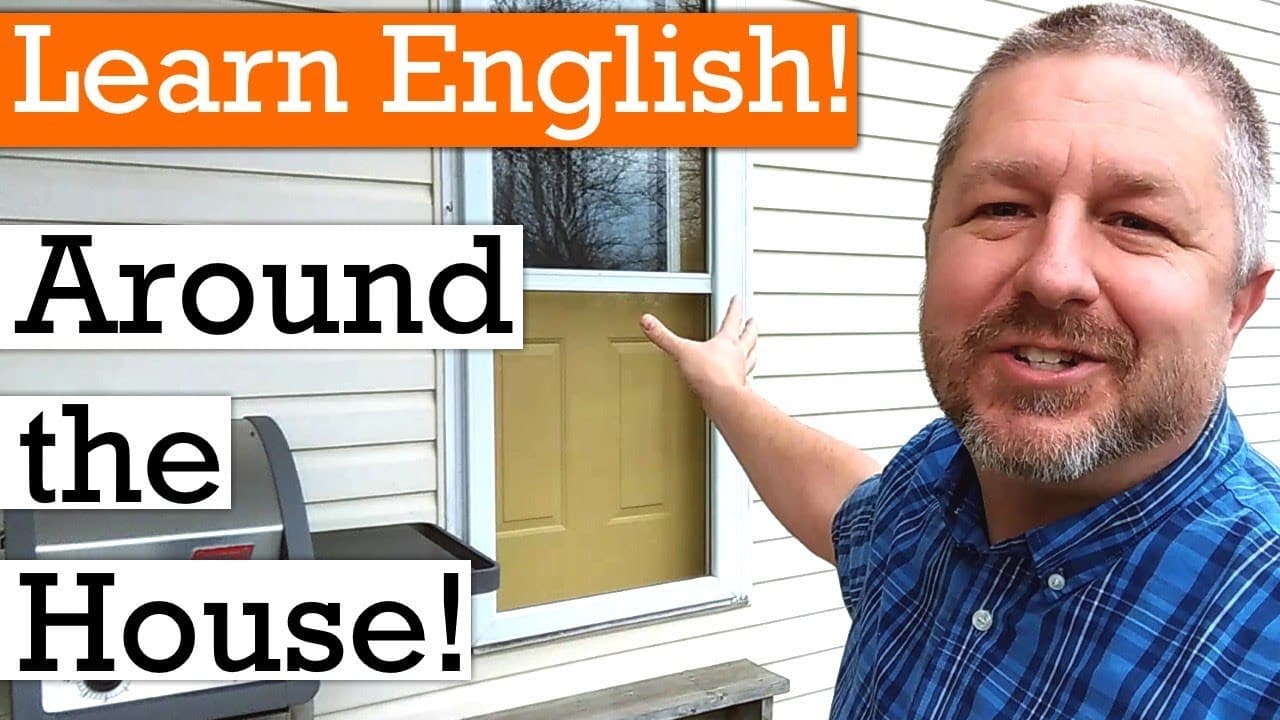
Common English words for describing a house include entranceway, kitchen, living room, dining room, bathroom, bedroom, hallway, basement, garage, and patio. Bob the Canadian explains household objects such as a fridge, utensil drawer, dresser, furnace, and garage door opener, along with phrases for their uses. Read on for room-by-room vocabulary and clear examples of how these words are used.
Transcript
Hi! Bob the Canadian here! Let’s learn English around the house. Come on in! Hi, Bob the Canadian here. Welcome to this video. If this is your first time here don’t forget to click the subscribe button below, and give me a thumbs up at some point during this video if it’s helping you learn English. Well today we’re going to learn some English words... Read More
Key Insights
- 🤵 Understanding English vocabulary for household items and room descriptions.
- 🤵 Learning about common features and purposes of rooms like the kitchen, living room, dining room, bathroom, bedroom, basement, and garage.
- 😑 Exploring practical household-related English phrases and expressions.
- 🤵 Gaining insights into Canadian home structures and room designations.
- 🤵 Recognizing various furniture pieces and appliances commonly found in different rooms.
- 🌍 Appreciating the importance of practicing English language skills in real-world scenarios.
- ❓ Enhancing language proficiency by immersing in practical English conversations.
Install to Summarize YouTube Videos and Get Transcripts
Explore YouTube Video Summarizer or Get YouTube Transcript Extractor
Questions & Answers
Q: What English words can you use to describe rooms in a house?
Bob the Canadian covers the front entranceway, kitchen, living room, dining room, bathroom, bedroom, hallway, spare room, basement, and garage. He also shows a patio area outside the back door.
Q: What common kitchen vocabulary does Bob the Canadian teach?
The kitchen vocabulary includes refrigerator or fridge, freezer, oven, stove, sink, coffee maker, kettle, pitcher, cupboards, utensil drawer, counter or countertop, and microwave. Bob explains that cupboards hold items such as plates and bowls, while the utensil drawer holds spoons, forks, and knives.
Q: What is the difference between a living room and a dining room?
A living room usually contains chairs, sofas or couches, and sometimes a television. It is used for relaxing, reading, talking with friends, or watching television, while a dining room has a table and chairs specifically for eating breakfast, lunch, and supper.
Q: What are the three main parts of a bathroom?
Bob identifies three main parts: a sink, a shower, and a toilet. He also names the toilet seat and toilet paper.
Q: What furniture is commonly found in a bedroom?
A bedroom generally has a bed and a dresser with drawers for storing clothes. It may also have night tables or night stands beside the bed, with small lamps and space for a book.
Q: What do hallway and spare room mean in English?
A hallway is the part of a home that connects the rooms together. A spare room is an extra room that may contain an extra bed, although the spare room Bob shows is empty.
Q: What is commonly found in the basement of a Canadian home?
A basement is the part of the house below ground and is often used for storage. Bob says it usually contains a furnace that heats the home with gas or oil in winter and a hot water heater that makes hot water for the house.
Q: What garage and outdoor-house vocabulary does Bob explain?
A garage is a place for keeping a car, and its door may be opened automatically by a garage door opener mounted on the ceiling. Outside the back door, Bob shows steps, a barbecue, and a small patio area where food can be cooked during warmer summer months.
Summary & Key Takeaways
-
Bob the Canadian provides a detailed walkthrough of a house, describing various rooms and objects found within, such as the front entrance, kitchen, living room, dining room, bathroom, bedroom, hallway, basement, and garage.
-
Each room is outlined with specific vocabulary and phrases in English, along with explanations of common objects and their uses.
-
The video serves as a practical English lesson for learners looking to expand their vocabulary related to household items and rooms.
Read in Other Languages (beta)
Share This Summary 📚
Summarize YouTube Videos and Get Video Transcripts with 1-Click
Try YouTube Summary with ChatGPT & Claude or YouTube Transcript Generator
Explore More Summaries from Learn English with Bob the Canadian 📚






Summarize YouTube Videos and Get Video Transcripts with 1-Click
Try YouTube Summary with ChatGPT & Claude or YouTube Transcript Generator