How to Build Trusting Teams Through Leadership
TL;DR
Create an environment where people feel safe admitting mistakes, requesting help, and being vulnerable without fearing humiliation or punishment. Leaders achieve this by caring for the people responsible for results, offering support instead of merely catching failures, and consistently reinforcing trust as an ongoing practice rather than treating it as a target reached through a course or one-time event.
Transcript
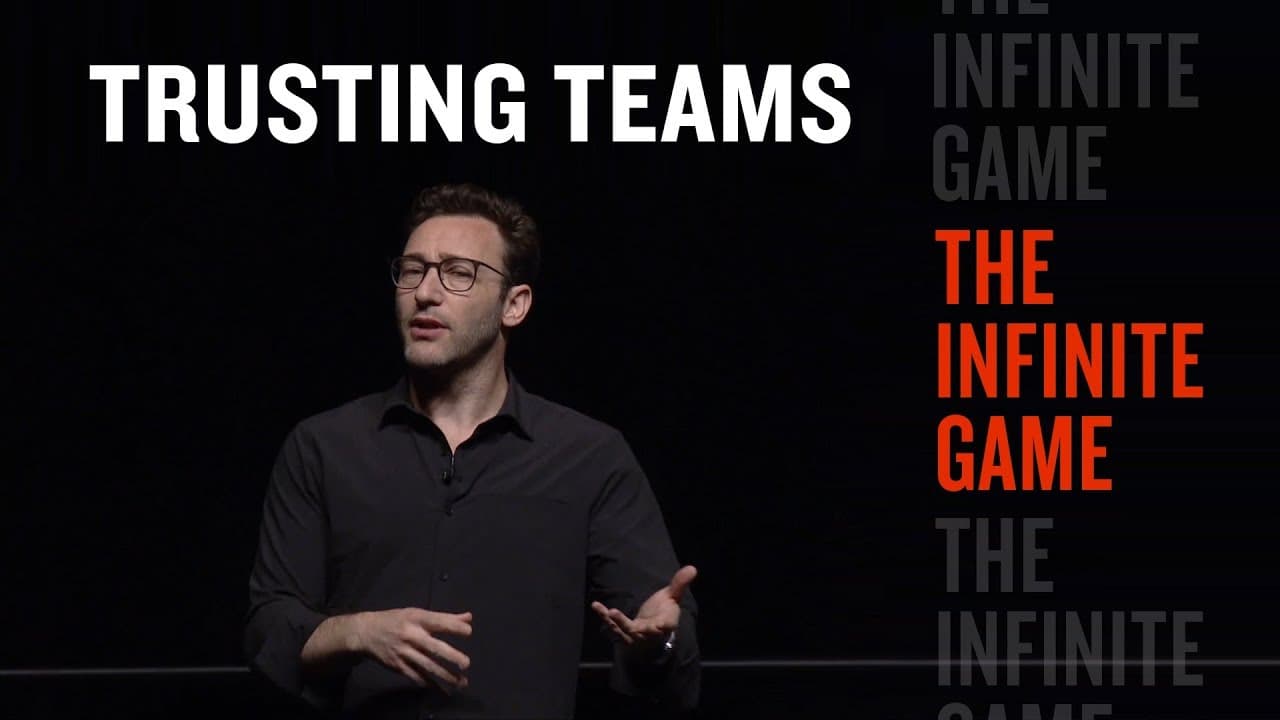
trusting teams I went on a business trip to Las Vegas and they put me up at the Four Seasons out there which is a beautiful hotel and one of the reasons it's a wonderful hotel is not because of the fancy beds any hotel can buy a fancy bed the reason the Four Seasons is a fantastic hotel is because of the people who work there that when you roam the... Read More
Key Insights
- Trusting teams are environments where people can acknowledge mistakes, uncertainty, fear, personal difficulties, or a need for help without expecting humiliation or punishment. Employees speak honestly because they are confident that leaders and colleagues will support them rather than use their vulnerability against them.
- Leadership conditions can change how the same employee behaves in different workplaces. Noah felt emotionally connected to the Four Seasons because managers asked how he was doing and what he needed, while at Caesar's Palace he stayed unnoticed, completed the day, and collected his paycheck.
- The correct leadership question is how to create an environment where people can work at their natural best. Asking how to get the most out of employees treats people like objects to be depleted and encourages flawed management answers instead of supportive working conditions.
- A lack of trust causes employees to lie, hide, and fake their way through work. They may conceal mistakes, pretend to understand an unfamiliar role, withhold personal pressures, deny fear, and avoid requesting help because honesty appears more dangerous than struggling silently.
- Fear can override employees' willingness to do what they believe is right. In the United Airlines incident, crew members knew dragging a paying customer from an aircraft was wrong, but nobody intervened because avoiding trouble felt safer than challenging the situation.
- Customer service reflects the leadership environment as much as individual ability. When employees feel trusted to apply their training, customers, workers, and the company benefit. When employees fear punishment for departing from rigid rules, all three groups can suffer.
- Leadership is the responsibility to care for the people who are responsible for results. Leaders set the environment rather than merely command performance, and recurring performance or customer service problems usually indicate weaknesses in leadership conditions, particularly the absence of trusting teams.
- Trust is built through consistent practice rather than a target, formula, single course, or one-time team event. Like physical fitness, it develops at different speeds and requires continued effort even after progress appears, making leadership a lasting lifestyle rather than a temporary initiative.
Install to Summarize YouTube Videos and Get Transcripts
Explore YouTube Video Summarizer or Get YouTube Transcript Extractor
Questions & Answers
Q: How do leaders build trusting teams at work?
Leaders build trusting teams by creating conditions where employees can admit mistakes, disclose uncertainty, request training, discuss pressures affecting their work, express fear, and ask for help without expecting humiliation or retaliation. Managers should regularly ask employees how they are doing and what they need to perform better. Trust develops through this consistent pattern of care and support, not through a single course, meeting, or off-site event.
Q: What is a trusting team in the workplace?
A trusting team is a group whose members feel safe being vulnerable with one another. People can say that they made a mistake, lack the knowledge required for a promoted role, need additional training, face difficulties at home, feel scared, or require help. They share these concerns confidently because they expect their leader, boss, and colleagues to support them rather than embarrass, punish, or reject them.
Q: Why does psychological safety improve employee performance?
Psychological safety allows employees to raise problems before those problems develop into larger organizational failures. When people do not fear humiliation, retribution, job loss, or redundancy, they can disclose mistakes, identify knowledge gaps, seek training, and request assistance. When safety is absent, employees hide errors and fake competence, leaving weaknesses unresolved until cracks become visible and the organization eventually breaks under accumulated problems.
Q: How does leadership affect customer service?
Leadership shapes the environment in which employees serve customers. Noah was the same person at the Four Seasons and Caesar's Palace, yet he felt able to be himself only where managers checked on his well-being and needs. At the other workplace, managers focused on catching mistakes and enforcing performance. These contrasting conditions produced different levels of emotional connection, engagement, and likely customer experience without changing the employee himself.
Q: Why do employees hide mistakes from their managers?
Employees hide mistakes when they believe honesty could lead to trouble, humiliation, retaliation, job loss, or placement on a future redundancy list. In such an environment, appearing competent seems safer than admitting uncertainty or asking for help. People may also conceal personal stress and fear. This behavior is not simply an individual defect, it is often a response to leadership conditions that make vulnerability feel dangerous.
Q: What does the United Airlines example show about workplace trust?
The United Airlines examples show how fear can prevent employees from using judgment or challenging harmful actions. Crew members knew that dragging a paying passenger from an aircraft was wrong, yet nobody intervened because they feared trouble more than they prioritized doing the right thing. Earlier, a gate agent said strict rule-following protected her job, revealing that she did not feel trusted or safe within her organization.
Q: Why is leadership compared with physical fitness?
Leadership is compared with physical fitness because both depend on repeated practice over time. A person cannot become fit through one concentrated gym session, and a team cannot become trusting through one course or off-site meeting. Progress occurs at different speeds, so there is no fixed completion date. Even after trust has formed, leaders must continue practicing supportive behaviors to maintain the environment they created.
Q: What are leaders responsible for when managing results?
Leaders are responsible for the people who are responsible for results. Their role is to establish an environment where employees can work at their natural best, feel safe, and use the training they have received. When leaders care for people and reinforce trust, employees can support one another and serve customers effectively. Persistent performance or service problems frequently point to the leadership environment rather than to employees alone.
Summary & Key Takeaways
-
Trusting teams emerge when leaders create an environment where employees feel safe being themselves, admitting mistakes, requesting training, discussing personal pressures, and asking for help. The contrasting experiences of the same barista at two hotels demonstrate that leadership conditions, rather than an employee's underlying character, can profoundly shape engagement and customer service.
-
Without psychological safety, employees hide errors, conceal uncertainty, fake competence, and avoid seeking assistance because they fear humiliation, retaliation, job loss, or redundancy. These behaviors allow organizational cracks to accumulate. The United Airlines examples illustrate how fear-driven workplaces can prevent employees from exercising judgment or intervening when they recognize that something is wrong.
-
Building trust is an ongoing leadership practice comparable to maintaining physical fitness. A single course, off-site meeting, or concentrated effort cannot create a trusting team. Leaders must repeatedly care for employees and reinforce safety. Their responsibility is to support the people producing results so those people feel valued, valuable, and willing to care for one another.
Read in Other Languages (beta)
Share This Summary 📚
Summarize YouTube Videos and Get Video Transcripts with 1-Click
Try YouTube Summary with ChatGPT & Claude or YouTube Transcript Generator
Explore More Summaries from Simon Sinek 📚





Summarize YouTube Videos and Get Video Transcripts with 1-Click
Try YouTube Summary with ChatGPT & Claude or YouTube Transcript Generator