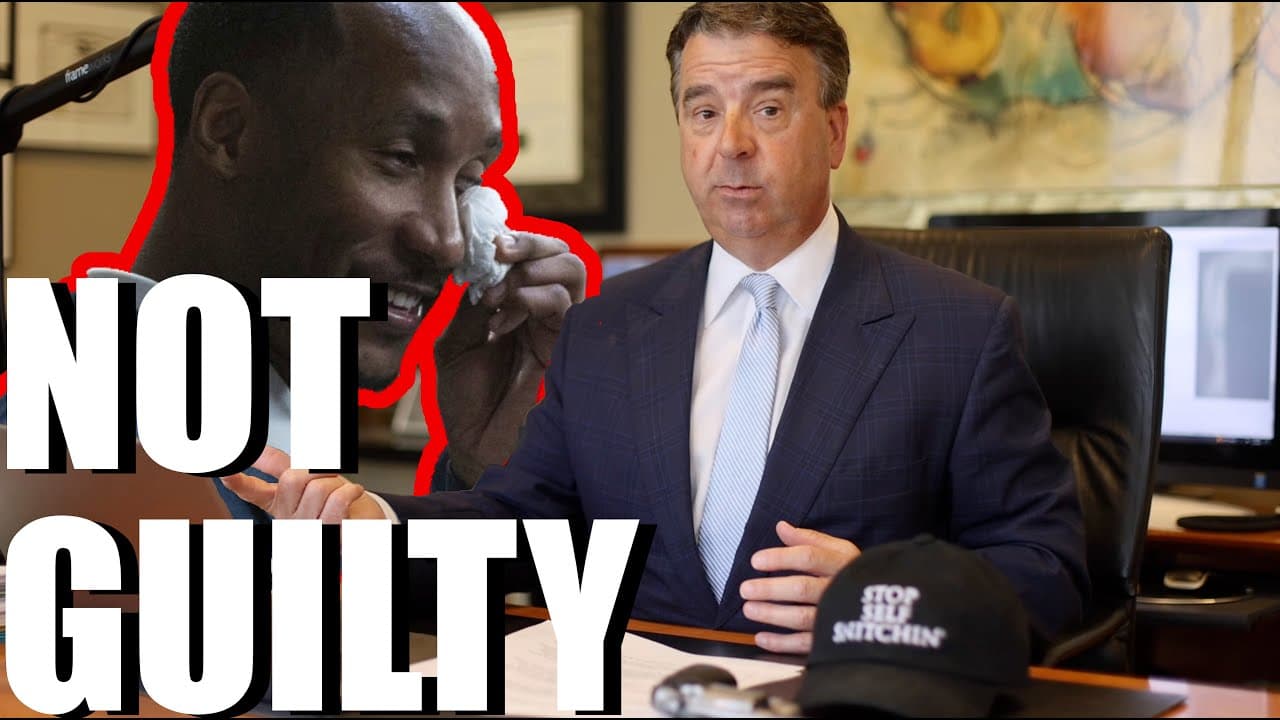
What Led to Travis Rudolph's Not Guilty Verdict in His Trial?
TL;DR
Travis Rudolph was acquitted of murder and attempted murder charges after a jury accepted his self-defense argument in a violent confrontation at his home. The case highlighted the complexities of Florida's stand your ground law, emphasizing the significance of perceived threat and reasonable belief in self-defense scenarios.
Transcript
snitching hi this is Bruce Rivers welcome to another fun-filled episode of criminal lawyer reacts this is Bruce Rivers board certified criminal defense lawyer coming to you live with my pearl handle pistol cufflinks so graciously gifted to me by our content genius Michael Rivers who's behind the camera as we speak and has my back and I've got his a... Read More
Key Insights
- 🛝 Self-defense laws such as stand your ground and the castle doctrine played a vital role in Travis Rudolph's acquittal.
- ❓ The trial highlighted the importance of thorough investigation and factual presentation by the prosecution and defense.
- ✋ Jury deliberations in high-stakes cases like Rudolph's showcase the weight of legal arguments and evidence on decision-making.
- 🤳 Legal nuances and interpretations of self-defense scenarios can impact the outcome of criminal trials significantly.
- 😀 Travis Rudolph's case serves as a reminder of the complexities and challenges faced in defending against serious criminal charges.
- ✋ The role of jury selection and alternates in high-profile trials can have critical implications on the final verdict.
- 🤳 The emotional and legal toll of representing clients in self-defense cases underscores the dedication and skills required in criminal defense practice.
Install to Summarize YouTube Videos and Get Transcripts
Explore YouTube Video Summarizer or Get YouTube Transcript Extractor
Questions & Answers
Q: What legal concepts were crucial in Travis Rudolph's self-defense case?
The key legal concepts in Rudolph's case included self-defense, stand your ground law, and the castle doctrine, each playing a significant role in determining the verdict. Rudolph's defense team skillfully utilized these concepts to argue his innocence.
Q: How did the prosecution and defense present their closing arguments during the trial?
The prosecution focused on the victim's injuries and the sequence of events leading to the fatal confrontation, while the defense challenged the investigation's adequacy and emphasized self-defense as the primary motive in Rudolph's actions during the trial's closing arguments.
Q: What factors contributed to the jury's decision to acquit Travis Rudolph?
Factors such as the self-defense argument, the lack of evidence disproving Rudolph's actions, and the jury's understanding of Florida's legal statutes on self-protection likely influenced the decision to acquit Rudolph of murder and attempted murder charges.
Q: How did the case outcome reflect the importance of a strong defense strategy in self-defense cases?
The case outcome underscored the importance of a strong defense strategy in self-defense cases, showcasing how effective legal representation, understanding of legal concepts, and compelling arguments can sway a jury's decision in favor of the defendant.
Summary & Key Takeaways
-
Travis Rudolph, former Florida State football player, acquitted in self-defense case after a violent midnight confrontation.
-
Legal concepts of self-defense, stand your ground law, and castle doctrine examined during the trial.
-
Jury deliberates and finds Rudolph not guilty of murder and attempted murder charges, emphasizing the importance of self-defense arguments.
Read in Other Languages (beta)
Share This Summary 📚
Summarize YouTube Videos and Get Video Transcripts with 1-Click
Try YouTube Summary with ChatGPT & Claude or YouTube Transcript Generator
Explore More Summaries from CLR Bruce Rivers 📚




Summarize YouTube Videos and Get Video Transcripts with 1-Click
Try YouTube Summary with ChatGPT & Claude or YouTube Transcript Generator