How Likely Was a Second U.S. Economic Shutdown?
TL;DR
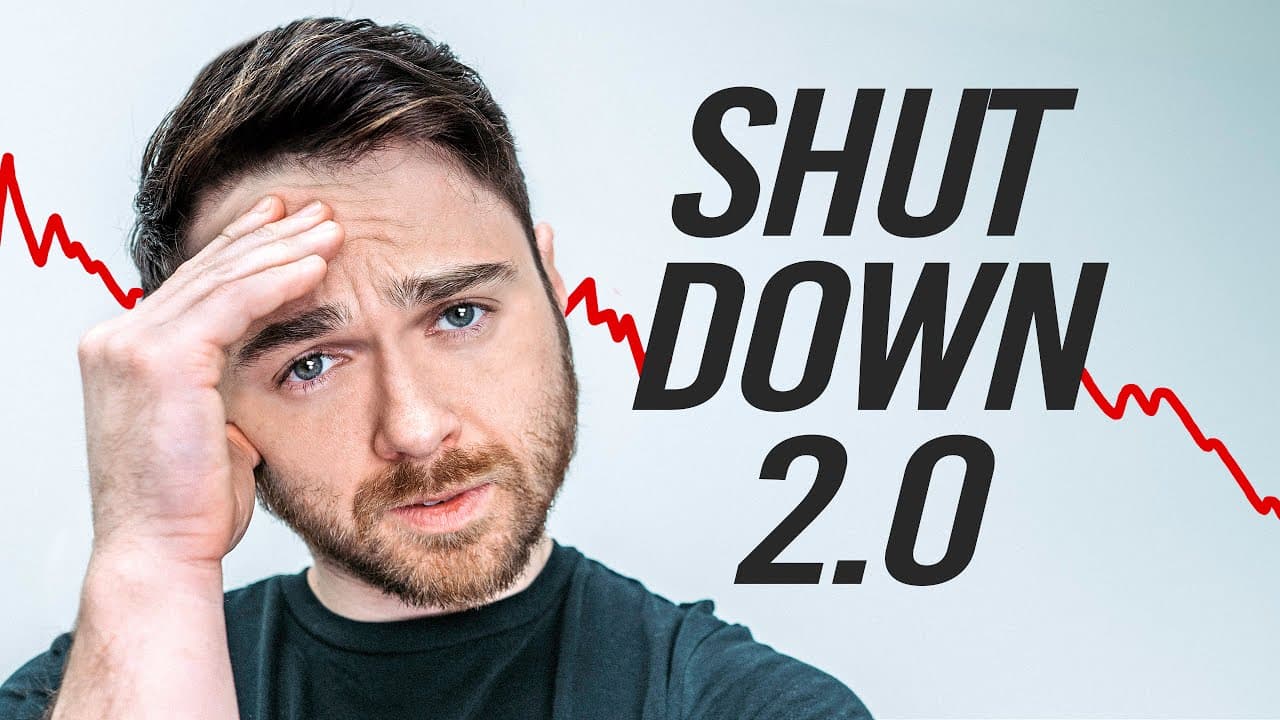
A nationwide second shutdown was considered highly unlikely because stay-at-home orders and business restrictions were largely decided by governors and local officials. The proposed alternative was a synchronized shutdown across every state, paired with economic stimulus, until daily cases and test positivity fell enough for contact tracing to contain outbreaks effectively.
Transcript
Hi, my name is Andrei Jikh. Hope you're doing good, hope you're feeling well, hope you had a wonderful Thanksgiving, and today I wanted to share my thoughts on the second economic shutdown as far as what's gonna happen, because there seems to be a lot of confusion out there on the internet, and I wanted to share my perspective and some facts about ... Read More
Key Insights
- Weekly unemployment claims were 778,000, above the expected 735,000 and the highest weekly result in five weeks. The increase also marked a second consecutive week of rising claims, suggesting that the labor market was not improving at the desired pace.
- Federal pandemic support programs were approaching scheduled expiration dates. Pandemic Emergency Unemployment Compensation, which added 13 weeks after regular benefits were exhausted, was set to end December 26, while Pandemic Unemployment Assistance for gig workers was set to end December 31.
- COVID conditions were worsening rapidly at the time discussed. The United States was averaging 160,000 to 175,000 new cases daily, representing a 43% increase over two weeks, with nearly 13 million infections and more than 250,000 deaths reported.
- A nationwide second shutdown was considered highly unlikely because stay-at-home orders and restrictions on businesses and schools were decided by state governors and local officials. The federal system made a fast, uniform national response difficult without agreement among the states.
- A coordinated shutdown was supported only if every state followed the same World Health Organization guidelines simultaneously. The proposed target was one new daily confirmed case per 100,000 people and a test positivity rate of 3% or less.
- Contact tracing was described as effective when infections and test positivity reached sufficiently low levels. Above those levels, exponential growth could make tracking outbreaks impractical, weakening the value of partial restrictions that did not suppress transmission enough.
- Economic stimulus was presented as a necessary companion to any coordinated shutdown. Financial support would help people and businesses pay rent and bills without entering forbearance, allowing restrictions to continue until health targets were reached and workers could return.
- Financial markets were showing strength despite economic and health risks. The Dow reached 30,000 points, crude oil reached $46 per barrel, mortgage applications increased, Bitcoin approached $20,000, and Ethereum moved above $600 before retreating.
Install to Summarize YouTube Videos and Get Transcripts
Explore YouTube Video Summarizer or Get YouTube Transcript Extractor
Questions & Answers
Q: How likely was a second nationwide U.S. shutdown?
A large-scale nationwide second shutdown was considered highly unlikely. Stay-at-home orders and decisions about restricting businesses and schools were described as responsibilities of governors and local officials rather than a single federal decision-maker. Because states could choose different policies, achieving the uniform agreement required for a simultaneous national shutdown would be extremely difficult.
Q: Why were unemployment claims a warning sign for the economy?
Weekly unemployment insurance claims reached 778,000, exceeding the expected figure of 735,000. That result was the highest in five weeks and represented the second consecutive week of increasing claims. The trend suggested that people were still losing jobs and that the economy was not recovering at the desired pace, especially as some job losses appeared permanent.
Q: When were pandemic unemployment programs scheduled to expire?
Pandemic Emergency Unemployment Compensation was scheduled to end on December 26. That program provided an additional 13 weeks of payments after a person had exhausted regular unemployment insurance benefits. Pandemic Unemployment Assistance, which extended coverage to gig workers and others, was scheduled to end on December 31, leaving recipients exposed if no replacement support was approved.
Q: What conditions were proposed for supporting another shutdown?
Another shutdown was supported only if every state participated at the same time and followed the same World Health Organization guidelines. The proposal also required continuing restrictions until new daily confirmed cases fell to one per 100,000 people and test positivity reached 3% or less. Economic stimulus would need to continue throughout the shutdown.
Q: Why was economic stimulus considered necessary during a shutdown?
Economic stimulus was considered necessary because people and businesses would still need to pay bills and rent while normal activity was restricted. The stated goal was to prevent widespread reliance on forbearance and preserve the ability of businesses to reopen. Support would continue for however long it took to reach the proposed public health thresholds.
Q: Why were partial business restrictions criticized?
Partial restrictions were criticized because limiting restaurant capacity and entertainment while still permitting travel and schools was viewed as inconsistent and ineffective. The argument was that such measures could eliminate jobs and permanently close businesses without slowing transmission enough. The preferred approach was either a fully coordinated shutdown with financial support or keeping states open.
Q: Which industries and cities faced the greatest shutdown risks?
Cities dependent on visitors and in-person activity, particularly Las Vegas, were described as especially vulnerable. Food service, entertainment, and hospitality were identified as industries likely to suffer heavily if additional restrictions were imposed. More closures could become the final blow for businesses already weakened by earlier restrictions, causing some to cease operating permanently.
Q: What market signals were positive despite shutdown concerns?
Several asset markets showed strength despite worsening employment and health conditions. The Dow reached a record 30,000 points, Japan's market reached a high not seen in 29 years, and crude oil reached $46 per barrel. Mortgage applications rose 4%, refinance applications rose 5%, Bitcoin approached $20,000, and Ethereum moved above $600 before declining.
Summary & Key Takeaways
-
Rising unemployment claims and expiring relief programs indicated continuing economic weakness. Weekly claims reached 778,000, exceeding the expected 735,000 and marking a second consecutive increase. Pandemic Emergency Unemployment Compensation was scheduled to end December 26, while Pandemic Unemployment Assistance for gig workers was scheduled to end December 31.
-
COVID conditions were presented as the central reason another shutdown was being discussed. The United States was averaging 160,000 to 175,000 new daily cases, a 43% increase over two weeks. The expected post-Thanksgiving rise was also predicted to create fear and volatility across stocks, real estate, digital currencies, and other assets.
-
A nationwide shutdown was judged unlikely because restrictions on businesses, schools, and movement were controlled primarily by governors and local officials. Support for another shutdown depended on unanimous state participation, shared guidelines, measurable health thresholds, and economic stimulus. Meanwhile, the Dow, oil, mortgage demand, Bitcoin, and Ethereum showed stronger market activity.
Read in Other Languages (beta)
Share This Summary 📚
Summarize YouTube Videos and Get Video Transcripts with 1-Click
Try YouTube Summary with ChatGPT & Claude or YouTube Transcript Generator
Explore More Summaries from Andrei Jikh 📚
Summarize YouTube Videos and Get Video Transcripts with 1-Click
Try YouTube Summary with ChatGPT & Claude or YouTube Transcript Generator