How to Find Spiritual Liberation Beyond Thought
TL;DR
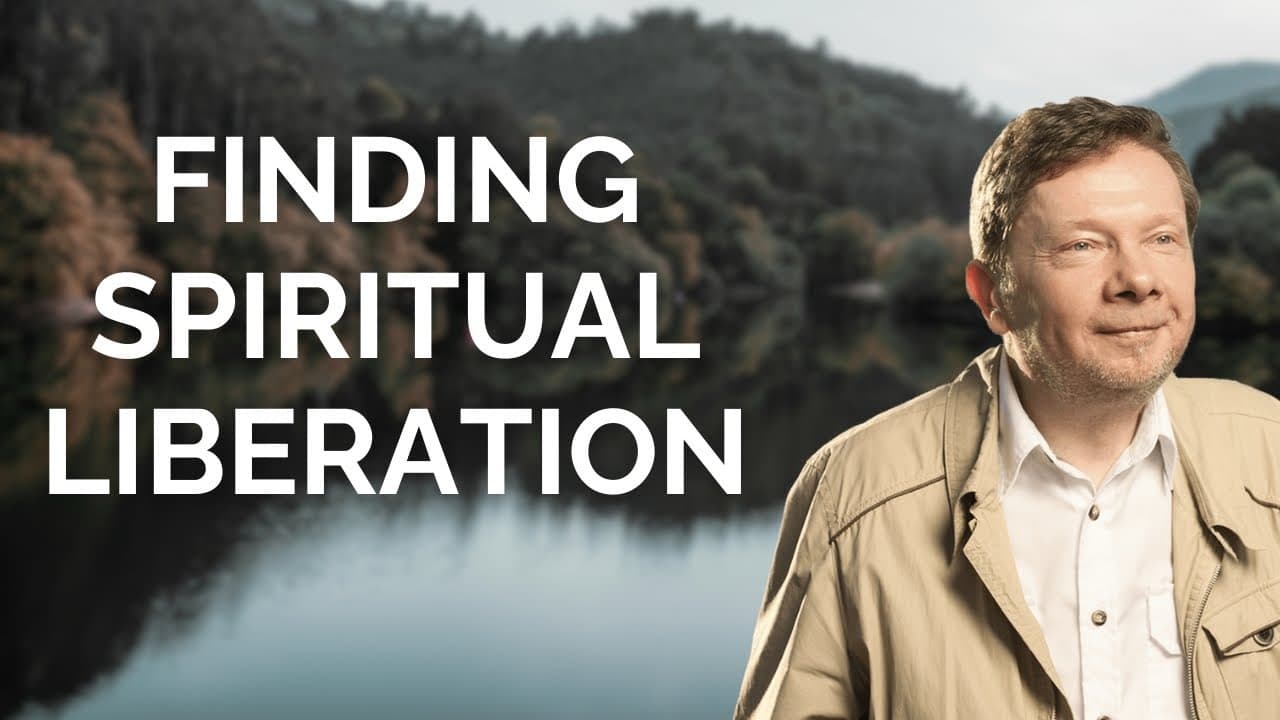
Spiritual liberation begins by withdrawing attention from compulsive thinking and no longer identifying with thought. This creates inner space, allowing people, places, and situations to be experienced without the ego’s habitual criticism and distortion. Necessary action can still be taken, but it arises without complaining, superiority, or the psychological burden of a heavily defended personality.
Transcript
and the amazing thing is that those this the realization of this truth is already gone is there throughout you go back thousands of years and it's already there it has come there's a little threat running through of a few people here and there always throughout history have realized that since it runs through history the undercurrent not not The Ma... Read More
Key Insights
- Timeless spiritual truth is an undercurrent that has appeared across thousands of years, although only a small number of people have realized it directly. Many others encounter the teachings through conceptual thought and consequently misunderstand what those teachings are pointing toward.
- Religion points toward the transcendent, but it can become part of the false sense of self when its teachings are appropriated by the mind. In that condition, a teaching meant to loosen identity instead becomes another identity that the ego uses to define and defend itself.
- Human psychological drama is created by a basic pattern of delusion in which the mind manufactures grievances, reactions, and suffering. Recognizing this pattern in one’s own life can provoke laughter, and that laughter can become a liberating moment of perspective and transcendence.
- The false self seeks conflict and unhappiness because these experiences strengthen its sense of identity. It does not consciously understand this motive, yet its complaints, judgments, and reactions continually provide a stronger feeling of being a separate and substantial self.
- Complaining creates a position of superiority by declaring a situation, place, or person deficient. The complainer becomes the judge, and each judgment reinforces the false sense of self through comparison, accusation, criticism, and the belief that something outside oneself is fundamentally lacking.
- Spiritual transcendence begins by taking attention out of thinking and moving beyond identification with thoughts. This introduces space into daily life, which otherwise becomes an exhausting sequence of tasks, worries, interpretations, reactions, and other forms competing continuously for attention.
- Acceptance is compatible with practical action because allowing a situation to be as it is does not prohibit changing it. Necessary action can occur without criticism or complaint, and action arising from this spacious acceptance carries a different energy from action driven by resistance.
- Spirituality is the presence of inner space created by not identifying with thought. Thinking continuously about God or angels does not by itself constitute spirituality. Liberation is the transcendence of mind, world, and psychological time through recognition of the timeless dimension within oneself.
Install to Summarize YouTube Videos and Get Transcripts
Explore YouTube Video Summarizer or Get YouTube Transcript Extractor
Questions & Answers
Q: How can someone find spiritual liberation beyond thought?
Spiritual liberation begins by taking attention out of compulsive thinking and ending identification with thought. As attention is no longer fully absorbed by mental forms, inner space appears in daily experience. People, places, and situations can then be allowed to be as they are without constant interpretation, judgment, or complaint. This spacious way of living is described as transcendence of the mind and recognition of the timeless dimension within.
Q: Why can spiritual teachings fail to produce transcendence?
Spiritual teachings can fail to produce transcendence when they are approached solely through the conceptual mind. Instead of directly realizing the timeless truth to which a teaching points, a person may misinterpret it and incorporate it into a false sense of self. The teaching then becomes another identity, belief, or position to defend. In this way, even a tradition that points beyond ego can unintentionally strengthen egoic identification.
Q: How does the false self strengthen itself through conflict?
The false self strengthens itself by using conflict, unhappiness, complaint, and judgment to create a more definite sense of identity. Although it does not consciously know that it wants these experiences, each grievance gives it something to oppose and therefore a stronger feeling of who it is. Repeated criticism of circumstances or people sustains psychological drama and keeps the individual experiencing life through the distorting filter of a separate self.
Q: Why does complaining reinforce the ego?
Complaining reinforces the ego because it identifies something as deficient and places the complainer in the position of judge. By declaring that a person, place, situation, or life circumstance is lacking, the false self implicitly claims superiority over what it criticizes. Even a small complaint can therefore strengthen identity. Repeated complaining creates an accumulating pattern in which dissatisfaction becomes a source of psychological importance and personal definition.
Q: Can you accept a situation and still take action to change it?
Acceptance does not prevent action when a situation genuinely needs to change. A person can allow the present condition to be as it is, recognize what must be done, and act without adding complaint or psychological resistance. Such action is described as carrying a different energy because it is not driven by egoic judgment. The practical response remains available, while the unnecessary burden of criticism, superiority, and inner conflict is removed.
Q: What does inner space mean in everyday life?
Inner space is the dimension that appears when life is no longer filled entirely by thoughts, reactions, tasks, worries, and interpretations. Instead of moving compulsively from one mental form to another, a person experiences space alongside whatever is happening. This changes daily life because events no longer have to be filtered immediately through a burdened personality. The individual can move through circumstances as a spacious being rather than as a continuously defended identity.
Q: Why can recognizing unconscious behavior be liberating?
Recognizing unconscious behavior reveals that much personal drama has been manufactured by the mind through a basic pattern of delusion. A person may first notice this pattern in others and later discover it operating within oneself. Seeing how years of complaints, reactions, and suffering arose from the same mechanism can provoke laughter. That laughter introduces distance from the pattern and becomes a moment of transcendence rather than another judgment against oneself.
Q: What is spirituality according to this teaching?
Spirituality is not defined by having thoughts about angels, God, or other spiritual subjects. It begins when a person no longer identifies completely with thought and inner space becomes present. That space is the spiritual dimension because it transcends the ordinary stream of mental forms. Liberation can therefore be described as transcendence of mind, world, and time, with the space within recognized as a timeless dimension.
Summary & Key Takeaways
-
Timeless spiritual truth has appeared throughout history, but relatively few people have realized it directly. Teachings that point toward transcendence are often interpreted only through conceptual thought. When absorbed into the false sense of self, even religion can reinforce the identity and psychological patterns that the original teaching was intended to transcend.
-
The false self strengthens itself through conflict, unhappiness, criticism, and complaint. Finding a person, place, or situation deficient places the ego in the role of judge and creates a feeling of superiority. Recognizing this recurring pattern in others and oneself can produce laughter, perspective, and a liberating moment of transcendence.
-
Liberation involves taking attention out of compulsive thinking so that life contains both form and inner space. Situations can then be allowed to exist as they are without immediate interpretation or resistance. Change remains possible, but action taken without complaint carries a different energy and is not burdened by egoic identity.
Read in Other Languages (beta)
Share This Summary 📚
Summarize YouTube Videos and Get Video Transcripts with 1-Click
Try YouTube Summary with ChatGPT & Claude or YouTube Transcript Generator
Explore More Summaries from Eckhart Tolle 📚





Summarize YouTube Videos and Get Video Transcripts with 1-Click
Try YouTube Summary with ChatGPT & Claude or YouTube Transcript Generator