How To Find The Velocity From a Displacement-Time Graph
TL;DR
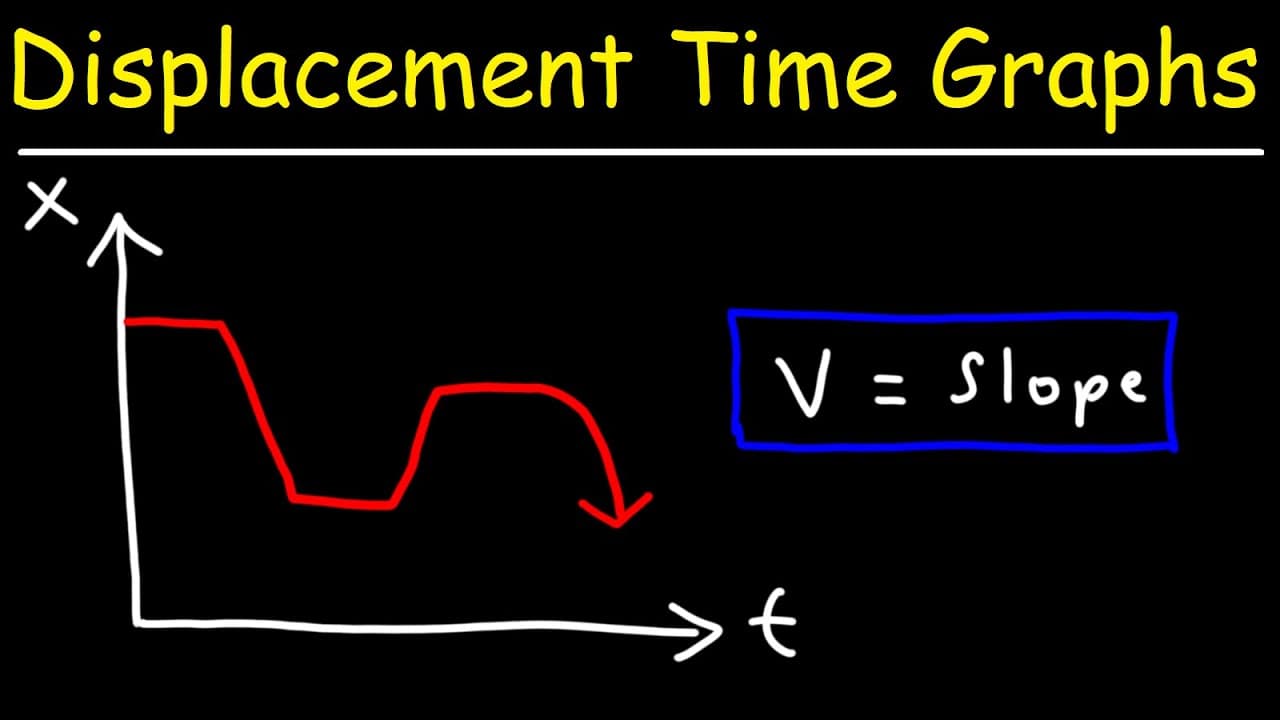
This video explains how to calculate velocity from a position-time graph, by finding the slope of the tangent line at any point.
Transcript
in this video we're going to talk about how to calculate the velocity from position time graph also known as an XT graph now the velocity function can be found by taking the derivative of the position function and whenever you take the derivative of a function you can calculate the slope of the tangent line at any point with that derivative functio... Read More
Key Insights
- 🫥 Velocity can be calculated by finding the slope of the tangent line on a position-time graph.
- 🧘 Positive velocity indicates increasing position, while negative velocity indicates decreasing position.
- 🚥 Horizontal tangents indicate zero velocity, meaning no motion.
- 😥 Average velocity can be determined between two points on a non-linear graph, while instantaneous velocity requires finding the slope at a specific point.
Install to Summarize YouTube Videos and Get Transcripts
Explore YouTube Video Summarizer or Get YouTube Transcript Extractor
Questions & Answers
Q: How is velocity calculated from a position-time graph?
Velocity can be calculated by finding the slope of the tangent line at any point on the position-time graph. It represents how fast an object is changing its position over time.
Q: What does a horizontal tangent line on a position-time graph indicate?
A horizontal tangent line means that the position function is constant, and therefore, the object is not moving. Hence, the velocity at that point is zero.
Q: How can we calculate velocity between two points on a position-time graph?
By using the formula for slope (change in y divided by change in x), we can determine the velocity by calculating the change in position over the change in time between the two selected points.
Q: What does a concave down shape on a position-time graph indicate about velocity and acceleration?
A concave down shape indicates negative acceleration, and thus, the velocity is decreasing. The more concave the graph, the greater the negative acceleration, leading to a more negative velocity over time.
Summary & Key Takeaways
-
Velocity can be determined by taking the derivative (slope) of the position function on a graph.
-
When the position function is increasing, velocity is positive; when it is decreasing, velocity is negative.
-
For non-linear graphs, average velocity can be calculated between two points, while instantaneous velocity requires finding the slope at a specific point.
Read in Other Languages (beta)
Share This Summary 📚
Summarize YouTube Videos and Get Video Transcripts with 1-Click
Try YouTube Summary with ChatGPT & Claude or YouTube Transcript Generator
Explore More Summaries from The Organic Chemistry Tutor 📚



Summarize YouTube Videos and Get Video Transcripts with 1-Click
Try YouTube Summary with ChatGPT & Claude or YouTube Transcript Generator