How To Make an Electromagnet
TL;DR
Make an electromagnet by wrapping copper wire around an iron or steel screw, sanding the insulation from both wire ends, and connecting them to a 6- or 12-volt DC power source. The demonstration uses 28-gauge magnet wire and explains that more wire turns or more current produces a stronger magnetic field. Read on for material choices, assembly steps, strength adjustments, and troubleshooting tips.
Transcript
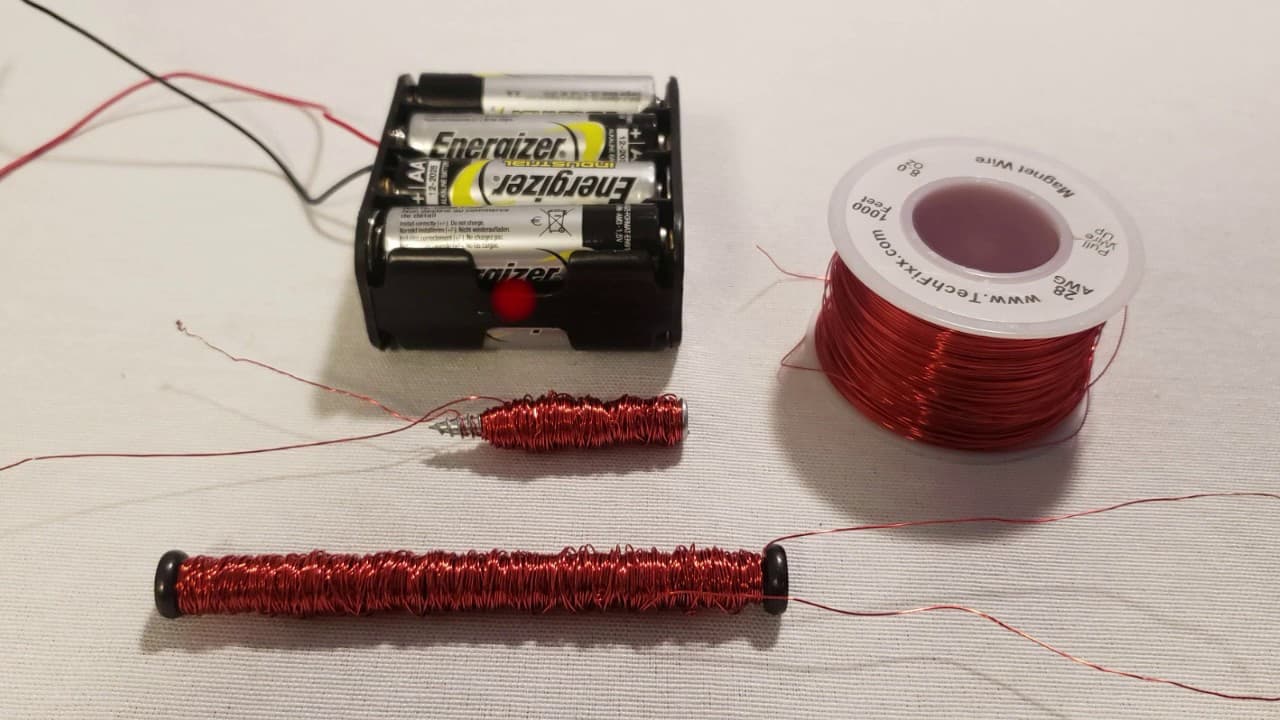
in this video we're going to talk about how to make an electromagnet what you need is a screw a metal screw it really doesn't matter what type of screw as long as it's made up of iron metal or even steel it's going to work you also need copper wire i'm using the 28 gauge magnet wire and you also need sandpaper because this wire is not conductive as... Read More
Key Insights
- 🤘 Making an electromagnet requires a metal screw, copper wire, and sandpaper to remove insulation.
- 💐 The number of wire turns and the current flowing in the circuit determine the strength of the electromagnet's magnetic field.
- ❓ Proximity between the electromagnet and the magnetic material is crucial for effective attraction.
- ✋ High-performance batteries are recommended for better current generation.
Install to Summarize YouTube Videos and Get Transcripts
Explore YouTube Video Summarizer or Get YouTube Transcript Extractor
Questions & Answers
Q: How do you make an electromagnet?
Wrap copper wire around an iron or steel screw to create many coils. Remove the insulation from the wire ends with sandpaper, then connect the exposed copper to a battery or another DC power supply.
Q: What materials are needed to make an electromagnet?
You need an iron or steel screw, copper wire, sandpaper, and a power supply such as a battery. The demonstration uses 28-gauge magnet wire, although the speaker says the screw type does not matter as long as it is made of iron or steel.
Q: Why must the insulation be removed from the copper wire?
The magnet wire will not conduct through its insulating layer. Sanding the ends exposes bare copper so the wire can be connected to the power supply.
Q: How does the homemade electromagnet work?
When current flows through the wire coils, the device acts as a solenoid and creates a magnetic field. Connecting the battery activates that field, allowing the electromagnet to pull a nearby iron or steel screw toward itself.
Q: How can you make the electromagnet stronger?
Increase either the number of wire turns around the screw or the current flowing through the circuit. The transcript states that the magnetic field increases proportionally with both factors.
Q: What happens if you double or triple the number of wire turns?
Doubling the number of turns doubles the magnetic-field strength, according to the explanation. Tripling the number of turns triples the field strength.
Q: What voltage and batteries should be used for the electromagnet?
The speaker recommends applying a DC voltage of 6 or 12 volts. High-performance AA, AAA, or D-size batteries are suggested because the electromagnet may not work well when the current is too low.
Q: Why does the electromagnet need to be close to the object?
The demonstrated electromagnet is not very strong, so the screw must be close enough for the magnetic force to pull it. If the gap is too large, the electromagnet may not attract the screw, including when attempting to lift it vertically against gravity.
Summary & Key Takeaways
-
To make an electromagnet, you will need a metal screw, copper wire, and sandpaper to remove the insulation from the wire.
-
By wrapping the copper wire around the screw and connecting it to a power supply, such as a battery, you can create an electromagnet.
-
Increasing the number of wire turns or the current flowing in the circuit can strengthen the magnetic field of the electromagnet.
Read in Other Languages (beta)
Share This Summary 📚
Summarize YouTube Videos and Get Video Transcripts with 1-Click
Try YouTube Summary with ChatGPT & Claude or YouTube Transcript Generator
Explore More Summaries from The Organic Chemistry Tutor 📚




Summarize YouTube Videos and Get Video Transcripts with 1-Click
Try YouTube Summary with ChatGPT & Claude or YouTube Transcript Generator