How I’d Build a Future-Proof One-Person Business If I Started Over in 2026
TL;DR
To build a future-proof one-person business in 2026, develop a personal brand, create useful content, and evolve beyond static information products toward interactive, AI-driven learning experiences or a micro SaaS product. The underlying model remains content, traffic, and a product that solves a problem, but its delivery must adapt as technology and markets change. Read on for the practical model, product options, and skills behind this approach.
Transcript
I think it's obvious that everything is changing right now. Business. The internet. Social media. Coding. Art. It feels like what worked just last year doesn't work anymore. And since we're here to talk about the one person business or just online business as a whole because it applies to everything. I'm not here to give you just some recycled advi... Read More
Key Insights
- The one-person business model is evolving due to shifts in technology and market saturation.
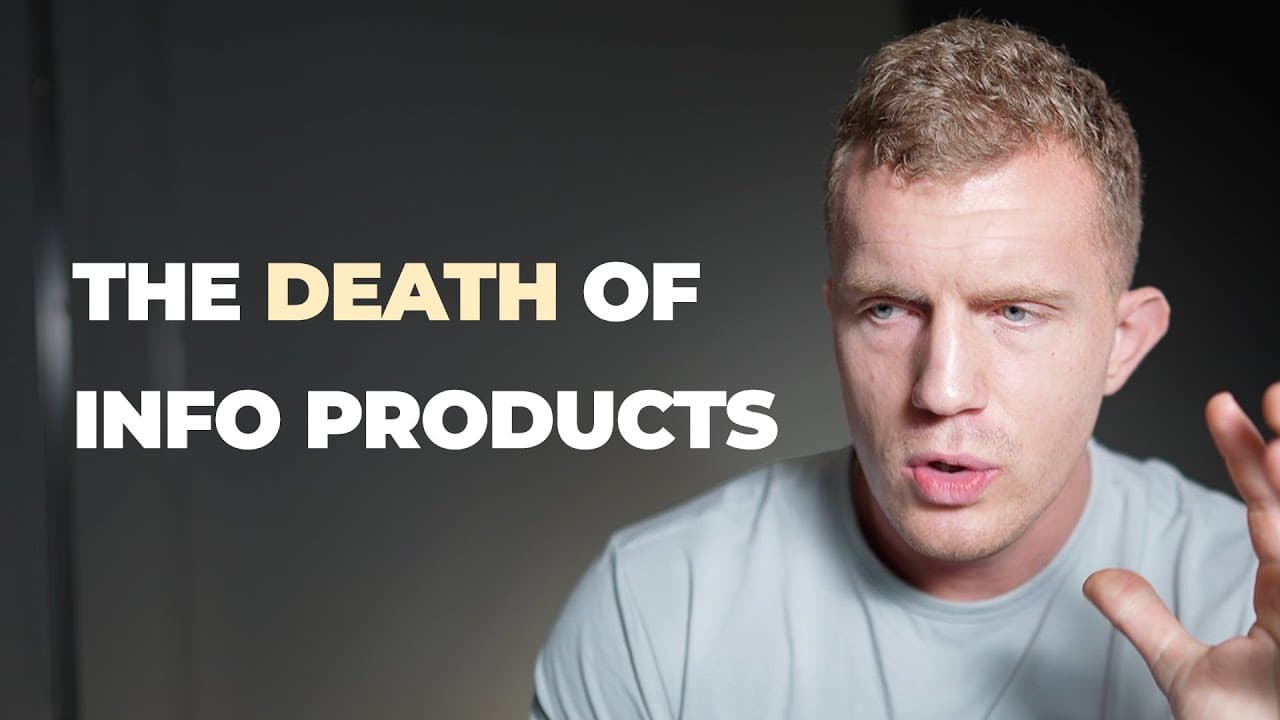
- Info products are declining as markets reach saturation and consumers seek more authentic experiences.
- The future of education products involves interactive, AI-driven learning experiences.
- AI can enhance learning by providing personalized, interactive guidance at scale.
- Building a micro SaaS product can be a viable evolution of traditional info products.
- AI-driven learning experiences are more effective than static courses due to real-time feedback.
- The speed of iteration in business models is increasing, necessitating adaptability.
- Specific knowledge and human experience become more valuable in the age of AI.
Install to Summarize YouTube Videos and Get Transcripts
Explore YouTube Video Summarizer or Get YouTube Transcript Extractor
Questions & Answers
Q: How would you build a future-proof one-person business if starting over in 2026?
Start by pursuing an interest until you develop useful expertise, then share what you learn through educational or entertaining content. Use the resulting traffic to support a product based on a process that solved a problem in your own life. For the next 2 to 3 years, the speaker favors evolving beyond static information products toward interactive, AI-driven learning experiences or a micro SaaS product.
Q: What is the core model behind a one-person online business?
The individual handles marketing, content, sales, and product development while using online content to attract traffic. The business then turns personal knowledge and proven problem-solving processes into products. Its two main levers are the amount of traffic reached and the quality of the product.
Q: Are information products and coaching dead?
No. The speaker says this model is never going away, but the vessel used to deliver its value will continue to change. Static formats face pressure from saturated markets and more interactive, personalized alternatives.
Q: How is the one-person business model evolving?
Creators previously relied heavily on information products or coaching when they wanted income beyond sponsorships and advertising revenue. Those products progressed from an e-book to a course, cohort, and community. The next evolution described here is an interactive learning product enhanced by AI.
Q: Why are AI-driven learning experiences favored over static courses?
AI-driven experiences can provide personalized guidance and real-time feedback at scale. This makes learning more interactive and closer to an apprenticeship model than consuming a static course. The approach also allows creators to turn their knowledge into a more dynamic education product.
Q: How could someone turn an interest in productivity into a business?
Study productivity, discuss it online, and improve the content through iteration until it attracts an audience. The speaker suggests buying the top five planners on Amazon, using and deconstructing them, and identifying what works and what does not. Those findings could inform a new planner, Notion template, printable planner, course, or combination of products.
Q: Why is a micro SaaS product relevant to a one-person business?
A micro SaaS product is presented as a promising evolution of the traditional information product. With AI, a creator can use specific knowledge to offer an interactive learning experience for a particular niche. This provides another delivery format for human expertise as static courses become less distinctive.
Q: What skills and ideas support becoming future-proof?
The speaker organizes becoming future-proof around two pillars: determining what you want in life and learning how to succeed in today’s world. The first incorporates psychology, philosophy, and personal development. The second involves skill acquisition, business, technology, and AI.
Summary & Key Takeaways
-
The one-person business model is evolving as traditional info products face market saturation. Businesses must focus on creating authentic experiences and communities to differentiate themselves. AI-driven learning experiences offer a more interactive and personalized way to educate and engage audiences, moving beyond static courses.
-
Info products are not entirely dead, but they need to evolve into more dynamic and interactive formats. AI can facilitate this by providing personalized learning experiences that mimic the apprenticeship model, offering real-time feedback and guidance.
-
Building a micro SaaS product is a promising direction for one-person businesses. By leveraging AI, creators can offer unique, interactive learning experiences that cater to specific niches, enhancing the value of human knowledge and maintaining relevance in a rapidly changing market.
Read in Other Languages (beta)
Share This Summary 📚
Summarize YouTube Videos and Get Video Transcripts with 1-Click
Try YouTube Summary with ChatGPT & Claude or YouTube Transcript Generator
Explore More Summaries from Dan Koe 📚
Summarize YouTube Videos and Get Video Transcripts with 1-Click
Try YouTube Summary with ChatGPT & Claude or YouTube Transcript Generator