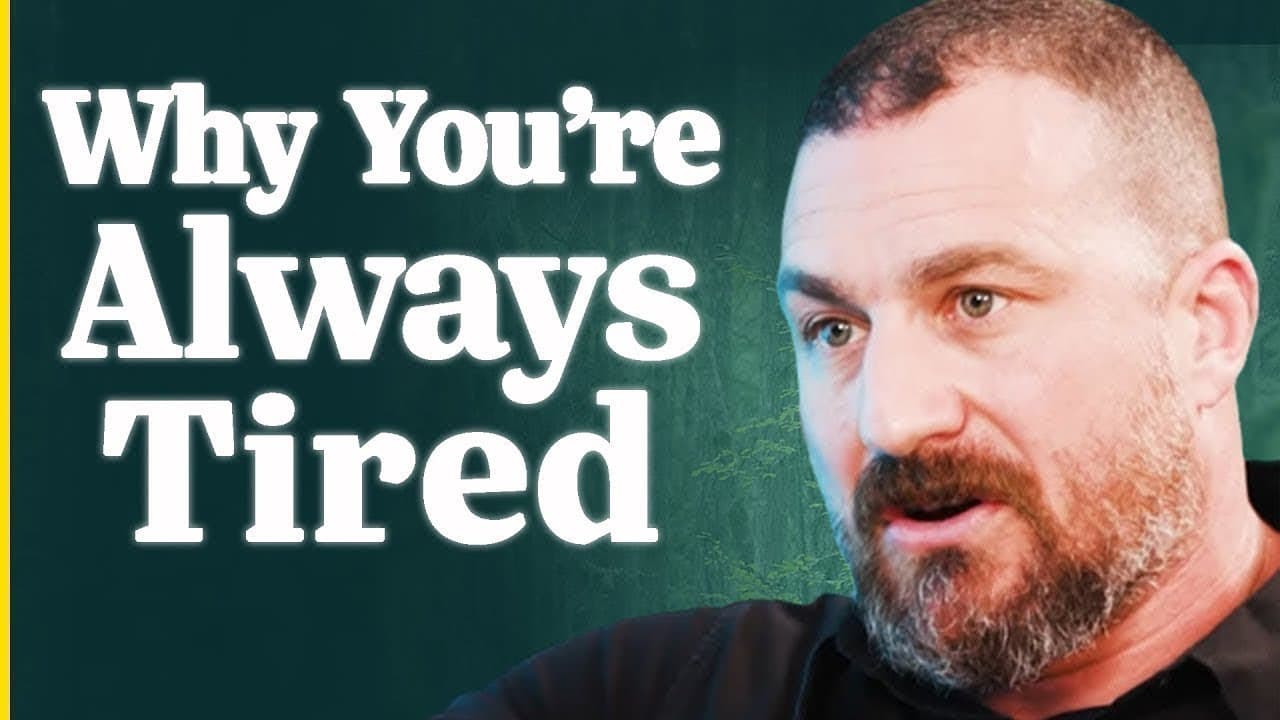
Andrew Huberman on Morning Sunlight for Energy and Sleep
TL;DR
View bright light, ideally sunlight, within 30 minutes to an hour of waking, for about 5 to 10 minutes most days. Morning light sets the body's master circadian clock, moves the daily cortisol pulse early so it brings energy and focus, and supports sleep and mood. Do not view it through windows or wear sunglasses, and never look at light that hurts your eyes.
Transcript
digestive issues mental focus issues depression anxiety exacerbation of every major psychiatric disorder from OCD to ADHD is closely associated with disruptions in circadian clock function the foundational practice that I truly believe every person should do every day is first of all I mean thank you for making time it's a pleasure I feel like we k... Read More
Key Insights
- The visual system is a key upstream lever for health because light reaching the eyes at the right times of day affects energy, immune function, the timing and depth of sleep, appetite, and many other biological processes.
- The neural retina is part of the brain itself. It is pushed out of the cranial vault during development, so each eye holds a small piece of brain that is the nervous system's main source of information about outside conditions.
- Every cell in the body has a 24-hour clock, and these clocks must be coordinated by a master clock. When they fall out of sync, people become effectively 'jetlagged at home', which is linked to digestive, focus, and psychiatric problems.
- The foundational daily practice is to view bright light, ideally sunlight, within 30 minutes to an hour of waking. Getting outside for about 5 to 10 minutes every morning is extremely important, even on cloudy days.
- Intrinsically photosensitive cells in the back of the eye send signals to the hypothalamus, where the master circadian clock sits. That clock coordinates the clocks in cells throughout the body, from the liver to the brain.
- Viewing light through a window or car windshield does not work well, because the glass filters particular wavelengths and the process takes about 50 times longer. Corrective lenses are fine, but sunglasses are a problem.
- Morning light makes the daily cortisol pulse arrive early, which gives energy and focus for 10 to 14 hours. Without morning light that pulse drifts later, and a late cortisol peak is linked to depression, evening anxiety, and poor sleep.
- The light-sensing clock mechanism is a slow integrator that counts light energy over time. Bright conditions such as a snow field may take only a minute or two, overcast days need longer, and a missed day calls for twice as much time outside the next day.
Install to Summarize YouTube Videos and Get Transcripts
Explore YouTube Video Summarizer or Get YouTube Transcript Extractor
Questions & Answers
Q: How long should you get morning sunlight each day?
In general, getting outside for about 5 to 10 minutes every morning is extremely important, according to Andrew Huberman. The amount varies with the time of year and with how sensitive a person is to light. On a very bright day or on a snow field, a minute or two may be enough. On an overcast day it can take much longer, sometimes around 30 minutes.
Q: When should you view sunlight after waking up?
Ideally, view bright light, preferably sunlight, within 30 minutes to an hour of waking, and sooner if possible. Huberman calls this the foundational practice he believes everyone should do every day, or at least most days. If you wake before sunrise, turn on as many bright artificial lights as you can, then go outside once the sun is up.
Q: Does viewing sunlight through a window work?
No. Viewing sunlight through a window or a car windshield is not effective, because glass filters out particular wavelengths of light. Huberman says it takes about 50 times longer to get the same clock-setting effect, so you would spend all day waiting for the mechanism to kick in. Going outside is necessary for the benefit.
Q: Can you wear glasses or sunglasses when getting morning light?
Corrective lenses such as glasses or contact lenses are fine. They actually help, because their job is to focus light precisely onto the neural retina rather than in front of or behind it. Sunglasses are a problem because they reduce the light reaching the eyes. You do not need to stare at the sun, and you should never look at any light so bright that it hurts.
Q: Why does morning light improve energy and mood?
The body releases a pulse of the hormone cortisol at least once every 24 hours. Cortisol is vital to life and provides alertness and focus. Viewing light early in the day makes this pulse arrive early, which gives energy and focus for 10 to 14 hours. Without morning light the pulse drifts later, and a late cortisol peak is closely linked to chronic depression, evening anxiety, and trouble sleeping.
Q: How does light reaching the eyes set the body's circadian clock?
A special class of neurons in the back of the eye, called intrinsically photosensitive cells, sends a connection to the hypothalamus, where the master circadian clock sits. Huberman compares this clock to a conductor in a clock shop: it sets the 24-hour clocks of all the body's cells, from the liver to the brain, to the same correct time so they work as a coherent whole.
Q: What happens when your circadian clocks are out of sync?
When the clocks in the body's cells are out of sync, people become what Huberman calls 'jetlagged at home'. Disrupted circadian clock function is closely associated with digestive issues, mental focus problems, depression, anxiety, and the worsening of every major psychiatric disorder, from OCD to ADHD, as well as Alzheimer's. Things do not collapse immediately, but within a day or two immune function and mood start to suffer.
Q: What should you do if you miss morning sunlight or have no access to it?
If you miss a day, it is no big deal, but try to get twice as much time outside the next day. The clock mechanism is a slow integrator that counts light energy over time, unlike the parts of vision used to see faces or motion. Without sunlight, bright artificial light helps. Daytime simulator lamps, also called SAD lamps, exist but are expensive, and a ring light like those YouTubers use is a low-cost alternative.
Summary & Key Takeaways
-
Andrew Huberman explains that the visual system is a major upstream lever for health. The neural retina is brain tissue that sits outside the skull, and light landing on it at the right times sets up energy, immune function, sleep, appetite, and mood. Light at the wrong times quickly disrupts these systems.
-
Every cell has a 24-hour clock that a master clock in the hypothalamus must coordinate. When the clocks are out of sync, people suffer something like jet lag at home: digestive issues, poor focus, depression, anxiety, and worse psychiatric disorders. Morning light reaching the eyes is the main signal that sets this clock.
-
The practical advice is to get outside within 30 minutes of waking and view sunlight for 5 to 10 minutes, or longer when it is overcast, without sunglasses or a window in between. Morning light moves the cortisol pulse early for daytime energy. If there is no sunlight, use bright artificial lights or a low-cost ring light.
Read in Other Languages (beta)
Share This Summary 📚
Summarize YouTube Videos and Get Video Transcripts with 1-Click
Try YouTube Summary with ChatGPT & Claude or YouTube Transcript Generator
Explore More Summaries from Dr Rangan Chatterjee 📚



Summarize YouTube Videos and Get Video Transcripts with 1-Click
Try YouTube Summary with ChatGPT & Claude or YouTube Transcript Generator