What Are the Strangest Desert Finds in History?
TL;DR
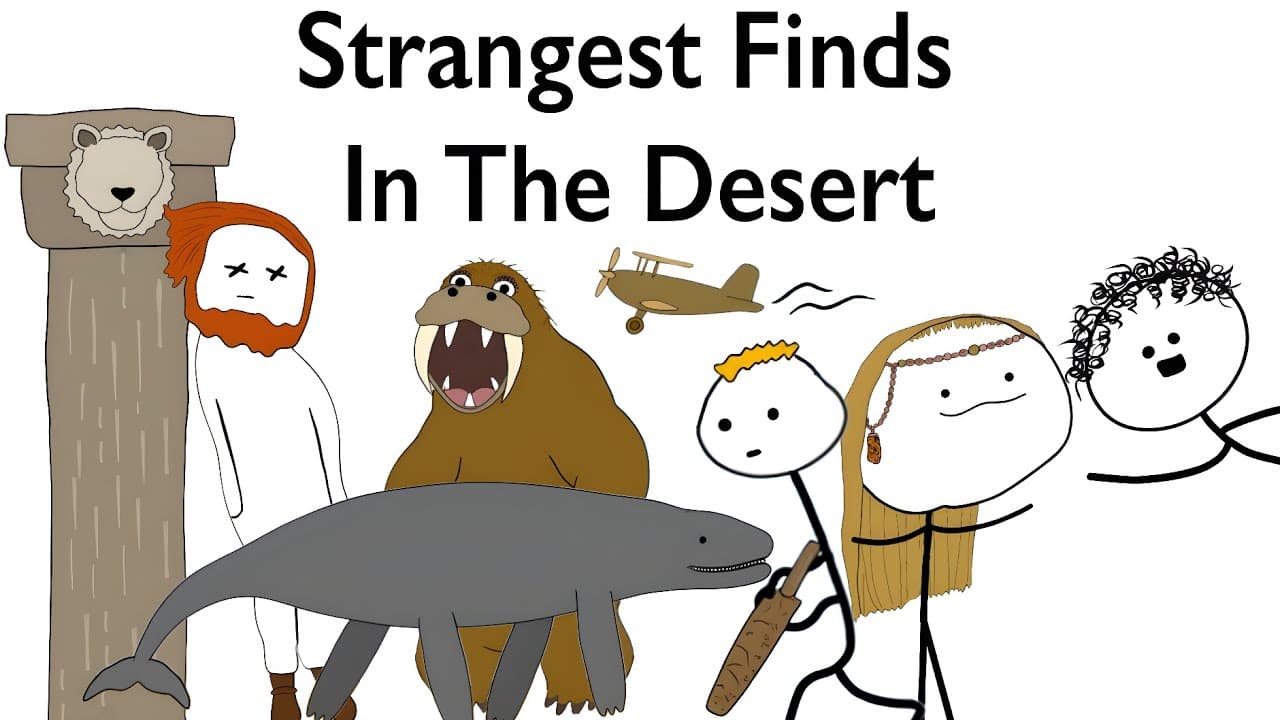
Ancient deserts preserve astonishing sites from graveyards to lost cities. Notable finds include the Green Sahara graveyard, Ubar, White Sands footprints, Saltmen, Desert kites, the Lost Army of Canvases, the Blythe intaglios, the Atacama alien baby, Chaco Canyon, and Gobekli Tepe. These discoveries show how climate change shaped civilizations and what we still have to learn about the past.
Transcript
let's get right into it number 11 the green Sahara graveyard scientists found something wild in niger's desert a massive graveyard from when the Sahara was green the biggest Stone Age burial ground ever found many groups of people lived here the first group were the keans these guys were absolute units 6 feet tall with muscles that would make the r... Read More
Key Insights
- The Green Sahara graveyard is the biggest Stone Age burial ground found, with multiple groups living there and well preserved artifacts.
- UBAR was revealed by satellite radar in the 1990s, exposing an ancient fortress and a city built with many trade connections and a cave system underneath.
- White Sands footprints are 23,000 years old, showing hunters and families leaving tracks at the edge of an ancient ice age lake.
- Saltmen are perfectly preserved by salt in Iran, illustrating regular miners trapped by collapses and their final moments frozen in time.
- Desert kites are massive stone walls forming funnels that trap animals, with over 6,000 scattered across the desert used to hunt entire herds.
- The Lost Army of Canvases, a massive desert find, hints at a vanished force and a dramatic story buried under sands.
- Blythe intaglios are large ground drawings made by scraping dark rocks to reveal lighter soil, visible from above and tied to sacred stories.
- The Atacama alien baby skeleton turned out to be a human infant with rare bone disorders, demonstrating how deserts preserve remains and aid medical research.
- More videos from this channel:
- More from this channel: Chill Dude Explains
Install to Summarize YouTube Videos and Get Transcripts
Explore YouTube Video Summarizer or Get YouTube Transcript Extractor
Questions & Answers
Q: What is the Green Sahara graveyard and why is it significant?
The Green Sahara graveyard is described as the biggest Stone Age burial ground ever found, with groups such as the Keans and Tarians occupying the site. It preserved graves, fishing hooks, bone harpoons, pottery, and animal remains, showing how a once wetter Sahara supported complex hunter gatherer and later settled communities. The significance lies in its scale, preservation, and insight into early human adaptation to changing climate in the Sahara region.
Q: How was Ubar discovered and what does it reveal about ancient trade?
UBAR was identified in the 1990s by scientists using satellite radar, revealing a fortress with eight walls and towers. The site shows a city that thrived on frankincense trade, indicating a highly connected ancient economy. Its location on top of a cave system and the evidence of global trade items such as Chinese pottery, Roman coins, and Indian jewelry illustrate long distance connections across ancient civilizations.
Q: What do the White Sands footprints tell us about early inhabitants of America?
The White Sands footprints are over 23,000 years old and include tracks of hunters pursuing a ground sloth, a woman or teenager with a child, and multiple others. The prints demonstrate advanced mobility and social structure of ancient peoples, with detailed heel strikes, arch shapes, and toe marks preserved in mud that turned to stone, revealing how people moved and lived near an ice age lake.
Q: Who were the Saltmen and why are they important to desert archaeology?
The Saltmen are a group of miners found preserved by salt in Iran, with bodies showing final expressions and even food in their stomachs. Their clothes, tools, and artifacts were preserved, giving insight into ordinary laborers rather than elites. The discovery highlights how salt can preserve organic material for thousands of years, offering a snapshot into daily life and risks of mining in ancient times.
Q: What are desert kites and what is their significance in archaeology?
Desert kites are giant stone walls forming funnel shapes that trap animals along migration routes. They can span miles and over 6,000 have been found, some older than pyramids. These structures indicate sophisticated hunting strategies and social organization, as well as long-term interactions with the landscape that influenced animal populations and possibly contributed to species changes in ancient deserts.
Q: What happened to the Lost Army of Canvases and what might it imply?
The Lost Army of Canvases refers to a large, mysterious desert find with bronze weapons and human bones uncovered, raising questions about a vanished Persian army that disappeared during a sandstorm. The discovery implies that extreme desert environments can erase evidence of large groups and that wind shifts continually reveal new bones and artifacts, keeping the mystery alive.
Q: What are the Blythe intaglios and why are they notable?
The Blythe intaglios are giant ground drawings in California, created by scraping away dark rocks to reveal lighter soil, forming human figures and animal shapes. They are notable for their size, visibility from above, and the sacred purpose attributed by local tribes. These drawings show how ancient communities used monumental geography for ceremonial reasons and storytelling.
Q: What does the Atacama alien baby skeleton teach researchers about bone disorders?
The Atacama alien baby skeleton, once considered extraterrestrial, is a human infant with rare genetic problems affecting bone growth. Studied DNA helps researchers understand bone development and aging, demonstrating how desert preservation can contribute to modern medicine. The case also underscores ethical considerations in displaying remains and the importance of returning them to their homeland.
Summary & Key Takeaways
-
The Green Sahara graveyard represents the largest Stone Age burial ground uncovered, showing groups of people living together and preserving artifacts like fishing hooks and tools.
-
The discoveries range from buried cities and giant geoglyphs to preserved human remains and ancient traps, highlighting how ancient people adapted to desert environments.
-
Several sites reveal advanced planning and astronomical alignments, suggesting sophisticated knowledge of stars, seasons, and landscape use across civilizations.
Read in Other Languages (beta)
Share This Summary 📚
Summarize YouTube Videos and Get Video Transcripts with 1-Click
Try YouTube Summary with ChatGPT & Claude or YouTube Transcript Generator
Explore More Summaries from Chill Dude Explains 📚






Summarize YouTube Videos and Get Video Transcripts with 1-Click
Try YouTube Summary with ChatGPT & Claude or YouTube Transcript Generator