Why did a bank manager fire a farmer for money
TL;DR
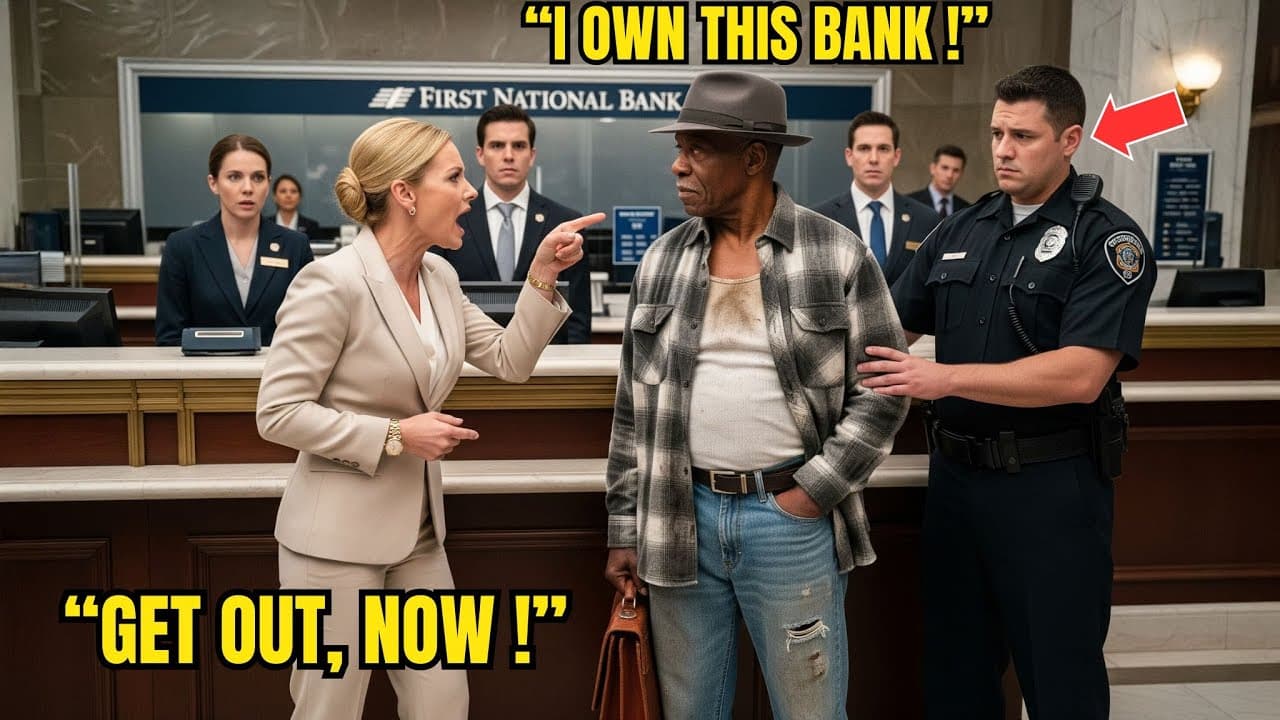
The bank manager fires the elderly farmer after a dramatic scene where cash is scattered on the floor and a tense crowd watches. The altercation exposes bias and power dynamics in a banking setting, leading to consequences for the manager within minutes. The story centers on dignity under pressure and accountability.
Transcript
Get this dirty old man and his drug money out of my bank. Rebecca Sterling's voice cut through the marblelined lobby like a blade. Her manicured hands swept across the premium counter, scattering $100 bills onto the pristine floor with theatrical disgust. Samuel Jefferson, 68, stood frozen in his patched flannel shirt. His weathered black hands, sc... Read More
Key Insights
- Banking confrontations can be sparked by perceived money provenance and social status, leading to public scrutiny.
- Dignity under pressure becomes a crucial asset, influencing how individuals are perceived during crisis moments.
- Public livestreaming transforms private disputes into collective accountability moments, pressuring institutions to respond quickly.
- Authority figures may misjudge risk when emotions run high, triggering disproportionate punitive actions.
- Documented money flows and visuals of cash manipulation can escalate investigations and lead to firings.
- Crisis responses in banks often involve security protocols, law enforcement, and internal reviews to determine proper conduct.
- Public perception of fairness can be swayed by how staff handle sensitive money related situations.
- Story illustrates that empathy and procedural correctness, not just rules, determine outcomes in customer conflicts.
Install to Summarize YouTube Videos and Get Transcripts
Explore YouTube Video Summarizer or Get YouTube Transcript Extractor
Questions & Answers
Q: How can a bank handle money related conflicts with dignity and fairness?
A bank can handle money related conflicts by following clear procedures, including documenting suspected issues, involving security and management appropriately, and communicating transparently with customers. Staff should avoid public shaming and instead focus on due process, ensuring that actions are justified, proportionate, and respectful. In such cases, investigations should determine whether funds are illicit and what steps are required by policy and law, while preserving customer dignity.
Q: What immediate actions did the bank take during the conflict?
During the conflict, the bank called for security, considered testing bills for illegal substances, and prepared to involve federal authorities. These actions reflect standard procedures for handling suspected drug money, including documenting the incident, securing the area, and coordinating with law enforcement to verify fund legitimacy while minimizing customer disruption and humiliation.
Q: What role did public livestreaming play in this narrative?
Public livestreaming amplified the incident by increasing viewer numbers and social commentary, transforming a private dispute into a public accountability moment. The growing audience added pressure on bank staff to justify their actions and to demonstrate fair treatment, illustrating how real time documentation can influence organizational responses and reputational stakes.
Q: What were the key turning points within the 11 minute window described?
Key turning points include the moment the farmer gathers his money back, the testing kit being introduced, and the impending contact with federal authorities. These events shift the scene from humiliation to formal evaluation of the money and the bank’s handling of the situation, ultimately leading to consequences for the manager.
Q: What themes does the description emphasize about power and dignity?
The description emphasizes that dignity under adversity is a powerful counterpoint to abusive theatrics, showing that quiet resilience, patient retrieval of money, and respectful communication can undermine attempts at public shaming and demonstrate moral authority even in conflict.
Q: How does the narrative portray evidence and procedure in financial misconduct cases?
The narrative portrays evidence and procedure as central to resolving financial misconduct allegations, including testing the bills, documenting claims, and following security protocols. It suggests that careful, measured steps are essential to avoid wrongly accusing individuals while protecting legitimate interests and public trust.
Q: What lessons about fairness in customer service can be drawn from the story?
Lessons include the importance of treating customers with respect regardless of status, applying rules consistently, and avoiding humiliation as a tool of conflict resolution. Fairness arises when authorities rely on evidence, maintain composure, and prioritize due process over spectacle.
Q: Why is accountability important in bank leadership narratives as depicted here?
Accountability is important because leadership actions set organizational tone and public trust. Demonstrating that mistakes are recognized, consequences are applied, and proper channels are followed reinforces ethical standards, reduces harm to customers, and signals that respect for all individuals is central to bank culture.
Summary & Key Takeaways
-
A dramatic scene unfolds in a bank lobby as a large sum of cash is scattered on the floor and a crowd forms, revealing tensions around class and race.
-
The branch manager responds with harsh theatrics before a rapid turn of events that culminates in immediate consequences for her actions.
-
The narrative contrasts dignity and humiliation, highlighting how public scrutiny and procedural steps drive accountability in financial institutions.
Read in Other Languages (beta)
Share This Summary 📚
Summarize YouTube Videos and Get Video Transcripts with 1-Click
Try YouTube Summary with ChatGPT & Claude or YouTube Transcript Generator
Explore More Summaries from Black Tales Stories 📚






Summarize YouTube Videos and Get Video Transcripts with 1-Click
Try YouTube Summary with ChatGPT & Claude or YouTube Transcript Generator