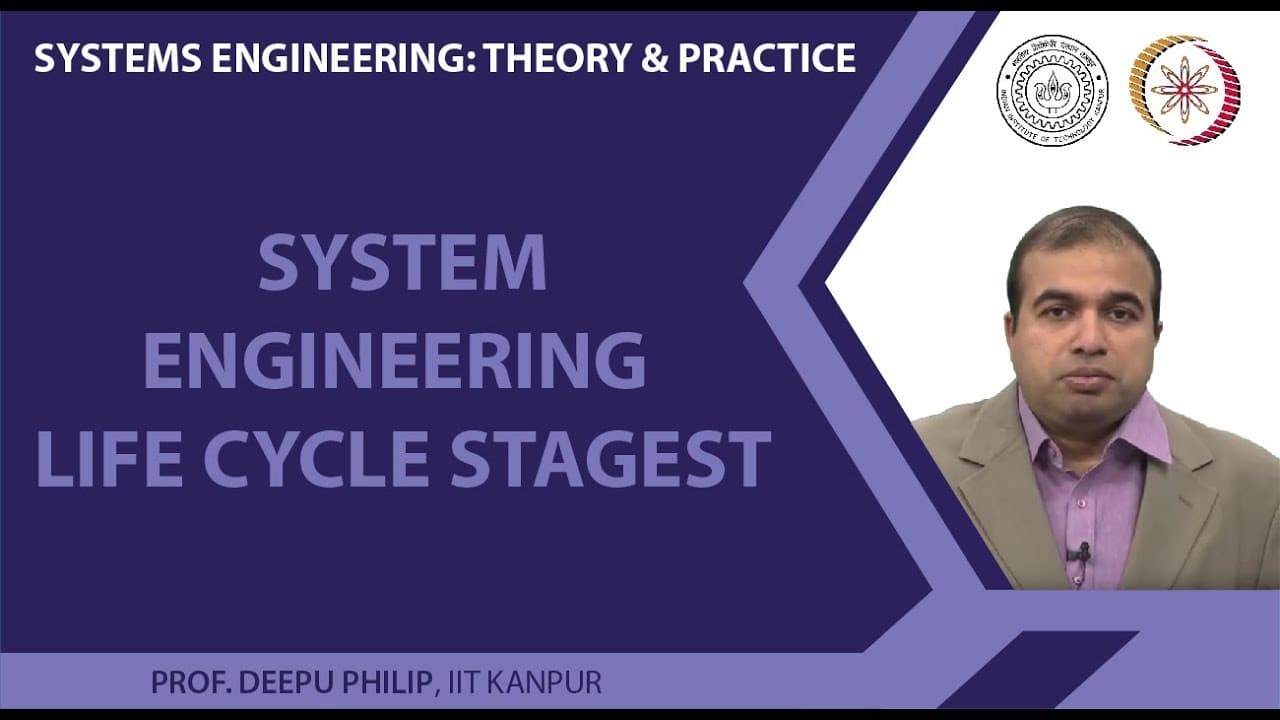
System Engineering Life Cycle Stages
TL;DR
Exploration of systems engineering lifecycle stages and process models.
Transcript
again very will one welcome and a good day to all of you we are in the systems engineering course on the MOOCs and I am talking Vito filly from IIT Kanpur and what we are talking going to talk today is dig more deeper into the systems engineering lifecycle stages and also compare and contrast different systems engineering process models that are av... Read More
Key Insights
- The systems engineering lifecycle is divided into three main stages: concept, engineering, and fielding/operational stages, each with distinct objectives and processes.
- The concept stage involves defining the system's initial formulation and satisfying valid customer needs, with a focus on system architecture and feasibility.
- In the engineering stage, the system concept is translated into a physical design, ensuring it meets customer requirements within reasonable cost and schedule constraints.
- The fielding and operational stage encompasses activities beyond development, including production, deployment, and system support during its useful life.
- The concept stage includes analysis and planning to establish a valid need for the system, exploring potential system concepts, and selecting the most suitable one.
- New technology development may be necessary during the concept stage to meet the system's requirements, as seen in the Boeing 787 example with composite materials.
- Systems engineering plays a crucial role in guiding the engineering process, developing test cases, and managing interfaces, ensuring successful system implementation.
- Post-development, systems engineering supports system upgrades, maintenance, and supply chain management to ensure continued system operation.
Install to Summarize YouTube Videos and Get Transcripts
Explore YouTube Video Summarizer or Get YouTube Transcript Extractor
Questions & Answers
Q: What are the main stages of the systems engineering lifecycle?
The systems engineering lifecycle is divided into three main stages: the concept stage, the engineering stage, and the fielding/operational stage. Each stage has distinct objectives and processes. The concept stage involves defining the system's initial formulation and satisfying valid customer needs. The engineering stage translates the system concept into a physical design, ensuring it meets customer requirements within reasonable cost and schedule constraints. The fielding and operational stage encompasses activities beyond development, including production, deployment, and system support during its useful life.
Q: What activities are involved in the concept stage of systems engineering?
The concept stage in systems engineering involves several key activities, including analysis and planning to establish a valid need for the system, exploring potential system concepts, and selecting the most suitable one. This stage focuses on defining the system's initial formulation and satisfying valid customer needs, with an emphasis on system architecture and feasibility. Additionally, new technology development may be necessary to meet the system's requirements, as seen in the Boeing 787 example with composite materials.
Q: How does the engineering stage translate system concepts into physical designs?
In the engineering stage, the system concept is translated into a physical design that meets customer requirements within reasonable cost and schedule constraints. This involves designing a physical system, ensuring it can be produced, operated, and maintained economically and successfully. Systems engineering guides the engineering process, developing test cases, and managing interfaces to ensure successful system implementation. The engineering stage aims to create a prototype that fulfills performance, reliability, safety, and maintenance requirements.
Q: What role does systems engineering play in the fielding/operational stage?
In the fielding/operational stage, systems engineering supports activities beyond development, such as production, deployment, and system support during its useful life. It plays a crucial role in solving unanticipated problems requiring urgent solutions, ensuring successful testing and evaluation in the system's operational environment. Systems engineering also assists with system upgrades, maintenance, and supply chain management to ensure continued system operation. This stage is vital for demonstrating the system's functional capabilities and achieving customer acceptance.
Q: Why is new technology development sometimes necessary in systems engineering?
New technology development is sometimes necessary in systems engineering to meet the system's requirements, especially when existing technology is insufficient. During the concept stage, systems engineers may identify the need for new technology to realize the system's architecture and satisfy customer needs. For example, in the Boeing 787 project, new advanced manufacturing technologies were developed to build the airframe using composite materials, significantly reducing the aircraft's weight and improving fuel efficiency. This development illustrates the importance of innovation in systems engineering.
Q: How do systems engineers ensure successful system implementation?
Systems engineers ensure successful system implementation by guiding the engineering process, developing test cases, and managing interfaces. They work closely with experts in appropriate disciplines to translate system concepts into physical designs that meet customer requirements. Systems engineering involves ensuring that the system can be produced, operated, and maintained economically and successfully. Additionally, systems engineers play a supportive role in the fielding/operational stage, solving unanticipated problems and assisting with system upgrades and maintenance, contributing to the system's long-term operational success.
Q: What challenges did Boeing face with the 787 Dreamliner, and how were they addressed?
Boeing faced challenges with the 787 Dreamliner, particularly with lithium-ion battery failures during the fielding stage. These issues led to the grounding of the fleet until Boeing resolved the problem. Systems engineers were called upon to assess the situation, identify the root cause, and develop an alternate design for the battery interface. They also implemented better choices of batteries and rectified the faulty situation. This example illustrates the importance of systems engineering in addressing unforeseen issues and ensuring the system's continued operational success.
Q: What are the key outputs of the concept development phase in systems engineering?
The concept development phase in systems engineering produces several key outputs, including system operational effectiveness, system capabilities, system performance requirements, and system concepts. This phase involves need analysis, concept exploration, and concept definition. During need analysis, the validity of the customer's need is established. Concept exploration involves exploring multiple system concepts and performance requirements. Finally, the concept definition phase selects the most suitable system concept and defines its functional specifications, providing a foundation for the engineering stage.
Summary & Key Takeaways
-
The systems engineering lifecycle is divided into three stages: concept, engineering, and fielding/operational, each with specific goals and processes. The concept stage focuses on defining system needs and feasibility, while the engineering stage translates these into a physical design. The fielding stage involves system deployment and support.
-
Key activities in the concept stage include establishing a valid need, exploring system concepts, and selecting the best one. The engineering stage involves designing a physical system that meets customer requirements within cost and schedule constraints. Post-development, systems engineering supports system upgrades and maintenance.
-
The Boeing 787 example illustrates the importance of systems engineering in addressing unforeseen issues during the fielding stage. Systems engineering ensures successful system implementation by guiding the engineering process, developing test cases, and managing interfaces, contributing to the system's long-term operational success.
Read in Other Languages (beta)
Share This Summary 📚
Summarize YouTube Videos and Get Video Transcripts with 1-Click
Try YouTube Summary with ChatGPT & Claude or YouTube Transcript Generator
Explore More Summaries from Systems Engineering: Theory & Practice 📚


Summarize YouTube Videos and Get Video Transcripts with 1-Click
Try YouTube Summary with ChatGPT & Claude or YouTube Transcript Generator