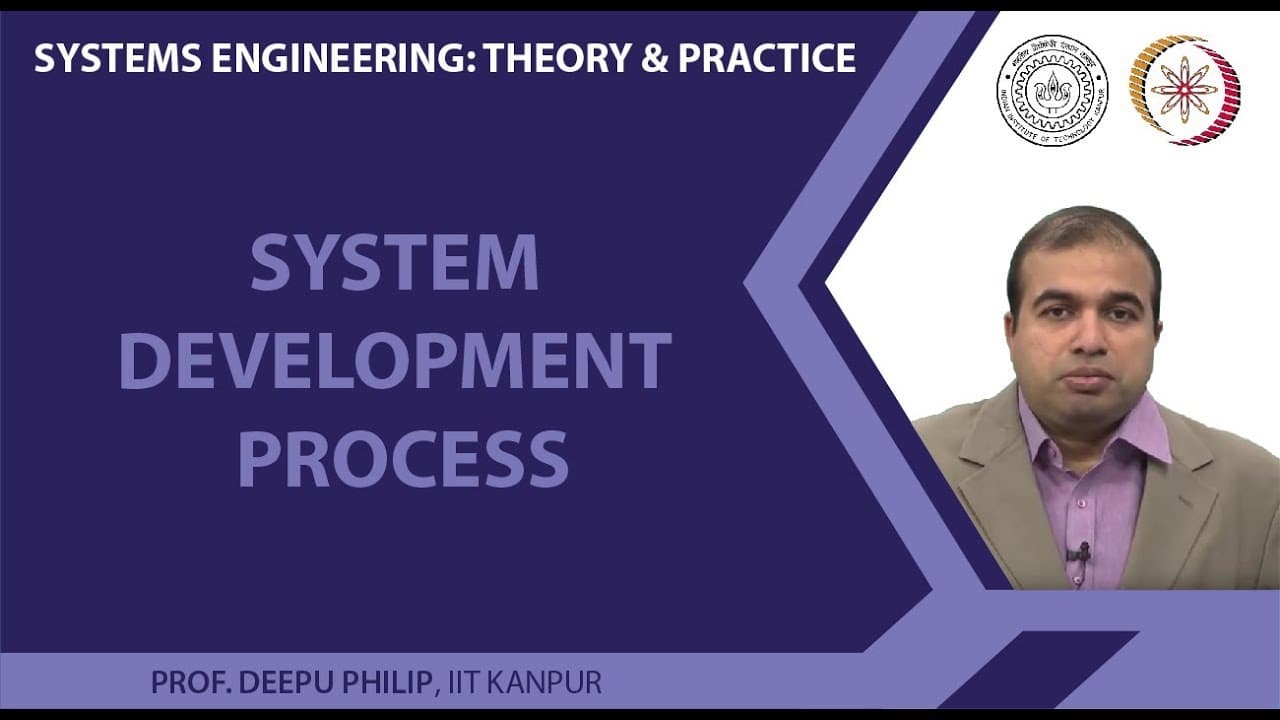
System Development process
TL;DR
Explores engineering development phases and systems engineering standards.
Transcript
so the second aspect of the uh uh development the engine system development phase is the engineering development phase again model suggested by kosov and all and uh this model again as I said the input will be the concept phase whatever is the input uh output of the con surface becomes the input of this one so if we drive the uh write the inputs it... Read More
Key Insights
- The engineering development phase translates concepts into physical systems, guided by systems engineering principles, and involves risk management, subsystem definition, and component specifications.
- The advanced development phase focuses on risk management, subsystem definition, and component specifications, resulting in detailed design specifications and a valid development model.
- The engineering design phase includes component engineering, component testing, and specialty engineering, producing a testing and evaluation plan and engineered components.
- System integration, testing, and operational evaluation are key aspects of the integration, testing, and evaluation phase, leading to system production specifications and the production system itself.
- Specialty engineering, such as reliability and manufacturability engineering, plays a crucial role in ensuring system robustness and cost-effectiveness through tradeoff analysis.
- The DoD MIL-STD-499B model is tailored for military applications, focusing on functional analysis, synthesis, and verification loops to ensure system performance characteristics.
- The IEEE-1220 model emphasizes requirement analysis, functional analysis, and design synthesis, ensuring the developed system meets customer needs through iterative verification.
- The EIA-632 model involves technical management, acquisition, system design, product realization, and technical evaluation processes, emphasizing iterative feedback and validation.
Install to Summarize YouTube Videos and Get Transcripts
Explore YouTube Video Summarizer or Get YouTube Transcript Extractor
Questions & Answers
Q: What is the purpose of the engineering development phase?
The engineering development phase aims to translate conceptual designs into physical systems. It involves various processes such as risk management, subsystem definition, and component specifications, guided by systems engineering principles. This phase ensures that the system meets functional requirements and is ready for integration, testing, and operational evaluation.
Q: How does the DoD MIL-STD-499B model approach system design?
The DoD MIL-STD-499B model is tailored for military applications, focusing on functional analysis, synthesis, and verification loops. It involves analyzing missions, identifying functional requirements, and defining performance constraints. The model ensures that the system design is robust and meets the specific needs of military applications through iterative processes.
Q: What are the key components of the IEEE-1220 model?
The IEEE-1220 model emphasizes requirement analysis, functional analysis, and design synthesis. It ensures that the developed system meets customer needs through iterative verification processes. The model involves validating requirements, establishing functional needs, and synthesizing design solutions to create a system architecture ready for production.
Q: What role does specialty engineering play in the development phase?
Specialty engineering, including reliability and manufacturability engineering, plays a crucial role in ensuring system robustness and cost-effectiveness. It involves tradeoff analysis to balance system redundancy and cost. Specialty engineering ensures that the system can be manufactured within tolerances and maintains reliability throughout its lifecycle.
Q: How does the EIA-632 model handle system design and validation?
The EIA-632 model involves technical management, acquisition, system design, product realization, and technical evaluation processes. It emphasizes iterative feedback and validation to ensure that the system design meets customer needs. The model involves planning, system analysis, and verification processes to ensure that the developed system is robust and reliable.
Q: What are the outputs of the advanced development phase?
The outputs of the advanced development phase include detailed design specifications and a valid development model. These outputs are derived from processes such as risk management, subsystem definition, and component specifications. The detailed design specifications and development model serve as inputs for the subsequent engineering design phase.
Q: What is the significance of system integration and testing?
System integration and testing are crucial for ensuring that all components of a system work together seamlessly. This phase involves integrating various subsystems, conducting system testing, and performing operational evaluations. The goal is to verify that the system meets all functional requirements and is ready for production and deployment.
Q: How do systems engineering models ensure iterative development?
Systems engineering models, such as DoD MIL-STD-499B, IEEE-1220, and EIA-632, ensure iterative development through feedback loops and verification processes. These models involve continuous validation of requirements, functional analysis, and design synthesis, allowing for adjustments and improvements throughout the development lifecycle. Iterative processes ensure that the final system meets all specified requirements.
Summary & Key Takeaways
-
The engineering development phase involves translating concepts into physical systems, guided by systems engineering principles. It includes risk management, subsystem definition, and component specifications, resulting in detailed design specifications and a valid development model.
-
The DoD MIL-STD-499B model is designed for military applications, focusing on functional analysis, synthesis, and verification loops to ensure system performance characteristics. It involves analyzing missions, identifying functional requirements, and defining performance constraints.
-
The IEEE-1220 and EIA-632 models emphasize requirement analysis, functional analysis, and design synthesis. They ensure the developed system meets customer needs through iterative verification, involving technical management, acquisition, system design, product realization, and technical evaluation processes.
Read in Other Languages (beta)
Share This Summary 📚
Summarize YouTube Videos and Get Video Transcripts with 1-Click
Try YouTube Summary with ChatGPT & Claude or YouTube Transcript Generator
Explore More Summaries from Systems Engineering: Theory & Practice 📚

Summarize YouTube Videos and Get Video Transcripts with 1-Click
Try YouTube Summary with ChatGPT & Claude or YouTube Transcript Generator