What Is Systems Thinking in Engineering?
TL;DR
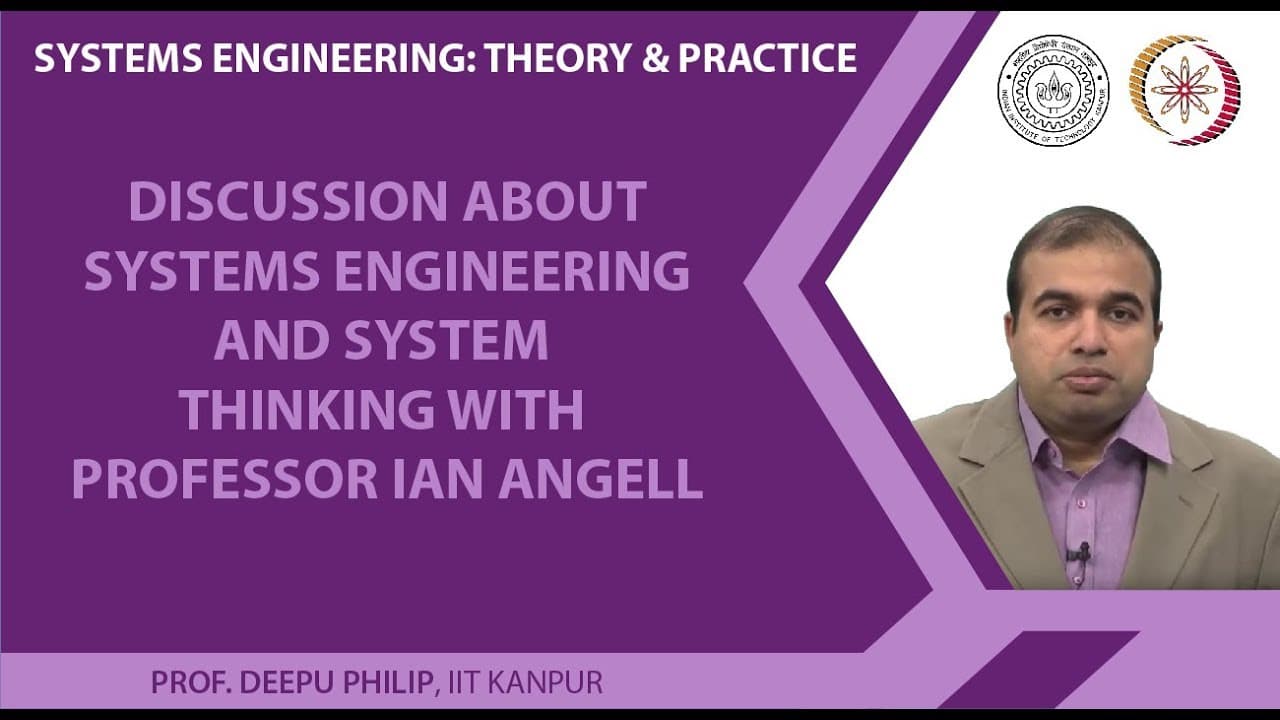
Systems thinking in engineering emphasizes that systems are not static entities but dynamic, evolving constructs. They interact with their environments and become more complex over time. Observers define systems based on their perspectives, making systems subjective. Emergence, unpredictability, and feedback loops are key concepts, highlighting the importance of adaptability and alternative viewpoints.
Transcript
good morning today we are lucky to have with us from Sir Ian angel officer from information systems from London School of Technology he retired from Elysee and now he's a professor emeritus and he is an honorary in systems engineering systems thinking and aspects baby's hospital editor system so as part of the endeavour to foster sy... Read More
Key Insights
- Systems are dynamic and evolve over time, influenced by their environment and interactions.
- The boundaries of a system are subjective and depend on the observer's perspective.
- Emergence is a key concept where complex systems produce unexpected new properties.
- Feedback loops within systems can lead to unforeseen changes and complexities.
- Risk is not an external factor but a product of human perception and interaction with uncertainty.
- Statistical models may fail to account for cultural and systemic differences, leading to inaccuracies.
- Alternatives and adaptability are crucial as all systems eventually fail or become obsolete.
- Technological systems, like Bitcoin, demonstrate systemic dynamics, including potential failure points.
Install to Summarize YouTube Videos and Get Transcripts
Explore YouTube Video Summarizer or Get YouTube Transcript Extractor
Questions & Answers
Q: What is systems thinking in engineering?
Systems thinking in engineering is an approach that views systems as dynamic and evolving entities rather than static constructs. It emphasizes the interactions between a system and its environment, leading to increased complexity and the emergence of new properties. Observers define systems based on their perspectives, making systems subjective and highlighting the importance of adaptability and alternative viewpoints.
Q: How does emergence occur in systems?
Emergence occurs when a system becomes so complex that it produces new, unpredictable properties or behaviors. This phenomenon is not predictable and arises from the interactions within the system and with its environment. An example is the Internet, which started as a simple communication tool and evolved into a complex system with various unforeseen applications and social implications.
Q: Why is risk considered a product of human perception?
Risk is considered a product of human perception because it arises from the interaction between an individual's theoretical perspective and the uncertainty of the external world. It is not an inherent property of the world but is constructed through the observer's cognitive processes, memory, and observations. This subjective nature of risk highlights the importance of understanding different viewpoints in systems thinking.
Q: What role do feedback loops play in systems?
Feedback loops are critical in systems as they can lead to changes and complexities that were not initially anticipated. These loops involve the flow of information from the system to its environment and back, influencing the system's behavior and potentially leading to new forms of complexity or emergence. Understanding feedback loops is essential for managing and adapting to system dynamics.
Q: How do statistical models fall short in systems analysis?
Statistical models often fall short in systems analysis because they may not account for cultural and systemic differences, leading to inaccurate representations. They typically assume homogeneity within populations, which is not the case in complex systems with diverse subsystems. This limitation underscores the need for a more nuanced approach that considers the unique characteristics of each system.
Q: Why are alternatives and adaptability important in systems?
Alternatives and adaptability are crucial in systems because all systems eventually face failure or become obsolete. Having alternative approaches and the flexibility to adapt allows systems to cope with unexpected changes and challenges. This adaptability is essential for long-term sustainability and success, as it enables systems to evolve and respond to new conditions.
Q: What is the significance of observer perspective in defining systems?
The observer's perspective is significant in defining systems because it determines how the system is perceived and understood. Different observers may see the same system differently based on their viewpoints, leading to various interpretations and definitions. This subjectivity highlights the importance of considering multiple perspectives in systems thinking to gain a comprehensive understanding of complex systems.
Q: How does systems thinking apply to technological systems like Bitcoin?
Systems thinking applies to technological systems like Bitcoin by emphasizing the systemic dynamics and potential failure points. Bitcoin operates on a distributed ledger system, which demonstrates the importance of feedback loops, emergence, and adaptability in maintaining system integrity. As the system evolves, challenges such as scalability, security, and sustainability must be addressed, showcasing the need for a systems thinking approach.
Summary & Key Takeaways
-
Systems thinking in engineering highlights that systems are not static but dynamic and evolving. They interact with their environment, leading to increased complexity and emergence of new properties. Observers define systems based on their perspectives, making them subjective and emphasizing the importance of adaptability and alternative viewpoints.
-
Emergence is a central concept in systems thinking, where complex systems produce new, unpredictable properties. Feedback loops within these systems can lead to unforeseen changes, making it crucial to consider different perspectives and maintain flexibility to adapt to evolving conditions.
-
Risk is a product of human perception and interaction with uncertainty, not an external factor. Statistical models often fail to account for cultural and systemic differences, leading to inaccuracies. Systems thinking underscores the need for alternatives and adaptability as all systems eventually fail or become obsolete.
Read in Other Languages (beta)
Share This Summary 📚
Summarize YouTube Videos and Get Video Transcripts with 1-Click
Try YouTube Summary with ChatGPT & Claude or YouTube Transcript Generator
Explore More Summaries from Systems Engineering: Theory & Practice 📚





Summarize YouTube Videos and Get Video Transcripts with 1-Click
Try YouTube Summary with ChatGPT & Claude or YouTube Transcript Generator