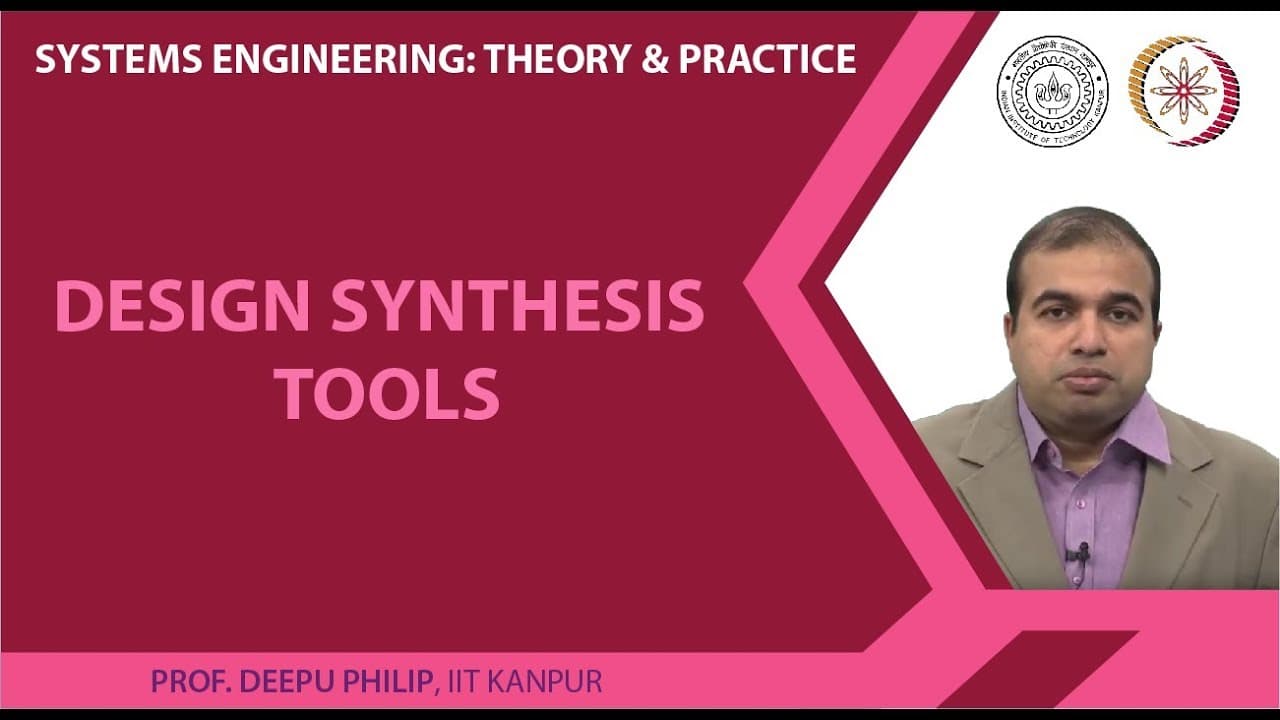
Design Synthesis Tools
TL;DR
Explores tools used in design synthesis within systems engineering.
Transcript
welcome to the one more lecture of systems engineering on the tools that are used in design synthesis so the lecture is titled design synthesis tools and just to recap on where we are today we have in the systems engineering process we have seen which is predominantly the US Department of Defense model use D or D model where the requirement analysi... Read More
Key Insights
- Design synthesis is a critical phase in systems engineering, converting performance and functional requirements into a physical product. It involves various tools to ensure the system meets user needs.
- The Requirement Allocation Sheet (RAS) is vital for ensuring traceability between high-level requirements and low-level functions, applicable in both functional analysis and design synthesis.
- The Concept Description Sheet (CDS) provides a clear depiction of the technical approach used in system design, often in graphical form, helping align user expectations with design philosophy.
- The Functional Metrics Diagram, also known as the Functional Physical Matrix, correlates system functions with physical components, ensuring each function is supported by the right components.
- The example of the UAV system illustrates how different tools and diagrams are used to ensure the system design meets specified requirements and functions effectively.
- Design synthesis tools help minimize communication gaps between system designers and users, ensuring the design aligns with user expectations and operational needs.
- The Bradley Fighting Vehicle example highlights challenges in balancing multiple design requirements, such as troop transport, reconnaissance, and combat capabilities, within budget constraints.
- Effective use of design synthesis tools can prevent costly design errors and ensure the final product meets performance and functional requirements, ultimately satisfying user demands.
Install to Summarize YouTube Videos and Get Transcripts
Explore YouTube Video Summarizer or Get YouTube Transcript Extractor
Questions & Answers
Q: What is the purpose of the Requirement Allocation Sheet (RAS)?
The Requirement Allocation Sheet (RAS) is used to ensure traceability between high-level requirements and low-level functions. It helps decompose requirements and allocate them appropriately to lower-level functions, ensuring that all performance and functional requirements are met in the system design.
Q: How does the Concept Description Sheet (CDS) aid in design synthesis?
The Concept Description Sheet (CDS) provides a clear depiction of the technical approach used in system design, often in graphical form. It helps users understand and appreciate the design philosophy, ensuring alignment between user expectations and the technical approach, and minimizing communication gaps.
Q: What is the Functional Metrics Diagram used for?
The Functional Metrics Diagram, also known as the Functional Physical Matrix, is used to correlate system functions with physical components. It ensures that each function is supported by the right physical components, helping to translate functional architecture into physical architecture effectively.
Q: Why is minimizing communication gaps important in systems engineering?
Minimizing communication gaps between system designers and users is crucial to ensure that the design aligns with user expectations and operational needs. Tools like the Concept Description Sheet (CDS) help bridge these gaps by visually depicting the design concept and technical approach, facilitating better understanding and collaboration.
Q: What challenges are highlighted in the Bradley Fighting Vehicle example?
The Bradley Fighting Vehicle example highlights challenges in balancing multiple design requirements, such as troop transport, reconnaissance, and combat capabilities, within budget constraints. It illustrates the complexities of accommodating conflicting requirements and the importance of effective design synthesis tools to navigate these challenges.
Q: How do design synthesis tools prevent costly design errors?
Design synthesis tools help prevent costly design errors by ensuring that performance and functional requirements are accurately translated into a physical product. They provide traceability, alignment, and correlation between requirements and components, reducing the risk of misalignment and ensuring the system meets user demands effectively.
Q: What role does the Functional Physical Matrix play in system design?
The Functional Physical Matrix plays a crucial role in system design by correlating system functions with physical components. It ensures that each function is supported by the appropriate components, facilitating the translation of functional architecture into a physical product that meets performance and functional requirements.
Q: How does the example of the UAV system illustrate the use of design synthesis tools?
The UAV system example illustrates the use of design synthesis tools by showing how different diagrams and sheets, such as the Concept Description Sheet and Functional Metrics Diagram, are used to ensure the system design meets specified requirements. It demonstrates the importance of aligning technical approaches with user expectations and operational needs.
Summary & Key Takeaways
-
Design synthesis in systems engineering involves translating performance and functional requirements into a physical product using various analytical, engineering, and modeling tools. Key tools discussed include the Requirement Allocation Sheet (RAS), Concept Description Sheet (CDS), and Functional Metrics Diagram.
-
The Concept Description Sheet (CDS) is crucial for visualizing the design concept, ensuring users understand and appreciate the technical approach used. It aids in minimizing communication gaps between designers and users, aligning expectations with design philosophy.
-
The Functional Metrics Diagram correlates system functions with physical components, ensuring the right components perform necessary functions. The example of the Bradley Fighting Vehicle illustrates challenges in balancing design requirements within budget constraints.
Read in Other Languages (beta)
Share This Summary 📚
Summarize YouTube Videos and Get Video Transcripts with 1-Click
Try YouTube Summary with ChatGPT & Claude or YouTube Transcript Generator
Explore More Summaries from Systems Engineering: Theory & Practice 📚



Summarize YouTube Videos and Get Video Transcripts with 1-Click
Try YouTube Summary with ChatGPT & Claude or YouTube Transcript Generator