How to Conduct Effective Requirement Analysis
TL;DR
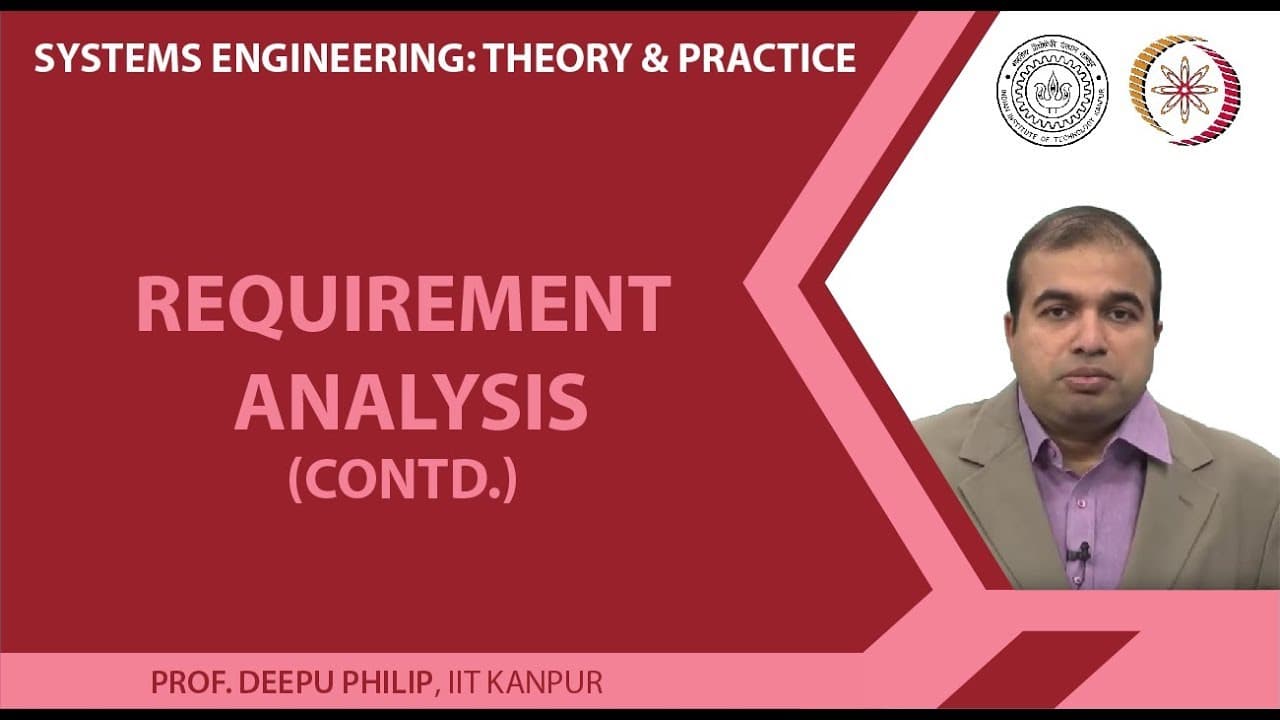
Requirement analysis is a critical process of inquiry and resolution aimed at understanding customer needs and system objectives. It involves defining customer requirements, optimizing system functions, and ensuring solutions meet specified constraints. This iterative process includes refining objectives, identifying constraints, and establishing performance measures to guide system development.
Transcript
so further getting into the requirement analysis we should or we should look into a little bit more detail into what is the requirement analysis so the first and foremost thing that we need to understand here is it's a process of inquiry emprah solution and query and the solution in a simplest 'uncle English form it is questions and... Read More
Key Insights
- Requirement analysis is a process of inquiry and resolution, focusing on customer needs and system objectives.
- The process involves defining customer needs and system objectives within the planned use environment.
- Iteration with functional analysis is crucial for optimizing system functions and performance requirements.
- Verification ensures that the system design meets customer needs within specified constraints.
- Requirement analysis refines customer objectives and translates them into measurable requirements.
- Identifying constraints helps in understanding factors that limit design solutions.
- Operational, functional, and physical outputs must be coordinated to capture user needs effectively.
- Key questions in requirement analysis include understanding system development reasons, user expectations, and system usage.
Install to Summarize YouTube Videos and Get Transcripts
Explore YouTube Video Summarizer or Get YouTube Transcript Extractor
Questions & Answers
Q: What is the purpose of requirement analysis?
The purpose of requirement analysis is to understand and refine customer needs and system objectives. It involves defining customer requirements, optimizing system functions, and ensuring that solutions meet specified constraints. This process is iterative, involving continuous inquiry and resolution to improve system design and performance with each iteration.
Q: How does requirement analysis optimize system functions?
Requirement analysis optimizes system functions through iterative functional analysis. This process involves repeatedly analyzing and refining system functions to enhance performance requirements. Each iteration aims to improve the system solution, ensuring that it better meets customer needs and objectives, ultimately leading to a more effective and efficient system design.
Q: What are the key outputs of requirement analysis?
The key outputs of requirement analysis are operational, functional, and physical outputs. Operational outputs focus on how the system will serve users, functional outputs detail what the system must do to achieve required operational behavior, and physical outputs describe how the system will be built. These outputs must be coordinated to capture user needs effectively.
Q: Why is verification important in requirement analysis?
Verification is important in requirement analysis because it ensures that the system design meets customer needs within specified constraints. It involves checking that the synthesized system solutions satisfy customer requirements and are verifiable, providing confidence that the system will perform as intended in the planned use environment.
Q: What role do constraints play in requirement analysis?
Constraints play a critical role in requirement analysis by defining the factors that limit design solutions. Identifying constraints helps in understanding the boundaries within which the system must operate, ensuring that proposed solutions are realistic and feasible. This awareness aids in refining system objectives and guiding the development process effectively.
Q: What questions are essential in requirement analysis?
Essential questions in requirement analysis include understanding the reasons behind system development, user expectations, system usage, and environmental compliance. These questions help clarify customer needs, refine system objectives, and ensure that the final product aligns with user requirements and operates effectively within its intended environment.
Q: How are operational, functional, and physical outputs synchronized?
Operational, functional, and physical outputs are synchronized by ensuring that they are coordinated and aligned with user needs and system objectives. This synchronization involves maintaining consistency across all outputs, so changes in one area are reflected in others, ensuring a cohesive approach to system development that effectively captures and addresses user requirements.
Q: What is the significance of iterative inquiry in requirement analysis?
Iterative inquiry is significant in requirement analysis as it involves continuously asking questions and seeking resolutions to refine system design. This process helps in progressively improving system functions and performance, ensuring that each iteration enhances the solution's ability to meet customer needs and objectives, ultimately leading to a more effective and efficient system design.
Summary & Key Takeaways
-
Requirement analysis is an iterative process focused on understanding and refining customer needs and system objectives. It involves defining initial performance objectives and translating them into measurable requirements while identifying constraints that limit solutions. The process ensures that system functions are optimized and solutions are verified to meet customer needs within specified constraints.
-
Operational, functional, and physical outputs are critical components of requirement analysis, each addressing different aspects of system development. Operational outputs focus on how the system will serve users, functional outputs detail what the system must do, and physical outputs describe how the system will be built.
-
Key questions in requirement analysis include understanding the reasons behind system development, user expectations, system usage, and environmental compliance. These inquiries help refine system objectives and ensure that the final product meets customer requirements effectively.
Read in Other Languages (beta)
Share This Summary 📚
Summarize YouTube Videos and Get Video Transcripts with 1-Click
Try YouTube Summary with ChatGPT & Claude or YouTube Transcript Generator
Explore More Summaries from Systems Engineering: Theory & Practice 📚
Summarize YouTube Videos and Get Video Transcripts with 1-Click
Try YouTube Summary with ChatGPT & Claude or YouTube Transcript Generator