How to Make Money on YouTube Beyond Ad Revenue
TL;DR
Ad revenue is one of the smallest income streams a YouTube channel can produce, so creators who chase only views and subscribers leave large sums unearned. A focused channel builds trust, and that trust opens the door to books, courses, and many other revenue streams that far outweigh AdSense. Building income streams one at a time compounds over the years.
Transcript
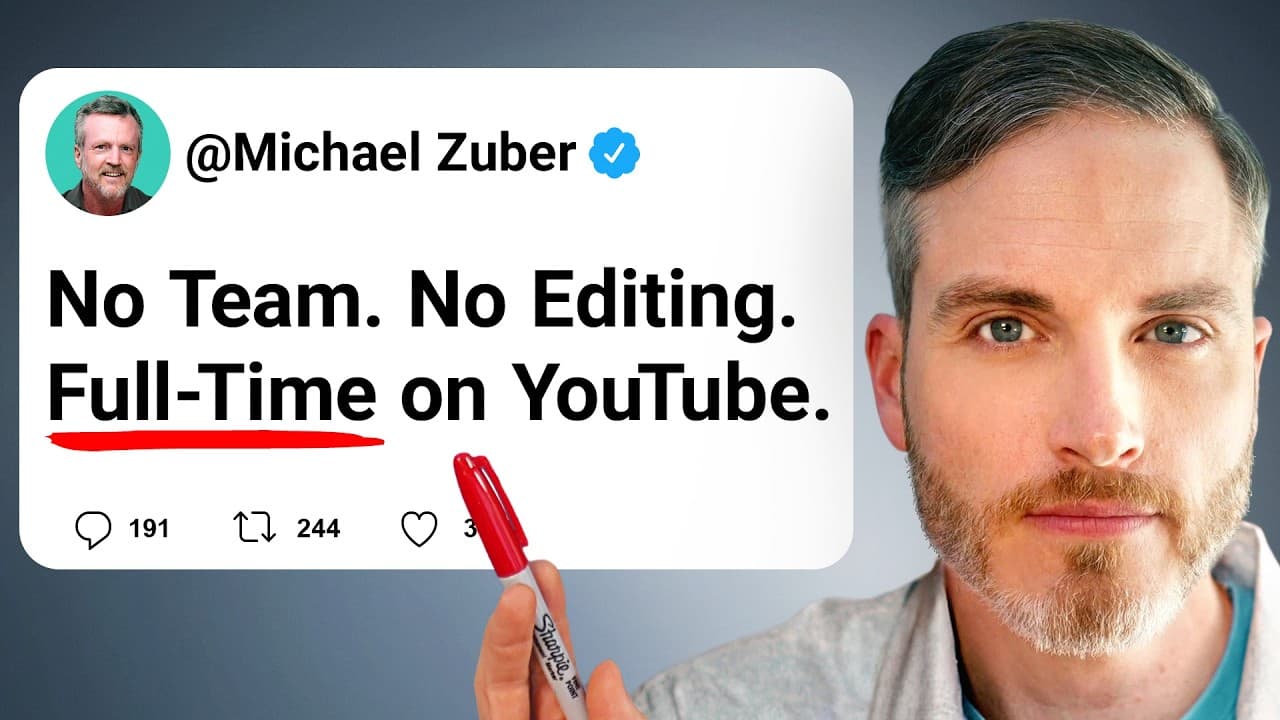
Most people think that YouTube is about going viral or AdSense revenue, but they're missing the bigger opportunity. I do no marketing. I have no team. I do no editing. It's just all these other income streams that come off of YouTube are much bigger. If you're building a channel, a business, or a brand, and you're only thinking about views and subs... Read More
Key Insights
- Ad revenue ranks near the bottom of Michael Zuber's income streams, showing that the YouTube Partner Program is often the least valuable way a channel earns compared with the other opportunities a channel creates.
- A YouTube channel functions as a trust-building machine, and in what Zuber calls a trust recession, consistently showing up around a topic makes audiences trust a creator and want to buy something more from them.
- High-quality editing is a myth for many niches, since Zuber has produced content for years without editing videos, simply recording on Zoom and uploading the raw file multiple times a day, every day of the week.
- The path to the first dollar took over a year of uploads before any ad revenue arrived, illustrating that monetization on YouTube requires sustained content production before it pays off.
- A self-published book on Amazon is an easy monetizable add-on for creators, using print-on-demand so Amazon handles shipping and distribution while the author earns a set amount per copy sold.
- Online courses should be audience-driven rather than pre-planned, because the recurring questions viewers ask can be packaged directly into course material that solves the exact problems people already want answered.
- What YouTube pays per thousand views depends on niche and audience, with personal finance, wealth-building, and real estate paying well and entertainment content paying on the lower end.
- Older audiences earn creators more ad revenue than younger ones, because YouTube pays more to reach viewers with greater spending power than it pays to reach a Gen Z audience.
Install to Summarize YouTube Videos and Get Transcripts
Explore YouTube Video Summarizer or Get YouTube Transcript Extractor
Questions & Answers
Q: How do you make money on YouTube beyond ad revenue?
Beyond the YouTube Partner Program, a channel can generate many other income streams that far outweigh ad revenue. Michael Zuber built his business on numerous distinct streams, including a self-published book and online courses. The channel itself acts as a trust-building machine, and once viewers trust a creator, they want to buy something more, which is where books, courses, and other products come in. Ad revenue actually ranks near the bottom of his streams.
Q: Why is YouTube ad revenue not the best way to make money?
Ad revenue ranks near the bottom of Michael Zuber's income streams. Payouts fluctuate with seasons, viewership, and the algorithm, so a creator never knows when views will rise or fall. Rates also vary by niche and audience age. Zuber emphasizes that AdSense is one of the lowest earners in his mix, and the far larger money comes from the other income streams that a YouTube channel makes possible, such as books and courses.
Q: Do you need to edit videos to succeed on YouTube?
According to Michael Zuber, elaborate editing is a myth for many niches. He has produced content for years without editing videos, and still does not edit. His method was to record on Zoom, press record, talk for a while, stop, and upload the raw file, posting several times a day every day of the week. For education, news, financial, and real estate content, this simple approach worked well and removed the need for complex technology or a team.
Q: How long does it take to make your first dollar on YouTube?
Michael Zuber produced content for over a year before earning his first dollar from YouTube, which arrived in his second year of creating. During that first year he published a very large number of uploads by recording multiple short videos from each interview and posting them throughout the day. His experience shows that monetization requires sustained production first, and that reaching the point of ad revenue takes patience and consistent output before the money begins.
Q: How can a creator make money from a self-published book?
Michael Zuber wrote his book during his first year of creating content and sells it through Amazon using print-on-demand, so Amazon handles shipping and distribution. He earns a set amount per copy sold. He recommends creators have something monetizable beyond AdSense and considers a book the easiest add-on, placing an Amazon link in the video description. Because viewers already trust the creator, they are willing to take the next step and buy the book.
Q: How do you create an online course that sells?
Michael Zuber advises building a course from audience-driven questions rather than a pre-made plan. His main course came directly from the questions his viewers repeatedly asked, so the material solves problems people already want answered. He suggests finding the intersection of your passion, your proficiency, and what could be profitable. Because he taught from real life experience of buying rentals, the channel educated viewers, they asked questions, and those questions were packaged into the course.
Q: What types of content pay the most in YouTube ad revenue?
Michael Zuber explains that payouts per thousand views depend heavily on niche and audience. Personal finance, wealth-building, and real estate content pay really well. Tech content pays well but sits somewhere in the middle. Entertainment content is usually on the low end. Audience matters too: YouTube typically pays more to reach older viewers in their forties, fifties, and sixties because they have more spending power, and less to reach a younger Gen Z audience.
Q: Why does a YouTube channel help build trust with an audience?
Michael Zuber views YouTube as a trust-building machine and believes society is in a trust recession, with many people chasing glitz and glam. By consistently showing up around a topic, whether wealth-building or a hobby, a creator earns the audience's trust over time. Once viewers trust a creator, they want to know one more thing and are willing to buy a product. This trust is what makes books, courses, and the other income streams possible and effective.
Summary & Key Takeaways
-
Most creators fixate on going viral, views, subscribers, and AdSense, but that focus leaves large amounts of potential income unearned. Michael Zuber built a real estate and wealth-building channel into a business powered by many distinct income streams, running it with no marketing, no team, and no editing, all starting from YouTube.
-
Zuber's first income stream is YouTube ad revenue, which he ranks near the bottom in value. He explains that creators move through seasons of favor and obscurity with the algorithm, that views and payouts fluctuate, and that niche and audience age strongly affect how much a channel earns per view.
-
Additional streams include a self-published book sold through Amazon's print-on-demand and online courses built entirely from audience questions. Both compound year over year. Zuber advises creators to find the intersection of passion, proficiency, and profitability, teaching from lived experience and letting the audience shape what products come next.
Read in Other Languages (beta)
Share This Summary 📚
Summarize YouTube Videos and Get Video Transcripts with 1-Click
Try YouTube Summary with ChatGPT & Claude or YouTube Transcript Generator
Explore More Summaries from Think Media Podcast 📚
Summarize YouTube Videos and Get Video Transcripts with 1-Click
Try YouTube Summary with ChatGPT & Claude or YouTube Transcript Generator