How to Use Psychological Triggers in Sales
TL;DR
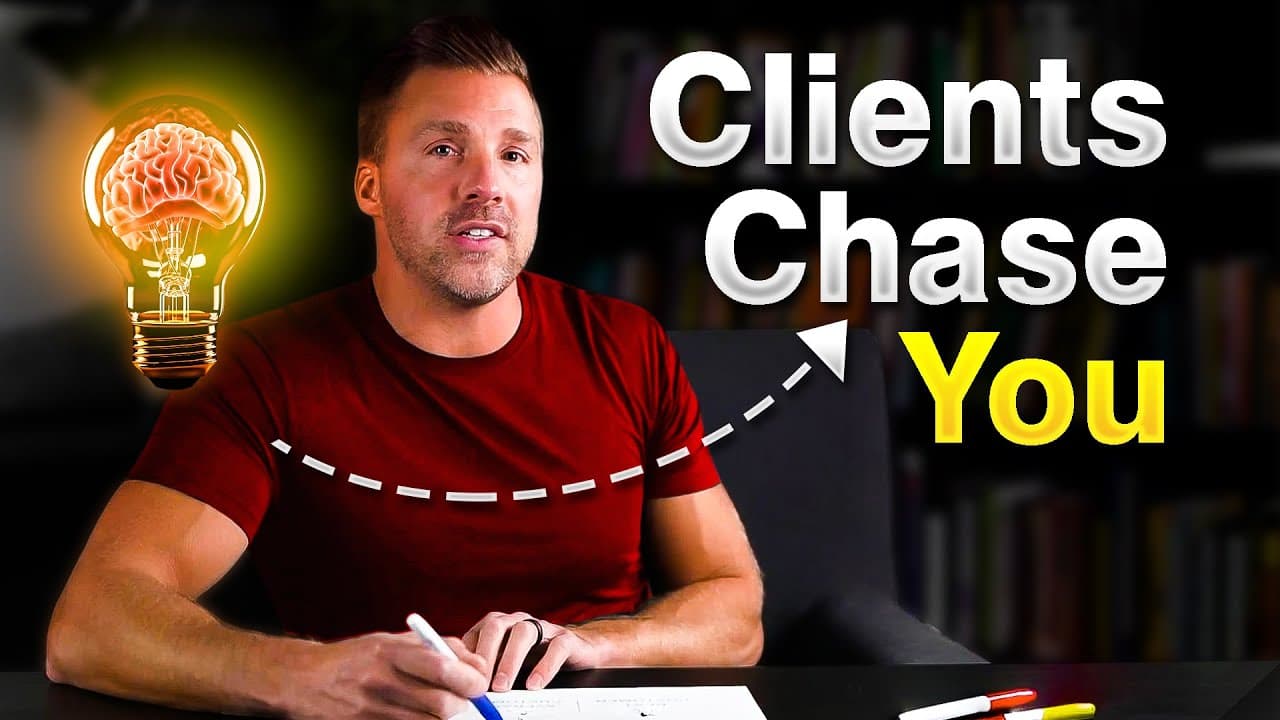
The key to making clients chase you is using psychological reactance, a principle where people desire what they perceive as limited or restricted. By making clients feel they need to qualify to work with you, you trigger their instinct to prove their worth. This approach shifts the power dynamic, leading to more committed clients without traditional selling pressure.
Transcript
Can I tell you a secret? There's one psychological trigger that completely flips the sales game. So, instead of chasing clients, they start chasing you. It works so well the first time I used it. I honestly felt like I was cheating. Now, you might have noticed I've got a big red button sitting here on my desk. I'll explain why in just a minute. But... Read More
Key Insights
- Psychological reactance is the desire to restore freedom when it feels threatened.
- Making clients qualify creates a sense of exclusivity and increases perceived value.
- Fake scarcity is ineffective; real selectivity based on criteria works better.
- The gatekeeper method involves four moves: open, criteria reveal, mirror close, and final filter.
- The mirror close shifts the decision from 'should I buy?' to 'am I a good fit?'
- Emphasizing client autonomy with 'but you are free' increases compliance.
- Selectivity must be genuine; fake selectivity can be detected easily.
- Confidence, not desperation, is essential for this method to succeed.
Install to Summarize YouTube Videos and Get Transcripts
Explore YouTube Video Summarizer or Get YouTube Transcript Extractor
Questions & Answers
Q: What is psychological reactance in sales?
Psychological reactance is a principle where individuals experience a strong motivation to regain their freedom when they perceive it as being threatened or limited. In sales, this can be leveraged by making clients feel they need to qualify to work with you, thus triggering their desire to prove their worth and increasing their commitment to the purchase.
Q: How does the gatekeeper method work?
The gatekeeper method involves creating a structured sales conversation where the seller positions themselves as the gatekeeper, making clients feel they need to qualify to work with them. By using specific language and criteria, the method shifts the power dynamic, making clients more eager to prove their fit and increasing their perceived value of the services offered.
Q: Why is fake scarcity ineffective in sales?
Fake scarcity is ineffective because clients can often detect when scarcity is not genuine, leading to distrust and reduced perceived value. Real selectivity, where clients must meet specific criteria to qualify for a service, creates a sense of exclusivity and triggers psychological reactance, making clients more eager to prove their worth and increasing their commitment.
Q: What is the mirror close in sales?
The mirror close is a technique used in the gatekeeper method where the seller acknowledges the client's qualifications and shifts the decision-making focus to the client by asking if they feel the service is the right fit for them. This approach removes pressure from the client, making them more likely to commit as it aligns with their self-image and desire for autonomy.
Q: How can emphasizing client autonomy increase sales compliance?
Emphasizing client autonomy, such as using phrases like 'but you are free,' reduces psychological pressure by acknowledging the client's freedom to choose. This approach makes clients feel respected and in control, which paradoxically increases their likelihood of saying yes, as they don't feel coerced and are more likely to commit to their decision.
Q: What are the key steps in the gatekeeper method?
The gatekeeper method consists of four key steps: the gatekeeper open, where the seller sets the qualification frame; the criteria reveal, where specific criteria are shared; the mirror close, where the seller confirms the client's fit and shifts the decision to them; and the final filter, where the seller reinforces action-taking and emphasizes the client's freedom to choose.
Q: Why is genuine selectivity important in sales?
Genuine selectivity is crucial because it creates real exclusivity and value perception. Clients can sense when selectivity is fake, which can undermine trust and reduce the effectiveness of the sales approach. By genuinely setting and adhering to criteria, the seller enhances their positioning and triggers psychological reactance, making clients more motivated to qualify and commit.
Q: How can confidence impact sales success?
Confidence in sales is essential because it underpins the effectiveness of techniques like the gatekeeper method. Sellers who are confident in their criteria and the value of their services are more likely to convey authenticity and authority, which clients respond to positively. Desperation, on the other hand, can be sensed by clients and may undermine the perceived value and effectiveness of the sales approach.
Summary & Key Takeaways
-
The gatekeeper method transforms sales by making clients qualify to work with you. This approach triggers psychological reactance, where clients subconsciously assign more value to your services as they perceive them as exclusive. By implementing a structured conversation framework, you shift the power dynamic, resulting in clients chasing you.
-
Real selectivity, not fake scarcity, is crucial in sales. When clients feel they might not qualify, they are more motivated to prove themselves. Implementing the gatekeeper method involves creating a qualification process that makes clients eager to demonstrate their fit, leading to more committed and valuable client relationships.
-
The psychological trigger of reactance is activated when clients feel their freedom to choose is limited. By using the gatekeeper method, you create a scenario where clients are eager to prove they belong. This method relies on genuine selectivity and confidence, avoiding desperation and ensuring clients value your services more.
Read in Other Languages (beta)
Share This Summary 📚
Summarize YouTube Videos and Get Video Transcripts with 1-Click
Try YouTube Summary with ChatGPT & Claude or YouTube Transcript Generator
Explore More Summaries from Adam Erhart 📚
Summarize YouTube Videos and Get Video Transcripts with 1-Click
Try YouTube Summary with ChatGPT & Claude or YouTube Transcript Generator