Home Video: Crash Course Film History #13
TL;DR
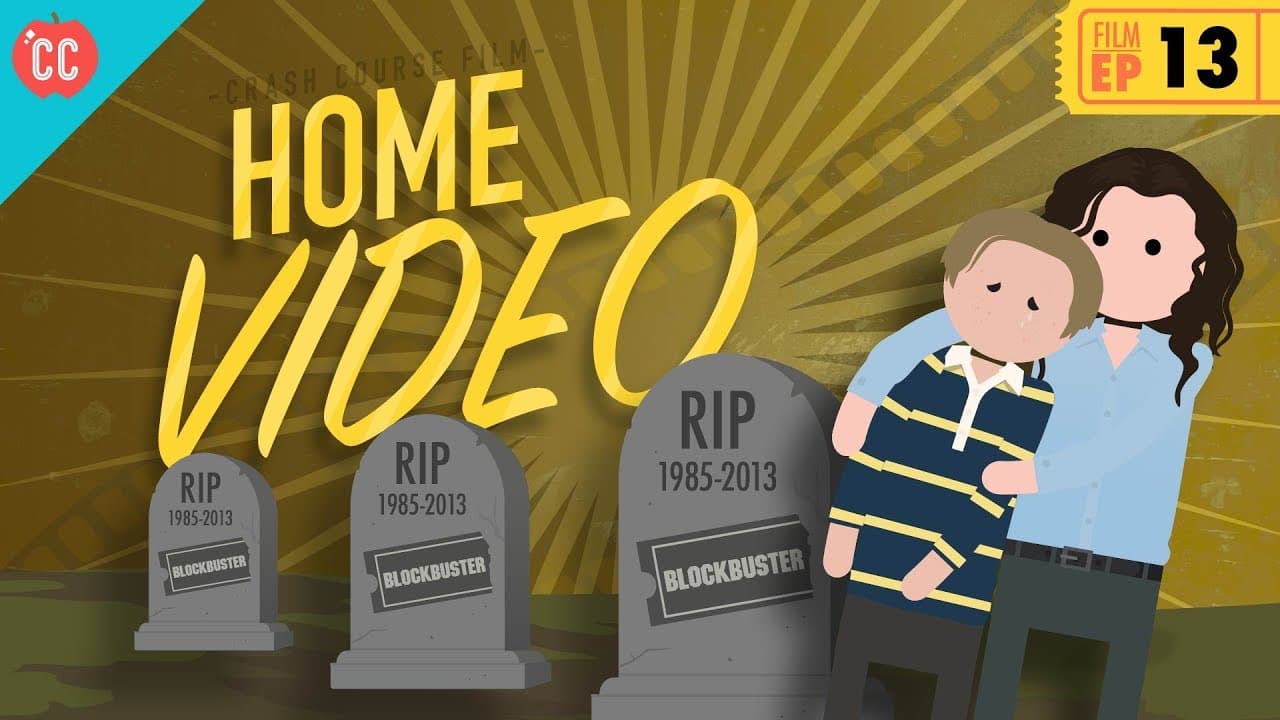
Home video transformed film consumption from Betamax to streaming.
Transcript
Hello, I'm Craig and this is Crash Course Film History. Gone are the days when the only way to experience film was buying a ticket at your local theater. Instead, you can watch almost anything you want, whenever you want, wherever you want. Film studios have made much of their back catalogs available to the public, with things like DVDs and Blu-ray... Read More
Key Insights
- Home video revolutionized film consumption, shifting from theater-exclusive experiences to accessible formats like DVDs, Blu-rays, and streaming services.
- 8mm film, introduced in the 1930s, marked the beginning of home movies, offering a portable and affordable alternative to 35mm film despite lower quality.
- The introduction of Betamax and VHS in the 1970s allowed consumers to record and watch films at home, with VHS eventually dominating due to cost-effectiveness.
- The 1980s and 1990s saw a boom in video rental stores, making Hollywood films accessible at home and creating a new revenue stream for studios.
- DVDs, emerging in the 1990s, offered durability and special features, surpassing VHS with digital technology that prevented degradation over time.
- Blu-ray discs, introduced in 2006, provided high-definition video, eventually winning over HD-DVDs due to strategic moves like integration with the Playstation 3.
- Streaming services like Netflix and Amazon have revolutionized film distribution, offering original content and wider access but requiring robust internet connections.
- The home video market continues to evolve, with 4K Ultra-HD discs and streaming platforms shaping the future of film consumption.
Install to Summarize YouTube Videos and Get Transcripts
Explore YouTube Video Summarizer or Get YouTube Transcript Extractor
Questions & Answers
Q: How did 8mm film contribute to the home video market?
8mm film, introduced in the 1930s, was pivotal in making home movies accessible. It was more portable and affordable than 35mm film, allowing families to record and watch personal events at home. Despite its lower quality compared to 35mm, it provided a practical solution for home viewing, laying the groundwork for future home video technologies.
Q: Why did VHS surpass Betamax in the home video market?
VHS surpassed Betamax primarily due to its cost-effectiveness and longer recording capacity. While both formats offered similar functionalities, VHS tapes were cheaper and could hold longer recordings, making them more attractive to consumers. This affordability and practicality led to VHS dominating 60% of the U.S. market by 1980, marking a significant shift in home video consumption.
Q: What impact did video rental stores have on home video consumption?
Video rental stores significantly impacted home video consumption by making Hollywood films accessible to the general public at an affordable cost. These stores allowed consumers to rent movies for a few dollars, circumventing the high purchase prices set by studios. This accessibility helped establish a new revenue stream for studios and popularized home viewing during the 1980s and 1990s.
Q: How did DVDs improve upon VHS technology?
DVDs improved upon VHS technology by offering digital storage, which prevented degradation over time. Unlike analog VHS tapes that wore down with repeated use, DVDs maintained consistent quality. Additionally, DVDs provided increased storage capacity, enabling the inclusion of special features like alternate cuts, commentary tracks, and closed captioning, enhancing the viewing experience.
Q: What advantages did Blu-ray discs offer over DVDs?
Blu-ray discs offered several advantages over DVDs, including the ability to store high-definition and ultra-high-definition video, providing a clearer and more detailed viewing experience. Blu-rays also had a larger storage capacity, allowing for more content and special features. These technological advancements made Blu-ray a superior format for home video, appealing to consumers seeking enhanced picture quality.
Q: How have streaming services changed film distribution?
Streaming services have revolutionized film distribution by eliminating the need for physical media and providing instant access to a vast library of films and TV shows. Platforms like Netflix and Amazon have also started producing original content, gaining critical acclaim and awards. However, streaming requires a stable internet connection, and content availability can vary, presenting challenges alongside its convenience.
Q: What challenges do streaming services face compared to physical media?
Streaming services face challenges such as the need for a reliable internet connection and fluctuating content availability. Unlike physical media, which provides a permanent copy, streaming relies on digital access, which can be disrupted by connectivity issues. Moreover, content licenses may expire, leading to the removal of titles, whereas physical media ensures perpetual ownership and accessibility.
Q: What is the future outlook for home video formats?
The future of home video formats is likely to continue evolving with technological advancements. While physical media like 4K Ultra-HD discs offer high-quality viewing, streaming services are becoming increasingly dominant due to their convenience and expanding content libraries. The ongoing development of internet infrastructure and digital technology will shape how audiences access and experience films in the coming years.
Summary & Key Takeaways
-
Home video changed how people consume films, evolving from 8mm film to streaming services. Betamax and VHS popularized home viewing in the 1970s, with VHS dominating due to cost and convenience. DVDs further revolutionized the market in the 1990s, offering durability and additional features.
-
The introduction of Blu-ray discs in 2006 brought high-definition viewing to homes, eventually surpassing HD-DVDs due to strategic moves by companies like Sony. Today, streaming services like Netflix and Amazon provide original content and wide access, though they require reliable internet.
-
Home video formats have continuously adapted to technological advancements, from physical media like VHS and DVDs to digital streaming. This evolution has significantly impacted how audiences access and enjoy films, providing more options and convenience than ever before.
Read in Other Languages (beta)
Share This Summary 📚
Summarize YouTube Videos and Get Video Transcripts with 1-Click
Try YouTube Summary with ChatGPT & Claude or YouTube Transcript Generator
Explore More Summaries from CrashCourse 📚






Summarize YouTube Videos and Get Video Transcripts with 1-Click
Try YouTube Summary with ChatGPT & Claude or YouTube Transcript Generator