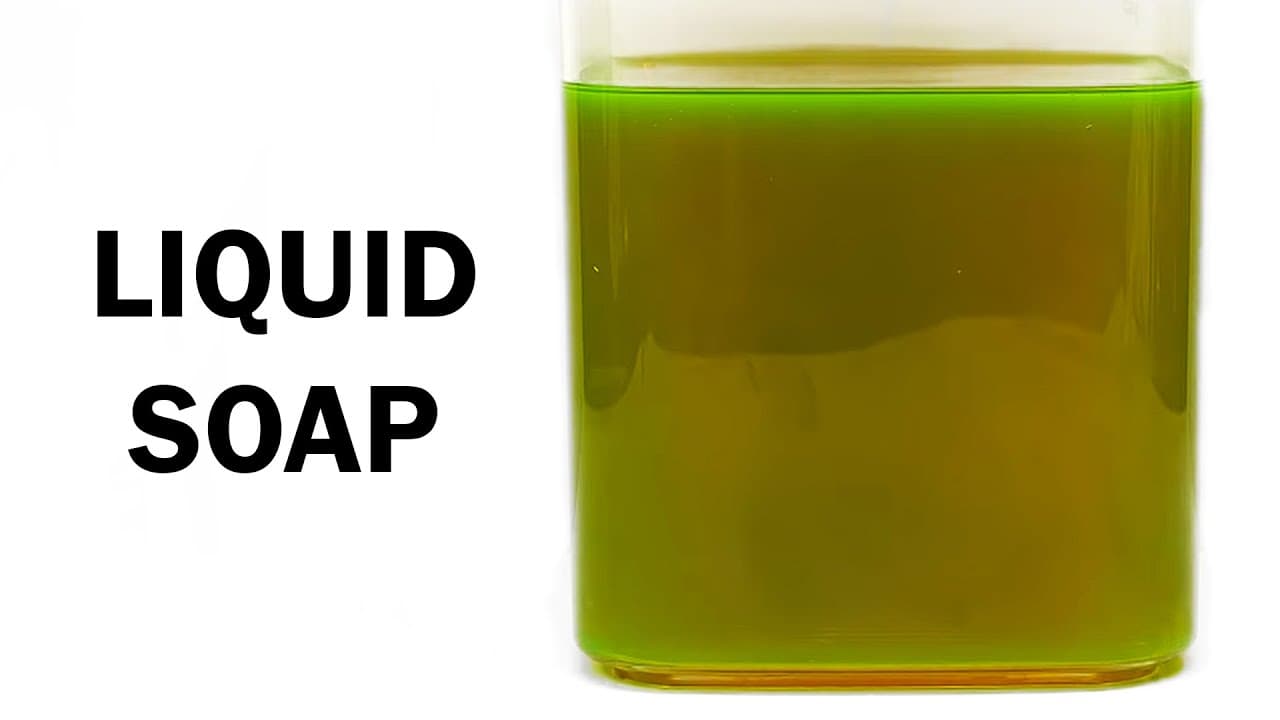
How to Make Liquid Soap Using the Hot Process
TL;DR
To make liquid soap using the hot process, start by combining oils and potassium hydroxide in a slow cooker, heating until a thick trace forms. After several hours, dilute the soap in boiling water, then neutralize any excess base with borax, and add desired additives for enhanced properties. This method is faster than the cold process and results in a softer, more water-soluble soap.
Transcript
Okay, so we're back for part two of my soap-making adventure. In the first part, I made solid soap by the cold process, and if you haven't seen this, you can either click the link on screen or in the description. If you haven't seen it, It's not absolutely necessary but I suggest that you do check it out before this one because I refer back to it q... Read More
Key Insights
- 😅 The hot process of making liquid soap is faster compared to the cold process, taking only a few hours instead of two weeks.
- 😅 Potassium hydroxide is used as the base in the hot process, resulting in softer and more water-soluble potassium fatty acid salts.
- 💁 Using more coconut oil in the recipe can improve lather formation in liquid soap.
- 🎁 Excess base may be present in the soap, which can be neutralized to prevent skin irritation.
- 😒 The soap can be diluted to different concentrations depending on the desired use.
- 😥 Borax can be added to lower the pH and act as a thickening agent in liquid soap.
- 🧼 Additives can be incorporated into the soap to enhance fragrance, color, or other properties.
Install to Summarize YouTube Videos and Get Transcripts
Explore YouTube Video Summarizer or Get YouTube Transcript Extractor
Questions & Answers
Q: What is the major difference between making solid soap using the cold process and liquid soap using the hot process?
The major difference is the base used - sodium hydroxide for solid soap and potassium hydroxide for liquid soap. This results in the formation of sodium fatty acid salts for solid soap and potassium fatty acid salts for liquid soap, which affect their properties.
Q: Why is it important to keep the soap mixture heated during the hot process?
Heating the soap mixture speeds up the reaction, allowing it to reach completion within a few hours instead of two weeks like the cold process. It also prevents the soap from thickening too quickly once cooled.
Q: What is the purpose of using an excess of base in the hot process?
Using an excess of base ensures that the reaction goes to completion and all the oils are fully saponified. However, this may result in some excess base remaining, which can cause skin irritation if not neutralized.
Q: Can additives be added to the liquid soap?
Yes, additives can be added to the liquid soap. Fragrances, colorants, and other ingredients can be incorporated based on personal preference. However, it's important to consider the purpose of the soap and the potential effects of the additives.
Summary & Key Takeaways
-
The creator starts by using the same oils as in the previous video but adds potassium hydroxide instead of sodium hydroxide for the base solution.
-
The reaction between the oils and base solution is much faster in the hot process, requiring the soap to be heated and mixed until it reaches a thick trace.
-
After several hours, the soap is transferred to a container, dissolved in boiling water, and then neutralized with borax before additives are added.
Read in Other Languages (beta)
Share This Summary 📚
Summarize YouTube Videos and Get Video Transcripts with 1-Click
Try YouTube Summary with ChatGPT & Claude or YouTube Transcript Generator
Explore More Summaries from NileRed 📚

Summarize YouTube Videos and Get Video Transcripts with 1-Click
Try YouTube Summary with ChatGPT & Claude or YouTube Transcript Generator