Why Do Orthodox Christians Call the Protestant Filioque Doctrine Heresy?
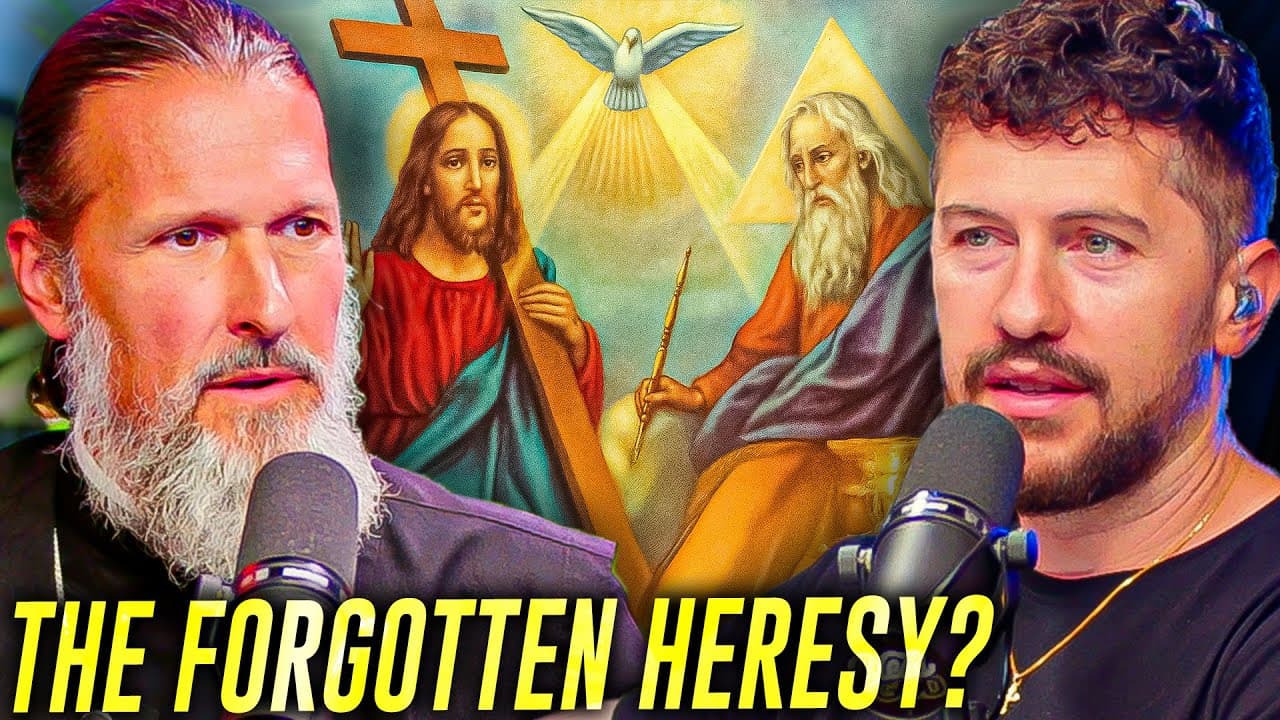
TL;DR
Filioquay is rejected by Orthodox Christians because it makes both the Father and Son the Holy Spirit’s eternal origin, while they hold that the Spirit proceeds from the Father alone. They distinguish this eternal procession from Jesus sending the Spirit and also object to adding the Filioque to the Nicene Creed without an ecumenical council. Read on for the theological and ecclesiastical reasons behind the dispute.
Transcript
So uh this is an interesting question. This is from Bian Buran. He says, "I've been reading a lot about the filioke and for the life of me I cannot understand why this is such a divisive issue. Can you please explain why the filioquay was is considered of such importance to divide the church?" So filioquay is the view that uh Jesus and the father s... Read More
Key Insights
- The Filioque is described as the doctrine that the Holy Spirit proceeds from both the Father and the Son, while the Orthodox position holds that the Spirit proceeds eternally from the Father and is sent through the Son.
- The Holy Trinity is presented as revealed reality rather than an abstract theory, because Christians encountered Christ, witnessed his works, and experienced the Holy Spirit’s indwelling, inspiration, and guidance within the life of the Church.
- The Father is identified as the single origin, or monarch, within the Trinity. His unique personal characteristic is fatherhood and origination, while the Son is uniquely begotten and the Holy Spirit uniquely proceeds from the Father.
- The Son’s being begotten is explicitly distinguished from being created. The speaker describes Jesus as the Father’s co-eternal and only begotten Son, fully sharing the divine nature while possessing a personal identity distinct from the Father and Spirit.
- The patristic principle presented says that qualities belonging to the divine nature are shared by all three persons, while a quality not shared by all must uniquely identify one person rather than being shared by only two.
- The central Orthodox objection is that the Filioque makes the Father and Son co-origins of the Spirit. According to the speaker, this assigns two persons a nonessential property that the third does not possess, violating traditional Trinitarian theology.
- The biblical language about Jesus sending the Holy Spirit is interpreted economically, meaning that the Son participates in the Spirit’s mission without becoming the Spirit’s eternal origin. This distinguishes historical sending through the Son from eternal procession from the Father.
- The creed’s alteration is presented as a separate ecclesiastical problem because the speaker says such a change required an ecumenical council rather than unilateral papal action. He states that earlier proposed changes were resisted before the insertion occurred in 1009.
Install to Summarize YouTube Videos and Get Transcripts
Explore YouTube Video Summarizer or Get YouTube Transcript Extractor
Questions & Answers
Q: Why is filioquay rejected by Orthodox Christians?
Orthodox Christians reject filioquay because it presents the Father and Son as co-origins of the Holy Spirit. The position explained here holds that the Spirit proceeds eternally from the Father alone, although the Son participates in sending the Spirit.
Q: What does the Filioque doctrine teach?
The Filioque is described as the teaching that the Holy Spirit proceeds from both the Father and the Son. The Orthodox position instead identifies the Father alone as the Spirit’s eternal origin.
Q: Why does the speaker call the Filioque a heresy?
The speaker says the doctrine assigns the Father and Son a property that the Holy Spirit does not share. Under the patristic principle presented, a property not shared by all three divine persons must uniquely identify one person rather than belong to two.
Q: How can Jesus send the Holy Spirit if the Spirit proceeds only from the Father?
The explanation distinguishes the Spirit’s historical sending from his eternal procession. Jesus sends the Holy Spirit within God’s work in the world, but the Father remains the Spirit’s sole eternal origin.
Q: What qualities distinguish the Father, Son, and Holy Spirit?
The Father is identified by fatherhood and as the origin of the other two persons. The Son is the Father’s only begotten, co-eternal Son, while the Holy Spirit is identified by procession from the Father.
Q: Does being begotten mean that Jesus was created?
No. The speaker explicitly distinguishes being begotten from being created and describes Jesus as the Father’s co-eternal and only begotten Son. Jesus fully shares the divine nature while remaining personally distinct from the Father and Holy Spirit.
Q: Why was adding the Filioque to the Nicene Creed considered improper?
The speaker argues that changing the creed required an ecumenical council. He says the Filioque was inserted without such a council, creating an ecclesiastical problem in addition to the theological dispute.
Q: What patristic principle supports the Orthodox objection to the Filioque?
Qualities of the divine nature, such as eternity, omniscience, and omnipotence, belong equally to the Father, Son, and Holy Spirit. A characteristic not shared by all three is personal and unique, so the speaker argues that it cannot properly belong to two persons while excluding the third.
Summary & Key Takeaways
-
The discussion defines the Filioque as the belief that the Holy Spirit proceeds from both the Father and the Son. The Orthodox position presented distinguishes the Spirit’s eternal origin from his historical sending: the Father alone is the origin, while the Spirit comes through the Son within God’s work in the world.
-
The Orthodox argument relies on a patristic principle concerning divine nature and personal characteristics. Eternity, omniscience, and omnipotence belong equally to all three divine persons. By contrast, fatherhood, being begotten, and procession identify the Father, Son, and Holy Spirit respectively, so one personal property cannot properly belong to two persons alone.
-
The speaker also objects to inserting the Filioque into the Nicene Creed without an ecumenical council. He connects the doctrine with what he considers a reduced understanding of the Holy Spirit and an excessive Western authority structure centered on Rome, although these broader institutional consequences are presented as Orthodox theological judgments.
Read in Other Languages (beta)
Share This Summary 📚
Summarize YouTube Videos and Get Video Transcripts with 1-Click
Try YouTube Summary with ChatGPT & Claude or YouTube Transcript Generator
Explore More Summaries from Bless God Studios 📚





Summarize YouTube Videos and Get Video Transcripts with 1-Click
Try YouTube Summary with ChatGPT & Claude or YouTube Transcript Generator