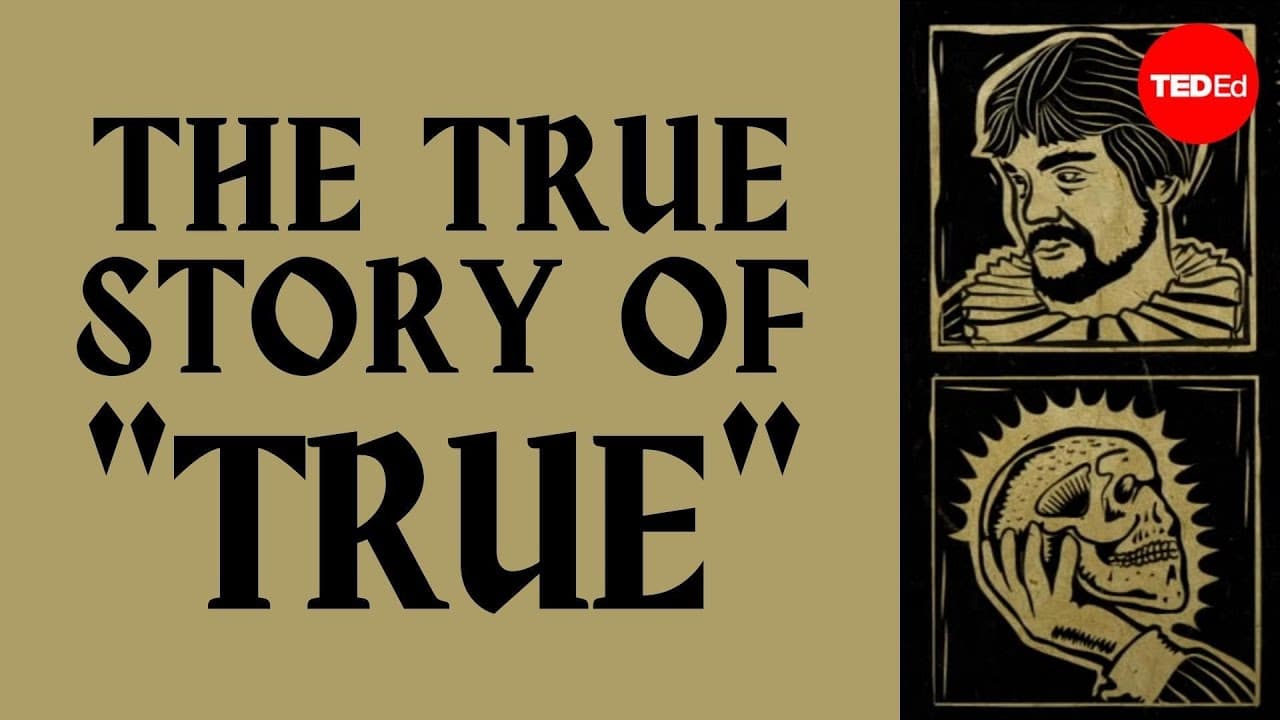
The true story of 'true' - Gina Cooke
TL;DR
Words carry histories, like trees counting years. English words like "true" reveal ancient concepts of trust and faith.
Transcript
Everyone knows that stories are made up of words, from short poems to epic novels. But did you know that a single word itself can tell an entire story? You see, just as we can look at a story's plot, setting, and characters, we can also study the history of an individual word, where it developed, and the cultures and people who helped shape it. Loo... Read More
Key Insights
- 🔑 Words carry histories and cultural influences, reflecting human experiences.
- 🫚 The word "true" has deep roots in Old English, illustrating concepts of trust and faithfulness.
- 🤬 Trees were symbols of truth and faithfulness, influencing the development of the word "true."
- 🌲 Ancient cultures believed in the sacredness of trees, associating them with deities.
- 🌱 Planting a tree symbolizes commitment and faithfulness across many cultures.
- 🌲 The longevity and reliability of trees mirror the steadfastness of the word "true."
- 🌲 Philosophers and poets often seek truth in nature, including trees.
Install to Summarize YouTube Videos and Get Transcripts
Explore YouTube Video Summarizer or Get YouTube Transcript Extractor
Questions & Answers
Q: How does the word "true" reflect concepts of trust and faith?
The word "true" originated from Old English with meanings of faithfulness, making promises, and trust. This reflects the ancient association of the concept of truth with the steadfastness and reliability of trees.
Q: What role do trees play in the origin of the word "true"?
Trees, symbols of faith and longevity, are associated with the concept of truth in the word "true." The idea of truth being tied to the uprightness, steadfastness, and reliability of trees dates back to ancient times.
Q: Why are older words like "true" significant in understanding human history?
Older words like "true" hold deep meanings and connections to ancient concepts, providing insights into human history, culture, and beliefs. These words carry stories of trust, faith, and fidelity passed down through generations.
Q: How has the meaning of the word "true" evolved over time?
The word "true" has evolved from Old English meanings of trust and faithfulness to its modern definition of factual correctness. Throughout history, it has maintained its core association with concepts of trust and the steadfastness of trees.
Summary & Key Takeaways
-
A single word can tell a story just as a full story can. The history of a word reveals its development and cultural influences.
-
Older words have longer stories, reflecting the complexity of human history through language.
-
The word "true" stems from Old English, reflecting concepts of trust and faith, with roots in ancient concepts associated with trees.
Read in Other Languages (beta)
Share This Summary 📚
Summarize YouTube Videos and Get Video Transcripts with 1-Click
Try YouTube Summary with ChatGPT & Claude or YouTube Transcript Generator
Explore More Summaries from TED-Ed 📚


Summarize YouTube Videos and Get Video Transcripts with 1-Click
Try YouTube Summary with ChatGPT & Claude or YouTube Transcript Generator