Sony WH-1000XM6 Review: Best All-Around Choice
TL;DR
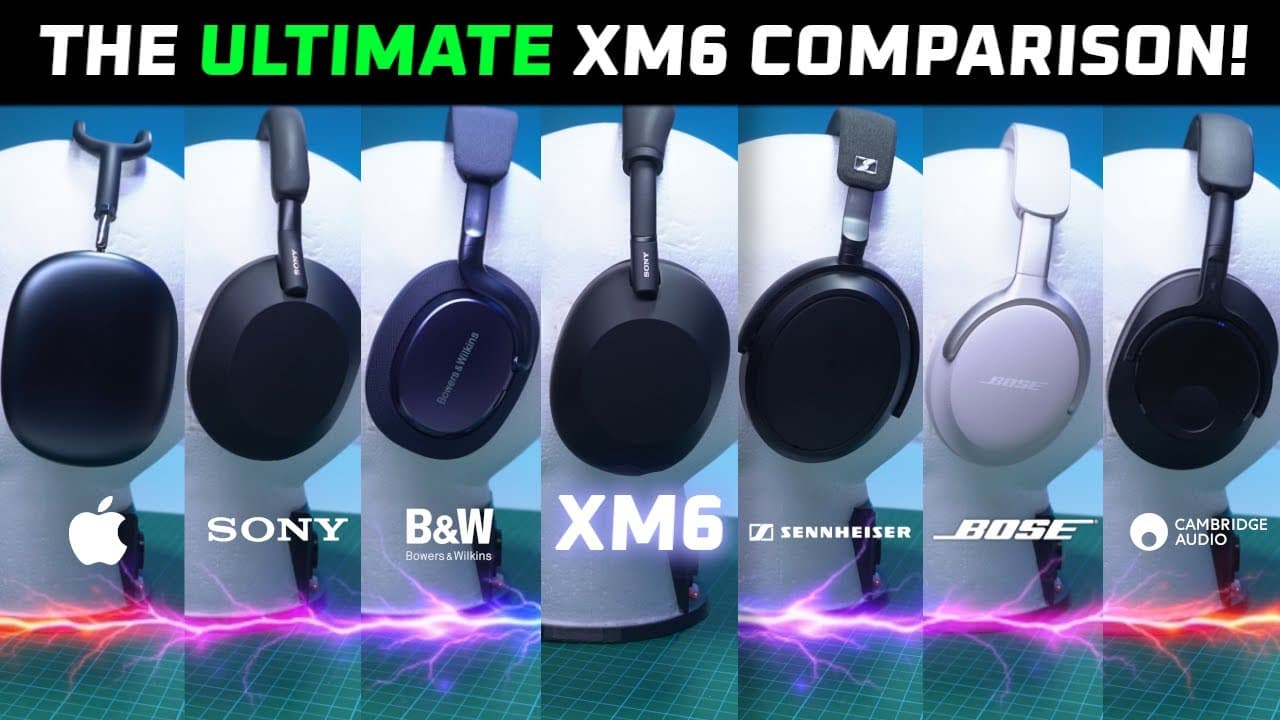
The Sony WH-1000XM6 is the strongest all-around choice in this comparison, combining the group’s best active noise cancellation with excellent microphone pickup, improved transparency, extensive sound controls, and a foldable design. Its default sound can seem dark and bloated, but the Hard EQ preset adds vibrance, reduces upper-bass bloat, and boosts treble.
Transcript
Today, we're gonna compare the performance of the Sony WH-1000XM6 to the top wireless headphones from Apple, Bose, Sennheiser, B&W, Cambridge Audio, and also Sony's previous flagship, the WH-1000XM5. Stay tuned because at the end of this video, I'm gonna tell you which one you should buy, the XM6 or any of these competitors. So buckle up, links in ... Read More
Key Insights
- The WH-1000XM6 is a substantial feature and design update over the XM5, adding a QN3 processor, 12 microphones, background music and cinema modes, voice control, auto-transparency, call muting, new EQ presets, and a 10-band graphic equalizer with four bass-focused bands.
- The redesigned folding system is intended to improve portability and hinge tolerance, using a metal component in the hinge and a spring-loaded earcup joint. The joint tightens the seal around the ears, while the wider headband and plush cushions distribute weight and keep the firmer fit comfortable.
- The WH-1000XM6 has the best active noise cancellation in the tested group, according to the reviewer’s measurements. It reduces more upper-bass and midrange noise than the XM5 and attenuates treble more effectively, while its tighter seal may provide additional passive blocking of high-frequency sounds.
- The XM6 microphone pickup is slightly better than the XM5 in noisy conditions, eliminating the remaining hint of background noise and reproducing the reviewer’s voice with greater fullness and volume. Noise gating can still cut too deeply into the voice, despite the otherwise strong isolation.
- The transparency mode is more useful than the XM5 for brief conversations and environmental awareness because its ambient pass-through closely follows bass noise up to the 2.5 kHz mark. Auto ambient mode can also transition from apparent noise cancellation into full transparency after detecting surrounding sounds.
- The default XM6 sound is bass-heavy, spacious, forward, and detailed, but it retains the XM5’s lower-midrange bloat and dark treble. Listeners accustomed to crisper, more vibrant headphones such as the AirPods Max, Px7 S3, or Bose QC Ultra may initially find it dull.
- The Hard EQ preset is the reviewer’s easiest recommended adjustment for a more vibrant XM6 sound. It increases lower bass, reduces upper bass to control bloat, and boosts treble, providing a straightforward alternative to manually refining Sony’s Find My Equalizer results.
- The XM6 is the reviewer’s stronger all-around choice over the XM5, Bose QC Ultra, and Momentum 4. The alternatives retain specific advantages, including Bose head tracking, the Momentum 4’s cleaner bass and open staging, and discounted pricing for the older Sennheiser model.
Install to Summarize YouTube Videos and Get Transcripts
Explore YouTube Video Summarizer or Get YouTube Transcript Extractor
Questions & Answers
Q: How is the Sony WH-1000XM6 different from the XM5?
The WH-1000XM6 adds Sony’s QN3 noise-cancelling processor, 12 microphones, new spatial-audio modes, auto-transparency, voice commands, call muting, expanded EQ controls, and additional presets. It also restores a foldable design, introduces a metal hinge component and spring-loaded earcup joint, uses a wider headband, and includes a smaller case with a magnetic clasp. Noise cancellation and microphone pickup also improve.
Q: Which headphones have the best noise cancellation in this comparison?
The Sony WH-1000XM6 provides the best active noise cancellation among the tested headphones, according to the reviewer’s measurements and listening samples. It reduces more noise than the XM5 through the upper-bass and midrange regions and is more effective against treble and sudden high-pitched sounds. The Bose QC Ultra and AirPods Max can adapt to approach its performance, but attenuate high frequencies less effectively.
Q: Is the Sony WH-1000XM6 microphone good for noisy calls?
The WH-1000XM6 has one of the strongest microphones in the comparison and slightly improves upon the XM5. During tests with loud cafe and wind noise, it removed even the faint background noise that remained with the XM5. The reviewer’s voice also sounded fuller and louder, although aggressive noise gating could still cut too deeply into parts of the voice.
Q: What does the Sony WH-1000XM6 sound like without EQ?
On its default settings, the WH-1000XM6 sounds bass-heavy, spacious, forward, and detailed. Its tuning resembles the XM5, including some bloat in the lower midrange and darkness in the treble. As a result, listeners accustomed to the crisper and more vibrant presentation of the AirPods Max, Px7 S3, or Bose QC Ultra may find the XM6 slightly dull before adjustment.
Q: What is the best easy EQ setting for the Sony WH-1000XM6?
The reviewer recommends Sony’s Hard preset as the easiest way to make the WH-1000XM6 sound more vibrant and exciting. This preset enhances the lower bass, reduces the upper bass to lessen bloat, and adds some treble energy. It offers a simple alternative to manually adjusting the 10-band equalizer or further refining results produced by the Find My Equalizer feature.
Q: Should I buy the Sony WH-1000XM6 or XM5?
The reviewer recommends buying the WH-1000XM6 even if the XM5 is discounted. Their overall tuning is similar, but the XM6 has slightly heavier bass, more focused and present mids, and stronger upper mids. It also offers improved noise cancellation and microphone pickup, more features, greater sound control, a foldable design, a smaller case, and a redesigned hinge intended to improve tolerance.
Q: Should I buy the Sony WH-1000XM6 or Bose QC Ultra?
The WH-1000XM6 is the reviewer’s preferred overall choice because it offers more sound customization, slightly better noise cancellation, better noisy-environment microphone pickup, switchable noise cancellation, and LDAC support. The Bose QC Ultra counters with tighter bass, a crisper and airier presentation, and head tracking that works with any device and content. Both have comparable clamping force and long-flight comfort.
Q: Should I buy the Sony WH-1000XM6 or Sennheiser Momentum 4?
Choose the WH-1000XM6 for stronger noise cancellation, transparency, microphone pickup, features, and overall all-around performance. Choose the Momentum 4 if you prefer a more open soundstage, cleaner and more precise bass, easy sound tuning, or better promotional value from an older model. The Momentum 4 also supports 16-bit/48 kHz audio through USB Type-C, while its vocals sound more laid-back and thin.
Summary & Key Takeaways
-
The WH-1000XM6 upgrades the XM5 with Sony’s QN3 noise-cancelling processor, 12 microphones, new spatial-audio modes, expanded equalization, voice commands, auto-transparency, and call muting. Its redesigned folding hinge, spring-loaded earcup joint, wider headband, plush cushions, and smaller magnetically clasped case improve portability, fit, weight distribution, and potential long-term durability.
-
Testing found that the XM6 delivers the strongest active noise cancellation in the comparison, especially across upper-bass, midrange, treble, and sudden high-pitched sounds. Its microphone pickup slightly improves upon the already capable XM5, while transparency more closely follows surrounding sound and automatically activates in response to environmental noise when auto ambient mode is enabled.
-
The XM6 has a heavy, spacious, forward, and detailed presentation, but its default tuning retains lower-midrange bloat and dark treble. The Hard preset improves excitement by raising lower bass, reducing upper bass, and boosting treble. Overall, the reviewer prefers it to the XM5, Bose QC Ultra, and Momentum 4 for all-around performance.
Read in Other Languages (beta)
Share This Summary 📚
Summarize YouTube Videos and Get Video Transcripts with 1-Click
Try YouTube Summary with ChatGPT & Claude or YouTube Transcript Generator
Explore More Summaries from Aaron X Loud and Wireless 📚




Summarize YouTube Videos and Get Video Transcripts with 1-Click
Try YouTube Summary with ChatGPT & Claude or YouTube Transcript Generator