What Was the New Deal and How Did It Impact America?
TL;DR
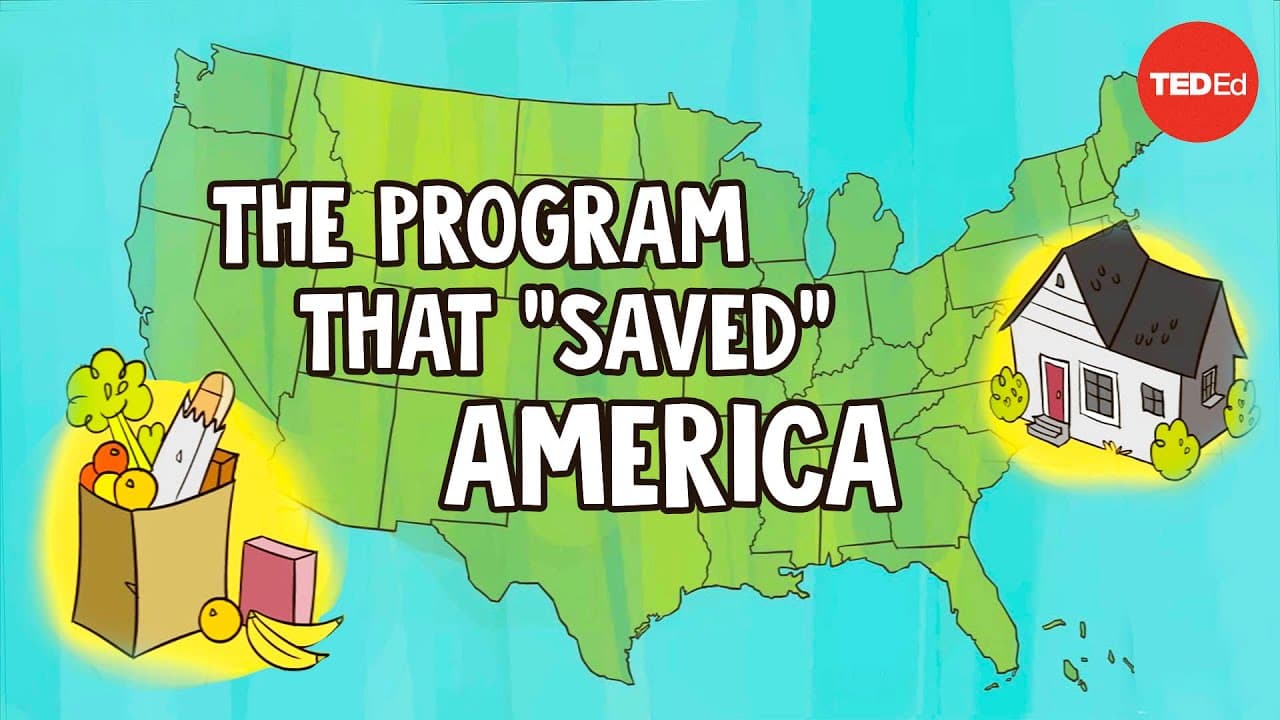
The New Deal was Franklin D. Roosevelt's ambitious program to provide relief and recovery during the Great Depression, implementing various initiatives like the Civilian Conservation Corps and Social Security Act that aimed to reduce unemployment and support struggling Americans. However, systemic inequalities persisted, particularly for Black Americans, as many benefits were inadequately distributed, leaving significant disparities in economic recovery.
Transcript
In 1932, the Great Depression entered its third winter. One in four Americans was unemployed, marking the highest unemployment rate in the country’s history. Tens of thousands had lost their homes and life savings, and there was very little confidence that Republican President Herbert Hoover could turn things around. So when the election came, vot... Read More
Key Insights
- 🛄 Franklin D. Roosevelt's New Deal aimed to combat the Great Depression through comprehensive legislation and government intervention.
- 🇳🇨 The New Deal programs, like the CCC and WPA, provided employment opportunities and relief to millions of Americans.
- 🖤 Despite its positive impacts, the New Deal fell short in addressing systemic inequalities, particularly affecting Black communities.
- 💋 The New Deal era marked a pivotal moment in American history, shaping the future of economic policy and social justice movements.
- 🇳🇨 The New Deal's legacy highlights the complexities of government intervention and the importance of equitable policies in addressing economic crises.
- 😫 Franklin D. Roosevelt's bold response to the Great Depression set the stage for future social welfare programs and government involvement in economic recovery.
- 💋 The New Deal era was marked by significant progress in labor rights, social security, and public works projects.
Install to Summarize YouTube Videos and Get Transcripts
Explore YouTube Video Summarizer or Get YouTube Transcript Extractor
Questions & Answers
Q: What was Franklin D. Roosevelt's motivation behind implementing the New Deal?
Franklin D. Roosevelt introduced the New Deal in response to the Great Depression's dire economic conditions, aiming to provide relief to struggling Americans and stimulate the economy through government intervention.
Q: How did the New Deal impact unemployment in the United States?
The New Deal, through programs like the Civilian Conservation Corps and Works Progress Administration, significantly reduced unemployment rates by employing millions of Americans in various infrastructure and relief projects.
Q: What were some criticisms of the New Deal's effectiveness?
Critics argue that the New Deal disproportionately benefitted white Americans over minorities, especially Black communities, and failed to fully address systemic inequalities in housing, employment, and financial stability.
Q: How did the New Deal contribute to the reshaping of the Democratic Party?
The New Deal era laid the groundwork for an emerging civil rights coalition by empowering unions and galvanizing working minorities to challenge the Democratic Party's racist leadership and push for more inclusive policies.
Summary & Key Takeaways
-
In the midst of the Great Depression, Franklin D. Roosevelt introduced the New Deal to combat widespread unemployment and economic instability.
-
The New Deal included a range of programs like the Civilian Conservation Corps, Social Security Act, and Works Progress Administration to provide relief to Americans.
-
While the New Deal had significant impacts on reducing unemployment and empowering unions, it fell short in addressing systemic inequalities, particularly affecting Black Americans.
Read in Other Languages (beta)
Share This Summary 📚
Summarize YouTube Videos and Get Video Transcripts with 1-Click
Try YouTube Summary with ChatGPT & Claude or YouTube Transcript Generator
Explore More Summaries from TED-Ed 📚
Summarize YouTube Videos and Get Video Transcripts with 1-Click
Try YouTube Summary with ChatGPT & Claude or YouTube Transcript Generator