Why Propose a 50% Tax on OnlyFans in Florida?
TL;DR
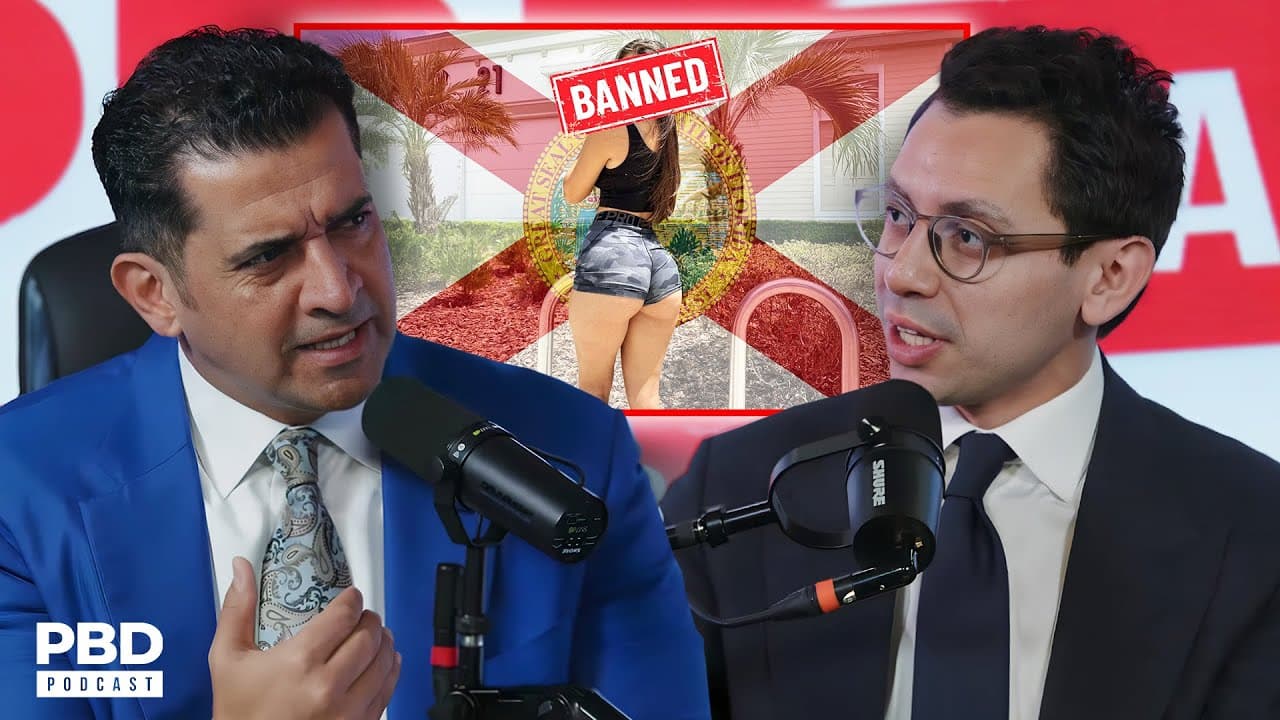
A proposed 50% tax on OnlyFans income in Florida aims to deter 'moral degeneracy' and redirect funds to increase teacher salaries. Critics argue it unfairly targets creators while ignoring larger corporations. Supporters believe it will encourage more traditional career paths and reduce adult content creation.
Transcript
We had a couple guys yesterday that were here were not happy about one of your ideas and it was I got pretty heated. I told him, "Listen guys, at least let him give his ideas here. Don't get too upset about it." The moment you came up with this idea that folks in Only Fence in the state of Florida have to pay 50% taxes. A lot of Adam's friends were... Read More
Key Insights
- A 50% tax on OnlyFans income is proposed to deter adult content creation.
- The tax aims to redirect funds to increase Florida teacher salaries.
- Critics argue the tax unfairly targets individual creators over corporations.
- Supporters believe the tax will encourage traditional career paths.
- The proposal is compared to New York's tax on cigarettes as a deterrent.
- The tax is intended to decrease demand for adult content creation.
- Critics highlight economic struggles as a reason for OnlyFans participation.
- The proposal is part of a broader political campaign for Florida governor.
Install to Summarize YouTube Videos and Get Transcripts
Explore YouTube Video Summarizer or Get YouTube Transcript Extractor
Questions & Answers
Q: What is the purpose of the proposed 50% tax on OnlyFans in Florida?
The proposed 50% tax on OnlyFans income in Florida is intended to deter adult content creation, which the proposer labels as 'moral degeneracy.' The revenue generated from this tax would be redirected to increase salaries for public school teachers in the state, addressing Florida's low teacher pay.
Q: How do critics view the proposed OnlyFans tax?
Critics of the proposed OnlyFans tax argue that it unfairly targets individual content creators while ignoring larger corporations that may also contribute to societal issues. They believe the tax could disproportionately affect those who use the platform due to economic necessity, rather than addressing broader systemic issues.
Q: What comparisons are made to justify the OnlyFans tax proposal?
The OnlyFans tax proposal is compared to New York's tax on cigarettes, which is designed to deter smoking by making it more expensive. Proponents argue that similar to sin taxes on tobacco, the OnlyFans tax would decrease demand for adult content creation by increasing its cost, thus promoting more traditional career paths.
Q: What are the intended benefits of the OnlyFans tax according to supporters?
Supporters of the OnlyFans tax believe it will reduce the prevalence of adult content creation by discouraging participation through higher taxes. They argue that this will encourage individuals, particularly young women, to pursue more traditional and socially accepted career paths, while also providing additional funding to improve teacher salaries in Florida.
Q: What role does the OnlyFans tax play in the political campaign for Florida governor?
The OnlyFans tax proposal is a key component of a political campaign for Florida governor, with the candidate advocating for smart government intervention in moral issues. The proposal is positioned as part of a broader strategy to promote traditional values and improve public sector wages, particularly for teachers.
Q: How do economic conditions relate to OnlyFans participation?
Economic conditions are cited as a significant factor driving individuals to participate in platforms like OnlyFans. Critics of the tax proposal argue that many creators turn to such platforms out of economic necessity, suggesting that addressing broader economic issues might be a more effective solution than imposing a high tax on content creators.
Q: What is the proposed use of revenue from the OnlyFans tax?
Revenue from the proposed OnlyFans tax would be used to increase salaries for public school teachers in Florida. The state currently ranks low in teacher pay, and the additional funds are intended to address this issue, thereby improving the quality of education and supporting educators financially.
Q: What are the arguments against government intervention in OnlyFans content?
Arguments against government intervention in OnlyFans content include concerns about personal freedom and economic necessity. Critics argue that individuals should have the right to choose their means of income, especially when driven by financial hardship, and that government should not impose moral judgments through punitive taxes.
Summary & Key Takeaways
-
The proposal for a 50% tax on OnlyFans income in Florida aims to deter adult content creation by labeling it as 'moral degeneracy' and using the revenue to increase teacher salaries. Critics argue it targets individual creators unfairly while ignoring larger corporations.
-
Supporters of the tax believe it will encourage more traditional career paths and reduce the prevalence of adult content creation. The proposal is compared to existing sin taxes, such as New York's tax on cigarettes, which aim to decrease demand for undesirable products.
-
The tax proposal is part of a political campaign for Florida governor, with the candidate arguing for smart government intervention in moral issues. Critics point out that economic struggles often drive individuals to platforms like OnlyFans, questioning the fairness of the tax.
Read in Other Languages (beta)
Share This Summary 📚
Summarize YouTube Videos and Get Video Transcripts with 1-Click
Try YouTube Summary with ChatGPT & Claude or YouTube Transcript Generator
Explore More Summaries from Valuetainment 📚





Summarize YouTube Videos and Get Video Transcripts with 1-Click
Try YouTube Summary with ChatGPT & Claude or YouTube Transcript Generator