How Microfactories Could Be the Manufacturing Strategy of the Future | WSJ
TL;DR
Microfactories in Singapore are changing the car manufacturing game with autonomous robot dogs, robotic arms, and AI, leading to a more flexible and automated production model.
Transcript
(upbeat music) - [Narrator] This may look like just another car factory, but it's actually a new microfactory, manned by autonomous robot dogs and robotic arms monitored by AI. It's designed to change the way cars are produced, and it's been built in the heart of one of the smallest and most expensive countries in the world, Singapore. Typically, c... Read More
Key Insights
- 😨 Microfactories in Singapore are revolutionizing car manufacturing by automating the process and adopting a cell-based model for production.
- 🧑🏭 Hyundai's microfactory in Singapore is the country's first auto factory in over 40 years and pioneers the idea of smaller factories producing various mobility devices.
- 🧑🏭 Automation in microfactories allows for higher productivity, with each worker producing two to three times more cars compared to traditional factories.
- 🚗 Microfactories are still relatively untested in the auto industry, but companies like Arrival are also exploring their potential for EV production.
Install to Summarize YouTube Videos and Get Transcripts
Explore YouTube Video Summarizer or Get YouTube Transcript Extractor
Questions & Answers
Q: How are microfactories different from traditional car factories?
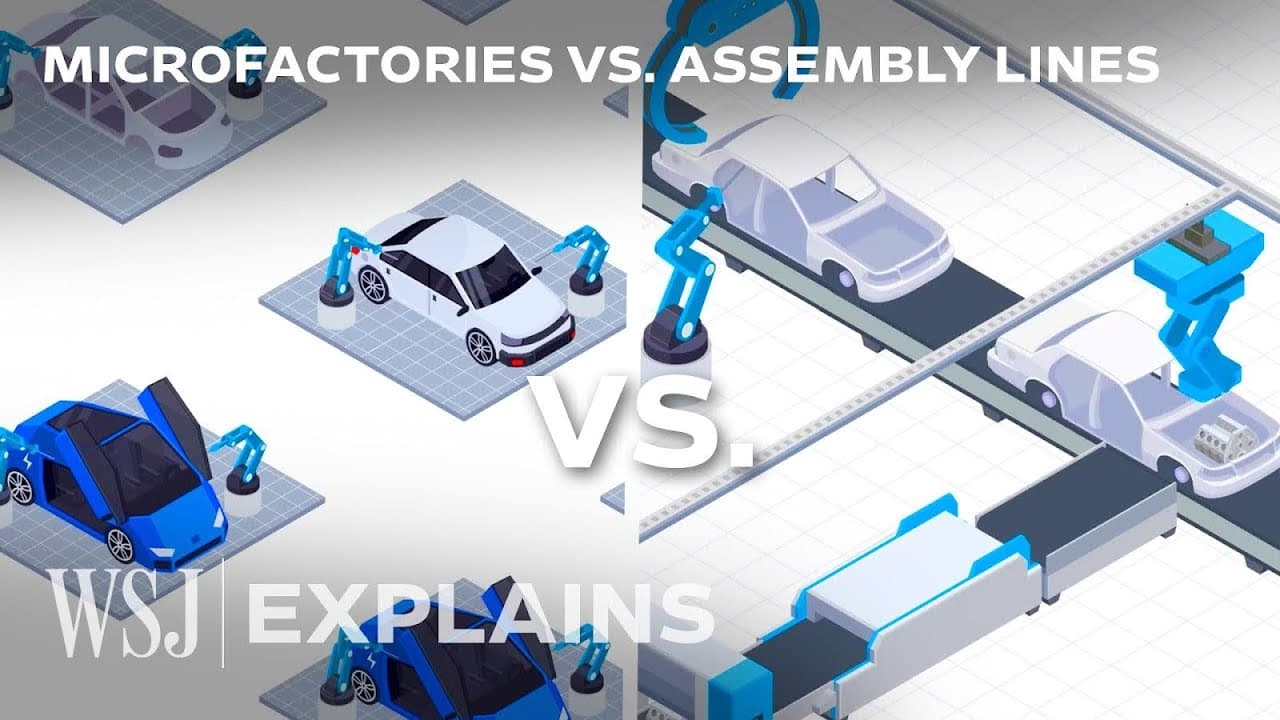
Microfactories use a cell-based model, allowing for different cells with different tasks, leading to higher automation and customization compared to linear assembly lines.
Q: How are robots involved in the manufacturing process at microfactories?
Robots in microfactories install components of cars, while four-legged robots equipped with AI cameras monitor and analyze the assembly. Human workers fix issues identified by the robot dogs.
Q: How many workers are needed in Hyundai's microfactory in Singapore?
Hyundai's microfactory in Singapore requires approximately 100 workers to produce their capacity of 30,000 cars per year, resulting in a higher output per worker compared to traditional factories.
Q: What is the potential impact of microfactories on manual jobs in the car manufacturing industry?
While microfactories lead to greater automation and efficiency, they could also reduce the number of manual jobs in the industry, resulting in a shift towards more automated processes.
Key Insights:
- Microfactories in Singapore are revolutionizing car manufacturing by automating the process and adopting a cell-based model for production.
- Hyundai's microfactory in Singapore is the country's first auto factory in over 40 years and pioneers the idea of smaller factories producing various mobility devices.
- Automation in microfactories allows for higher productivity, with each worker producing two to three times more cars compared to traditional factories.
- Microfactories are still relatively untested in the auto industry, but companies like Arrival are also exploring their potential for EV production.
- While microfactories have the potential to rebuild manufacturing industries in wealthier countries, they may also contribute to job displacement due to increased automation.
Summary & Key Takeaways
-
Hyundai's new Microfactory in Singapore is a game-changer in car manufacturing, automating most of the process and using a cell-based model for production.
-
The microfactory allows for customization and flexibility, with robots doing more than 50% of the manufacturing process.
-
With a smaller footprint, Hyundai's microfactory requires only about 100 workers to produce 30,000 cars per year.
Read in Other Languages (beta)
Share This Summary 📚
Summarize YouTube Videos and Get Video Transcripts with 1-Click
Try YouTube Summary with ChatGPT & Claude or YouTube Transcript Generator
Explore More Summaries from The Wall Street Journal 📚






Summarize YouTube Videos and Get Video Transcripts with 1-Click
Try YouTube Summary with ChatGPT & Claude or YouTube Transcript Generator