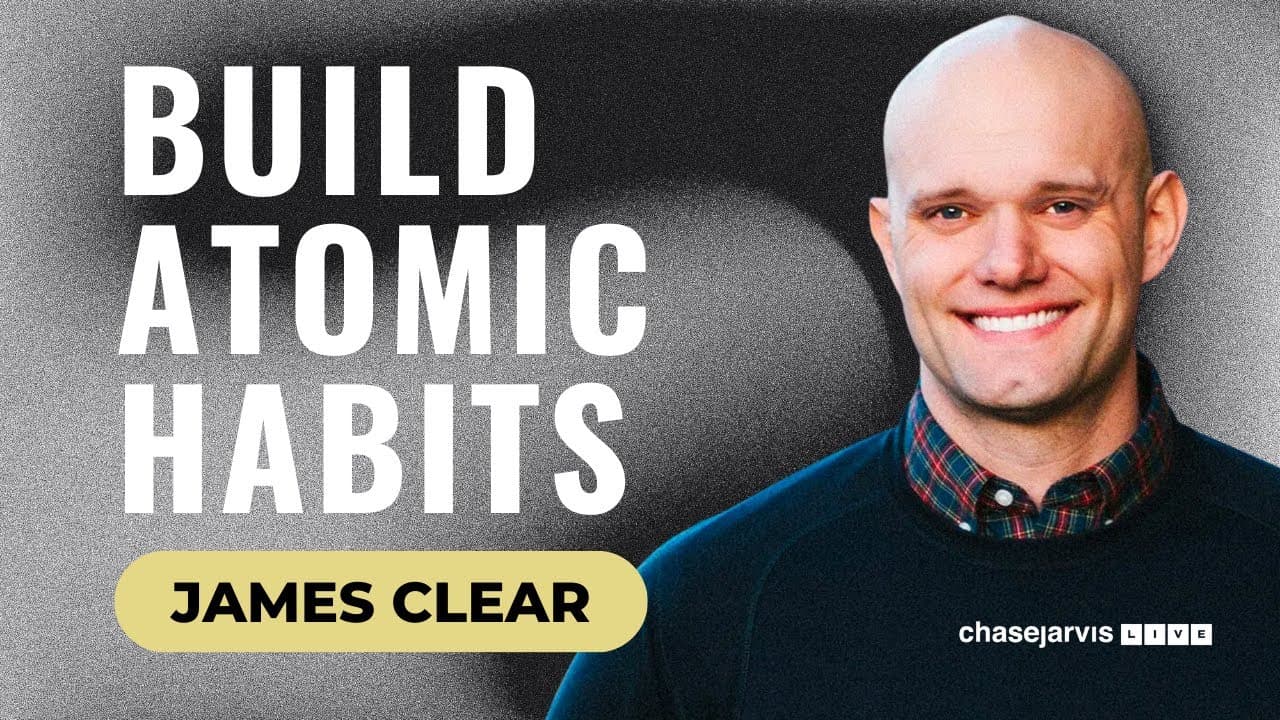
Is Passion and Curiosity Required for Habit Building? | James Clear | Chase Jarvis LIVE
TL;DR
Passion and curiosity are very important for habit building because they shape how you interpret cues and whether those cues motivate action. James Clear explains habits through four stages: cue, craving, response, and reward, placing desire in the craving stage. Curiosity helps people notice opportunities, investigate them, and pursue improvement. Read on to see how meaning turns everyday stimuli into behavior.
Transcript
I'm wondering how important is the desire for Change and the the fact that you're curious or interested or dare I use the word passionate about the area that you're moving into as a vehicle for uh extra fuel or or I mean I think we can all understand like if you have a bad habit and you want to break it there's actually a positive on the other side... Read More
Key Insights
- 🪛 Passion and curiosity are crucial drivers in behavior change efforts.
- 💁 Habit formation involves recognizing cues, interpreting cravings, executing responses, and receiving rewards.
- ❓ Curiosity is a fundamental trait for initiating personal growth and seizing opportunities.
- 💁 Assigning meaning to experiences shapes our responses and influences habit formation.
- 💱 Motivation stemming from passion can sustain behavior changes effectively.
- ❓ Being curious enables individuals to identify and capitalize on opportunities for improvement.
- 🦻 Understanding the habit loop aids in making practical changes for behavior modification.
Install to Summarize YouTube Videos and Get Transcripts
Explore YouTube Video Summarizer or Get YouTube Transcript Extractor
Questions & Answers
Q: How important are passion and curiosity for habit building?
James Clear says they are very important because they affect the meaning assigned to cues. That interpretation shapes whether a person feels motivated to respond and begin a habit.
Q: What are the four stages of a habit according to James Clear?
The four stages are cue, craving, response, and reward. Understanding them shows how a habit works and where someone can intervene to make a practical change.
Q: Which stage of habit formation includes desire and motivation?
Desire belongs in the second stage, craving. After a cue gets attention, the brain interprets it and predicts what it means, creating motivation to act when the prediction is favorable.
Q: How does a cue begin a habit?
A cue is something that gets your attention and can prompt action. Hearing an ambulance siren while driving can begin the habit of pulling aside, while seeing cookies on a counter can begin the habit of eating one.
Q: How does the brain interpret a cue before taking action?
After noticing a cue, the brain makes an interpretation or prediction about what it means. Seeing cookies may produce the prediction that they will be sweet, sugary, tasty, and enjoyable, which motivates the response of taking a bite.
Q: Why can the same cue produce different responses?
A cue only prompts action when a person assigns a relevant meaning to it. One person may walk past a basketball, while someone passionate or curious about basketball may pick it up and practice dribbling or taking shots.
Q: Why does James Clear connect curiosity with improvement?
He says the person who improves in the end is almost always curious in the beginning. Curiosity helps someone notice opportunities, investigate them, and dig one layer deeper.
Q: How can understanding the habit stages support behavior change?
The four-stage model clarifies what a habit is and how it works. It also reveals points where changes can be made, such as reconsidering the meaning assigned to a cue before it leads to a craving and response.
Summary & Key Takeaways
-
Understanding habits involves four stages: Cue, craving, response, and reward.
-
Passion and curiosity influence the interpretation of cues, leading to motivated actions.
-
Curiosity is key in initiating improvement and seizing opportunities for growth.
Read in Other Languages (beta)
Share This Summary 📚
Summarize YouTube Videos and Get Video Transcripts with 1-Click
Try YouTube Summary with ChatGPT & Claude or YouTube Transcript Generator
Explore More Summaries from Chase Jarvis 📚

Summarize YouTube Videos and Get Video Transcripts with 1-Click
Try YouTube Summary with ChatGPT & Claude or YouTube Transcript Generator