How Does Nolan Reinterpret Homer's Odyssey?
TL;DR
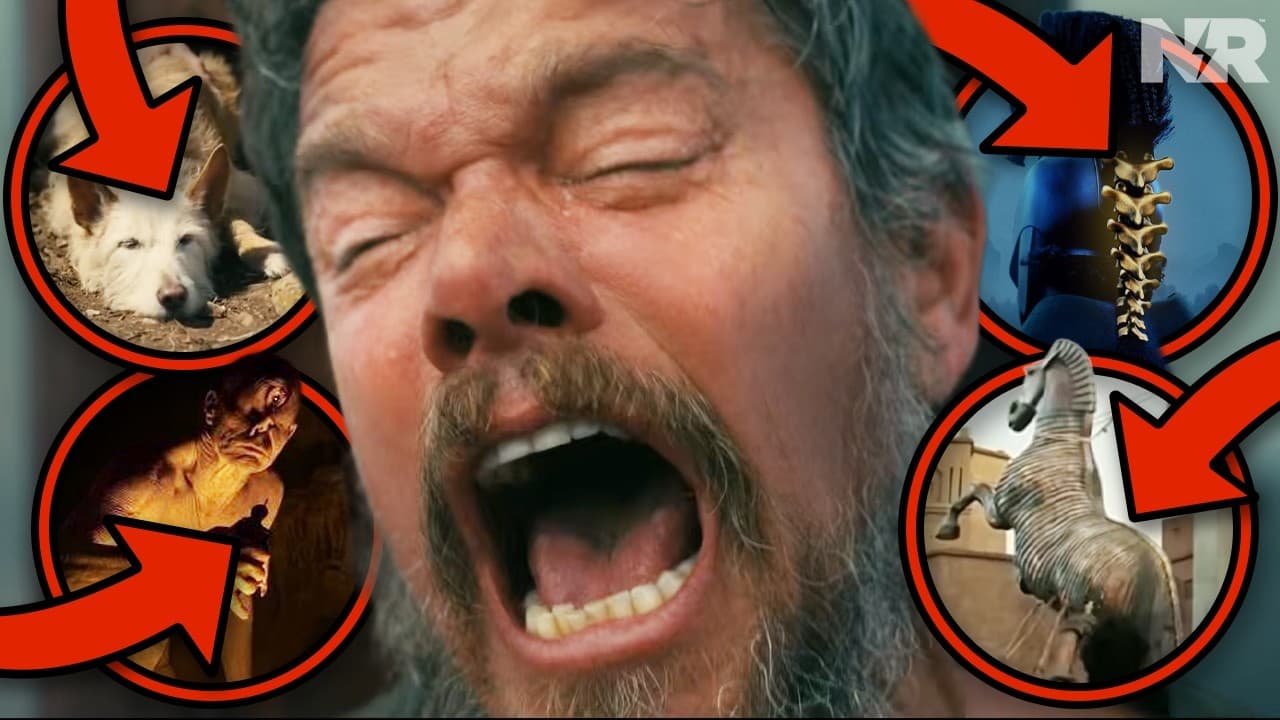
Christopher Nolan’s adaptation presents Odysseus’s legendary journey as subjective history shaped by unreliable storytellers, apparent magic, and the moral consequences of war. Its nonlinear structure revisits the Trojan horse from conflicting perspectives, while Zeus’s law of hospitality becomes a central standard for judging Odysseus, the Trojans, Penelope, and the suitors occupying Ithaca.
Transcript
Christopher Nolan's The Odyssey is a masterpiece in conversation with all of his past films from Oppenheimer to Interstellar. So, let's unpack all of these subtle connections. I'm Eric Boss of the New Rockstars channel, and this is an in-depth breakdown and analysis of Christopher Nolan's The Odyssey, the 2026 film adaptation of the 30,000-year-old... Read More
Key Insights
- The film treats magic as apparent and subjective, placing the story in a poorly documented historical era where unreliable accounts and uncertain eyewitnesses could transform real experiences into mythology without presenting every supernatural event as objectively verifiable.
- Zeus’s law of hospitality is the adaptation’s central moral standard, requiring hosts to treat strangers as possible gods in disguise. The Trojans honor that custom when accepting the horse, while Ithaca’s 108 suitors abuse it by occupying Odysseus’s household.
- The opening bard represents the oral tradition from which the Odyssey may have developed, using rhythmic chanting to evoke poetry performed at contests and festivals before it was written down in dactylic hexameter by someone familiar with those traditions.
- The Trojan horse works because the Trojans interpret it as a peace offering to Athena and a sign that the war has ended. They rescue it from the waves, move it on shaved logs, and protect its tail because they respect its supposed purpose.
- Sinon is reframed as a young farm boy who took another person’s draft lot and became Odysseus’s expendable pawn. Because he does not know soldiers are inside the horse, his explanation appears sincere enough to persuade the Trojans.
- The Greeks are visually associated with black-hat imagery while the Trojans wear white-hat colors, encouraging viewers to question the traditional heroic framing. Their campaign is presented as serving both Helen’s recovery and the strategic control of shipping routes.
- The nonlinear narrative changes the meaning of the Trojan horse through repetition, first presenting it through the bard, later through Menelaus as conquest, and finally through Odysseus as horror and regret over the pain his clever maneuver caused.
- The production was filmed entirely on IMAX film using a newly developed, heavily covered camera that reduced mechanical noise enough to record actors on set. Mirrors helped performers maintain eyelines when the camera’s size prevented them from seeing scene partners directly.
Install to Summarize YouTube Videos and Get Transcripts
Explore YouTube Video Summarizer or Get YouTube Transcript Extractor
Questions & Answers
Q: Why does Nolan describe the story as a time of apparent magic?
The phrase signals that the film does not necessarily present magic as an objectively recorded historical fact. Instead, extraordinary events emerge from unreliable accounts, uncertain eyewitnesses, and a poorly documented period following the Bronze Age. This approach lets the adaptation preserve the wonder of Homeric mythology while interpreting it through subjective human experience and incomplete historical knowledge.
Q: How does the film reinterpret the Trojan horse deception?
The Trojans do not foolishly accept an obviously suspicious weapon. They understand the horse as a peace offering to their shared goddess Athena and believe the war has ended. Their decision to save it from the waves and protect it while moving it demonstrates respect and hospitality, making Odysseus’s scheme a deliberate exploitation of trust rather than merely an ingenious military trick.
Q: What role does Zeus’s law of hospitality play in the story?
Zeus’s law requires people to treat strangers and visitors generously because any guest might be a god in mortal disguise. The film uses that principle to judge its characters. The Trojans honor hospitality when receiving the supposed Greek offering, while the 108 suitors violate it by taking over Odysseus’s home and pursuing Penelope as a route to Ithaca’s throne.
Q: Why does the film open with a bard played by Travis Scott?
The bard evokes the Odyssey’s origins in oral performance. The poem was believed to have developed from Homeric traditions recited aloud at contests and festivals before being written in dactylic hexameter. Casting a contemporary rapper and giving his delivery a forceful rhythm translates the energy of that ancient performance culture into a form recognizable to modern audiences.
Q: How is Sinon characterized differently in Nolan’s adaptation?
Sinon is presented not simply as a treacherous Greek operative but as a young farm boy who took another person’s draft lot for the war. Odysseus uses him as a sacrificial pawn and does not reveal that soldiers are hidden inside the horse. Sinon’s genuine ignorance makes his explanation believable, while placing greater moral responsibility on Odysseus for exploiting him.
Q: Why is the Trojan horse story told in separate pieces?
The fragmented presentation mirrors the nonlinear structure associated with Homer’s Odyssey and allows the event’s meaning to evolve. The bard initially turns it into a celebrated war story, Menelaus later frames it as conquest, and Odysseus eventually recounts it to Penelope as horror and regret. Each retelling moves attention from clever strategy toward destruction and personal responsibility.
Q: How does Penelope delay choosing one of the suitors?
Penelope claims she must finish weaving her father’s burial shroud before considering a suitor. During the day she visibly works on the tapestry, but at night she secretly undoes that progress. The repeated cycle lets her appear devoted to mourning while indefinitely postponing remarriage, protecting Odysseus’s place and resisting the suitors’ attempt to claim Ithaca’s throne.
Q: How was the film shot entirely on IMAX film?
Nolan, producer Emma Thomas, and IMAX developed a camera configuration with a heavy shell that muted the loud movement of vertical film through the shutter. This made recording actors’ dialogue on set possible. The camera was so large that several people moved it, and mirrors were sometimes installed so actors could preserve their eyelines when they could not see their scene partners.
Summary & Key Takeaways
-
Nolan frames the ancient epic as a story from a period of apparent rather than confirmed magic. The adaptation connects gaps in Bronze Age history, oral Homeric traditions, and the mysterious people of the sea with unreliable human accounts, allowing supernatural-seeming events to remain subjective without dismissing their cultural power.
-
The Trojan horse is reinterpreted as a calculated abuse of trust. The Trojans accept it as a peace offering dedicated to Athena and carefully preserve it, while Odysseus exploits Sinon as an uninformed sacrificial pawn. Later retellings transform the event from an ingenious victory into a source of suffering, horror, and regret.
-
The film mirrors Homer’s nonlinear construction by revealing the Trojan War in fragments and shifting perspectives. Penelope interrupts the bard’s heroic account, Menelaus later treats the horse as conquest, and Odysseus finally describes its human cost. Meanwhile, Penelope resists 108 suitors through her concealed cycle of weaving and unweaving a burial shroud.
Read in Other Languages (beta)
Share This Summary 📚
Summarize YouTube Videos and Get Video Transcripts with 1-Click
Try YouTube Summary with ChatGPT & Claude or YouTube Transcript Generator
Explore More Summaries from New Rockstars 📚
Summarize YouTube Videos and Get Video Transcripts with 1-Click
Try YouTube Summary with ChatGPT & Claude or YouTube Transcript Generator