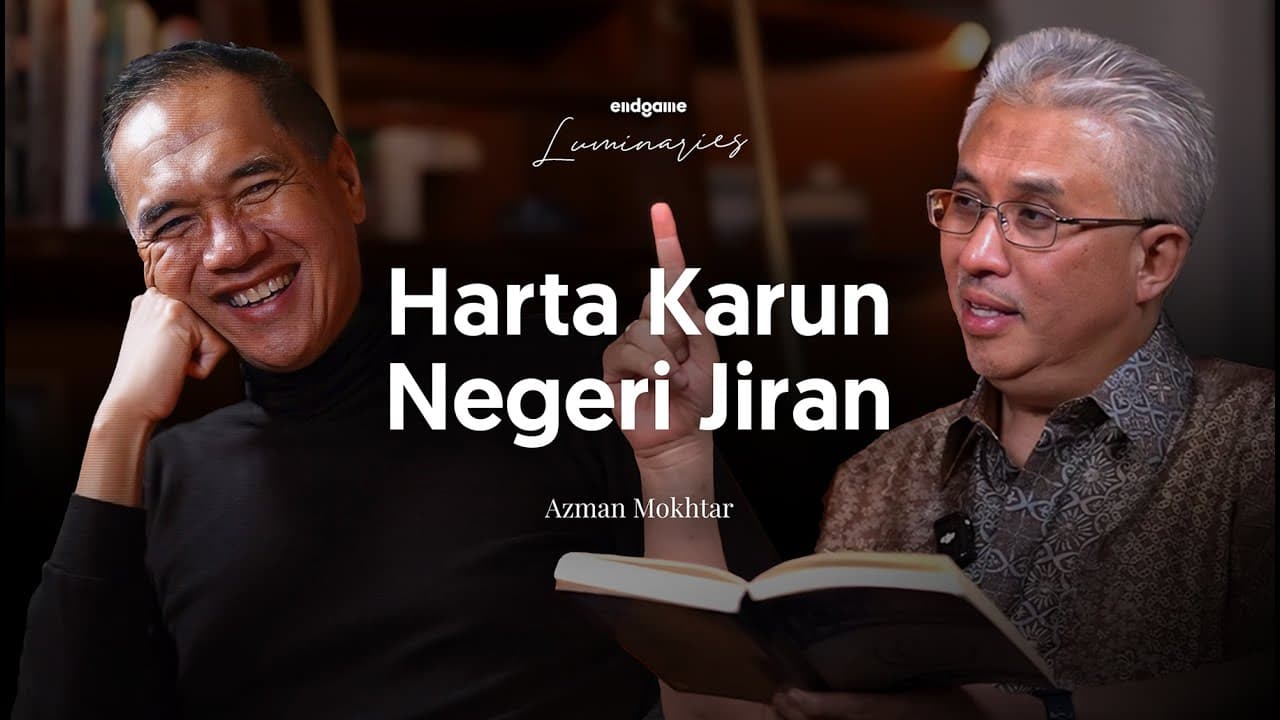
“There’s More to Life than Finance and Economics” - Azman Mokhtar | Endgame #206 (Luminaries)
TL;DR
Azman Mokhtar shares insights on leadership, justice, and Southeast Asia's future.
Transcript
Those who try to model economics, like mathematics, tidak boleh, cannot be done. Think about 'Kancil-nomics', which is a metaphor for when the giants fight in the big ugly jungle, the big beast fight, the elephant and the tiger and the crocodiles, be the smart, nimble, clever little kancil (deer). So then actually my intellectual curiosity turned t... Read More
Key Insights
- Azman Mokhtar emphasizes that life is more than finance, highlighting the importance of intellectual curiosity and moral values.
- Growing up in a middle-class family with teacher parents in Malaysia, Azman was influenced by a love for learning and diverse interests.
- Azman's education at Cambridge and his career in investment banking shaped his leadership at Khazanah, where he focused on restructuring and transformation.
- Khazanah's investment strategy included expanding into new sectors and geographies, balancing financial, strategic, and societal values.
- Azman believes in the importance of open discourse and accountability, fostering a culture of integrity and teamwork at Khazanah.
- He reflects on the role of institutions and individuals in shaping societies, advocating for a balance between financial success and moral ideals.
- Azman discusses Southeast Asia's pragmatic culture and the need to nurture principles of excellence amid global challenges.
- He stresses the ethical use of technology and the importance of maintaining a moral compass in decision-making processes.
Install to Summarize YouTube Videos and Get Transcripts
Explore YouTube Video Summarizer or Get YouTube Transcript Extractor
Questions & Answers
Q: How did Azman's upbringing influence his career?
Azman Mokhtar's upbringing in Malaysia, with both parents as teachers, instilled in him a love for learning and intellectual curiosity. Growing up in a middle-class family, he was exposed to diverse interests, which later influenced his career in investment banking and leadership at Khazanah. His parents' emphasis on education and moral values shaped his principles and approach to leadership.
Q: What was Azman's approach to leading Khazanah?
Azman Mokhtar's approach to leading Khazanah involved restructuring and transforming the sovereign wealth fund. He focused on expanding into new sectors and geographies, balancing financial, strategic, and societal values. Azman emphasized the importance of open discourse, accountability, and integrity, fostering a culture of teamwork and ethical decision-making within the organization.
Q: How does Azman view the role of institutions in shaping societies?
Azman Mokhtar believes that institutions and individuals play a crucial role in shaping societies. He advocates for a balance between financial success and moral ideals, emphasizing justice, development, and inequality. Azman draws from Islamic philosophy to articulate a holistic vision of progress, where ethical considerations and societal values are integral to decision-making processes.
Q: What are Azman's thoughts on Southeast Asia's future?
Azman Mokhtar is optimistic about Southeast Asia's future, emphasizing the region's pragmatic culture and potential for growth. He highlights the need to nurture principles of excellence amid global challenges, such as the US-China rivalry. Azman believes that Southeast Asia can be a voice of wisdom and moderation on the global stage, advocating for peace, stability, and ethical governance.
Q: How does Azman view the ethical use of technology?
Azman Mokhtar stresses the ethical use of technology, highlighting the importance of maintaining a moral compass in decision-making processes. He believes that while technology offers immense possibilities, it also poses significant risks. Azman emphasizes the need for a multidisciplinary approach to harness technology ethically, ensuring that it aligns with societal values and contributes positively to development.
Q: What lessons did Azman learn from the Asian financial crisis?
Azman Mokhtar learned valuable lessons from the Asian financial crisis, which influenced his leadership at Khazanah. He observed how financial crises could escalate into economic, political, and social crises. This experience shaped his approach to restructuring and transforming Khazanah, emphasizing the importance of resilience, strategic planning, and ethical decision-making in navigating complex challenges.
Q: What is Azman's perspective on justice and development?
Azman Mokhtar views justice and development as interconnected, drawing from Islamic philosophy to emphasize their importance in societal progress. He believes that institutions and individuals must prioritize justice in their actions, ensuring that development benefits all members of society. Azman advocates for a holistic approach to development, balancing economic growth with moral and ethical considerations.
Q: How does Azman balance financial and societal values in decision-making?
Azman Mokhtar balances financial and societal values in decision-making by integrating them into Khazanah's investment strategies. He emphasizes the importance of considering financial, strategic, and societal impacts in all decisions. Azman believes that a holistic approach, which aligns with ethical principles and societal values, is essential for sustainable development and long-term success.
Summary & Key Takeaways
-
Azman Mokhtar shares his life story, emphasizing that there is more to life than finance and economics. He discusses his upbringing in Malaysia, where his teacher parents instilled a love for learning and diverse interests. Azman reflects on his education at Cambridge and early career, which shaped his leadership principles.
-
As CEO of Khazanah, Azman led efforts to restructure and transform the sovereign wealth fund. He focused on expanding into new sectors and geographies, balancing financial, strategic, and societal values. Azman highlights the importance of open discourse, accountability, and integrity in fostering a positive organizational culture.
-
Azman reflects on broader issues like justice, development, and inequality, drawing from Islamic philosophy. He emphasizes the need for Southeast Asia to nurture principles of excellence amid global challenges. Azman stresses the ethical use of technology and maintaining a moral compass in decision-making processes.
Read in Other Languages (beta)
Share This Summary 📚
Summarize YouTube Videos and Get Video Transcripts with 1-Click
Try YouTube Summary with ChatGPT & Claude or YouTube Transcript Generator
Explore More Summaries from Gita Wirjawan 📚




Summarize YouTube Videos and Get Video Transcripts with 1-Click
Try YouTube Summary with ChatGPT & Claude or YouTube Transcript Generator