How Does Peter Crone Explain Freedom From Ego and Subconscious Limiting Beliefs?
TL;DR
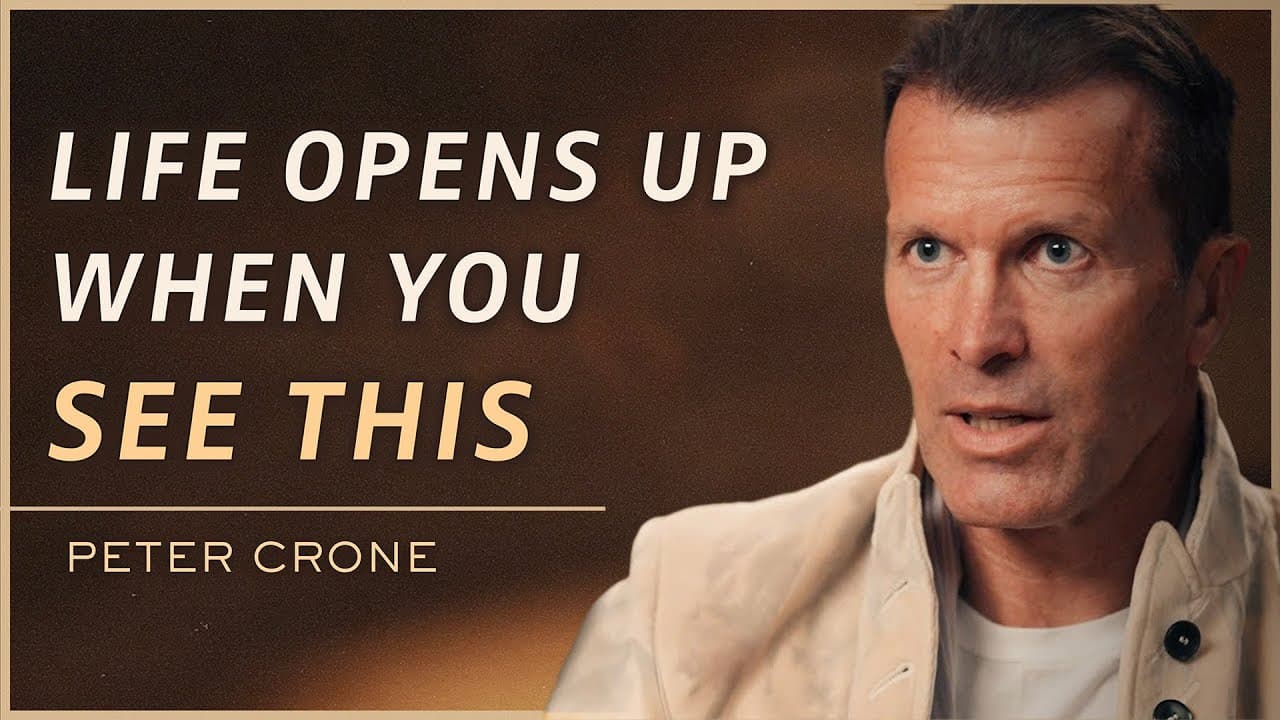
Peter Crone says limiting beliefs arise from a subconscious foundation that shapes conscious thoughts, emotions, actions, and results. Knowing that smoking or excessive drinking is harmful may not change the habit because conscious awareness leaves its deeper support intact. He works backward from visible problems to underlying beliefs and identity, then questions their truth. Read on to see why he believes this root-level approach creates lasting change.
Transcript
people really are under the impression that the life they have is not the life they want the thing that we're really up against is all our own perspective that's it we we could just be perpetually chasing our tail trying to perfect everything around us under the illusion that when I get everything exactly the way that my current perspective thinks ... Read More
Key Insights
- The subconscious is the foundation beneath any identity, in the same way a building requires pillars to support it. It is not bad by definition, but it informs everything: the conscious thoughts a person has while driving or showering are generated from that deeper, more well formed layer.
- Conscious awareness is not enough to change behavior. People know they should not smoke cigarettes or drink so much alcohol, yet they keep doing it, because the subconscious foundation supporting the habit was never touched by the conscious knowledge that the habit is harmful.
- Behavior-level coaching sits too far down the cascade of creation. Tennis instructors, yoga teachers, and nutritionists spend most of the conversation on what to do and what not to do, while the subconscious layer that generates emotions, actions, and results goes unaddressed.
- Everything anyone deals with as a problem exists only in perspective. Circumstances can genuinely be challenging, but the suffering attached to them comes from subconscious constraints that shape how the world is perceived, which is why shifting perspective changes what the person is looking at.
- The feeling of not being enough is software rather than genome. Crone describes himself as a coder helping people see that the identity they became misidentified with is based solely in language, so what they crave sits on the other side of vibration and sound.
- Crone works with 10 Primal prisons that he says form the foundation of the personality and sit in the subconscious. Because he knows them, he can hear someone's presenting problem and reverse engineer which underlying constraint is producing it.
- In a free event with about 8,000 people signed up, Crone worked with a 46 to 48 year old man from India struggling with self-esteem, anxiety, and anger toward loved ones, whose visible fatigue and dark circles showed the accumulated cost of the pattern.
- The man's surface story was that he was a bad father for blowing up at his kids, but the foundation was the identity "I'm bad," formed when he was slapped, scolded, and shamed as a child. Seeing it was never a truth produced visible joy.
- Chasing external perfection is an illusion with compounding costs. Living four decades under the belief that peace arrives once everything matches your current perspective accumulates toxicity in the brain, the body, and relationships, plus an absence of abundance in finances.
- Freedom from the idea of self instantaneously produces both newfound love for what is and, at the same time, a view of the present in relation to the future in which Crone says he sees nothing but pure possibility.
Install to Summarize YouTube Videos and Get Transcripts
Explore YouTube Video Summarizer or Get YouTube Transcript Extractor
Questions & Answers
Q: How does Peter Crone explain subconscious limiting beliefs?
Crone compares the subconscious to the foundation and supporting pillars beneath a building. Deeply formed beliefs and identities operate beneath conscious awareness, generating the thoughts, emotions, actions, and results that people experience.
Q: What is the subconscious mind according to Peter Crone?
The subconscious is what sits beneath conscious awareness while still informing everything above it. Crone says thoughts noticed while showering, going to bed, or driving arise from this deeper foundation, which is not necessarily bad but can be insidious.
Q: Why do people continue habits they consciously know are harmful?
Conscious knowledge does not necessarily alter the subconscious foundation supporting a habit. Crone uses smoking cigarettes and drinking too much alcohol as examples: people may know they should stop without understanding why they continue.
Q: Why might discipline and willpower fail to create lasting change?
Crone says behavior is too far down the cascade through which results are created. Instructions about what to do or avoid may change actions temporarily, but lasting change requires addressing the subconscious thoughts, beliefs, and identity beneath them.
Q: How does Peter Crone work backward from a person's problem?
He listens to the presenting issue and traces it beneath behavior, thoughts, and feelings toward its subconscious source. Using the 10 Primal prisons that he says underlie personality, he identifies the foundational constraint and investigates whether it is actually true.
Q: What are Peter Crone's 10 Primal prisons?
Crone describes them as subconscious constraints forming the foundation of personality. Recognizing these patterns helps him hear a person's stated problem and identify the deeper constraint producing it.
Q: How can perspective create suffering?
Crone says every problem exists within a perspective, even when the surrounding circumstances are genuinely challenging. Continually trying to perfect life so it matches that perspective can accumulate toxicity in the brain, body, and relationships, along with an absence of financial abundance.
Q: What does freedom from a limiting identity make possible?
Crone says a limiting identity is constructed through language rather than established as truth. Seeing through that misidentification can produce immediate love for what is while opening a view of the future as pure possibility.
Summary & Key Takeaways
-
The subconscious works like a building's foundation: any identity a person becomes associated with rests on pillars beneath conscious awareness. People know they should not smoke or drink so much, but they do not know why they still do it, because the habit is supported by a subconscious foundation that generates the conscious thoughts they notice in the shower, in bed, or while driving.
-
Most experts operate only in the realm of behavior. A tennis coach, a yoga teacher, or a nutritionist mostly says do this and don't do that, which sits far down the cascade of how things come into creation. Working prior to conscious thought, in the subconscious and then the realm of being and freedom, is what produces lasting change rather than temporary behavioral compliance.
-
Crone describes 10 Primal prisons that form the foundation of the personality and sit in the subconscious. Knowing them lets him hear a person's stated problem and reverse engineer it back to its source. He compares the work to being a magician who helps someone see something, and to being a coder, since the misidentified identity is built solely from language.
Read in Other Languages (beta)
Share This Summary 📚
Summarize YouTube Videos and Get Video Transcripts with 1-Click
Try YouTube Summary with ChatGPT & Claude or YouTube Transcript Generator
Explore More Summaries from André Duqum 📚

Summarize YouTube Videos and Get Video Transcripts with 1-Click
Try YouTube Summary with ChatGPT & Claude or YouTube Transcript Generator