Why Does Arnold Schwarzenegger Reject Plan B and Say Failure Leads to Success?
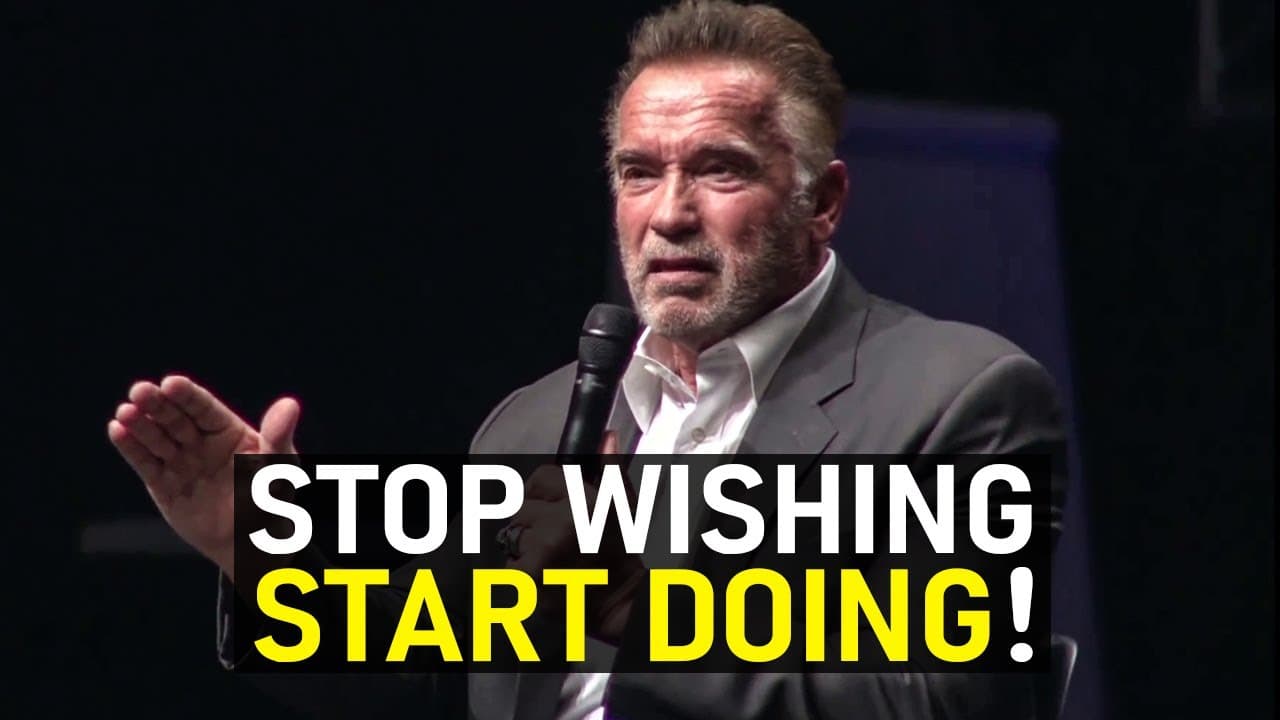
TL;DR
Arnold Schwarzenegger argues that success requires full commitment to Plan A, acceptance of repeated failure, and recognition that nobody succeeds alone. He says every thought devoted to a backup plan takes energy from the primary goal, while Michael Jordan’s 9,000 missed shots illustrate why failure does not define a person. Read on to understand how commitment, recovery, relaxation, gratitude, and service fit together.
Transcript
i hate plan b because we have so many doubters we have so many of those people that say no and you can't do it it's impossible but when you start doubting yourself that's very dangerous because now what you're basically saying is is that if my plan doesn't work i have a fallback plan i have a plan b and that means that you start thinking about plan... Read More
Key Insights
- Divided attention weakens commitment: Schwarzenegger’s objection to Plan B is specifically about where thought and energy go. Once a fallback exists, the mind can begin preparing for it instead of concentrating entirely on Plan A. In his account, removing the safety net creates the conditions for stronger focus and better performance.
- Self-doubt amplifies outside doubt: Many people will say a goal cannot be achieved or is impossible. Schwarzenegger presents those external voices as less dangerous than the moment a person begins repeating the same doubts internally. A backup plan can express that internal uncertainty by assuming the primary ambition may not survive sustained effort.
- Commitment includes repeated work: Declaring a goal is only the beginning of Schwarzenegger’s approach. His commitments to bodybuilding, America, show business, and becoming a leading man were paired with a willingness to do the work over and over until he succeeded. Commitment therefore appears as persistence in action, not merely confidence in an outcome.
- Failure belongs on the ladder: Schwarzenegger does not describe failure as an unusual interruption on the road to success. He treats it as a required part of climbing. Because nobody succeeds without failing, the useful question is not how to eliminate every setback, but whether a person will continue upward after each one.
- Missed shots do not define: Michael Jordan’s 9,000 missed shots provide Schwarzenegger’s clearest example of achievement existing alongside repeated failure. The misses did not erase Jordan’s successes or make him a failed player. The example separates unsuccessful attempts from a permanent identity and shows why counting failures alone gives an incomplete picture.
- Staying down creates defeat: Schwarzenegger draws his sharpest distinction between people who fail and people who remain down. Winners are not protected from setbacks. They fail, get up, fail again, and get up again. Recovery is therefore the behavior that turns failure into part of an ongoing pursuit instead of its final conclusion.
- Fear restricts effective performance: Worrying about losing can make the body and mind frozen, stiff, and unreceptive. Schwarzenegger says this interferes with performance in boxing, employment, and thinking itself. Acceptance of possible failure matters because it allows a person to relax enough to use their abilities fully when performance is required.
- Relaxation supports clear thinking: Relaxing is not presented as withdrawing effort. Schwarzenegger connects relaxation with performing well and then urges people to go all out and give everything they have. The combination is important: release the fear that produces stiffness, while maintaining complete effort toward the task in front of you.
- Success depends on many people: The phrase “self-made man” fails Schwarzenegger’s test because human development begins with dependence. Parents raise children, teachers educate them, and coaches guide athletic growth. Later achievements continue to depend on supporters, collaborators, and audiences, so personal effort never explains the full chain behind success.
- Harvard Bosek provided practical help: Schwarzenegger names Harvard Bosek as one of the thousands who assisted him. Bosek translated information into English so Schwarzenegger could complete his Mr. Universe entry form, flew with him to London, took thousands of photographs, and supported his competitions. The example makes Schwarzenegger’s rejection of self-made success concrete and personal.
- Audiences create movie success: Even a leading actor cannot produce box-office success alone. Schwarzenegger points out that millions of people around the world must choose to see a movie before the press can describe its star as successful. The audience is therefore not peripheral to the achievement. It is one of the essential causes of it.
- Gratitude becomes an obligation: America welcomed Schwarzenegger as an immigrant, invited him to Thanksgiving dinners, and showed him generosity firsthand. He responded by asking what he could contribute. Recognizing that people had fought, died, and suffered for the country, he felt obligated to give back, beginning with training Special Olympics athletes and proposing powerlifting.
Install to Summarize YouTube Videos and Get Transcripts
Explore YouTube Video Summarizer or Get YouTube Transcript Extractor
Questions & Answers
Q: Why does Arnold Schwarzenegger reject having a Plan B?
Schwarzenegger believes Plan B becomes a safety net that divides attention. Every thought and unit of energy spent considering the fallback is taken away from Plan A. He says people perform better when they cannot depend on another option to catch them after failure. Rejecting Plan B therefore protects full commitment to the chosen goal.
Q: How did Arnold Schwarzenegger apply full commitment to his own goals?
He says he fully committed to becoming a bodybuilding champion and moving to America. He later made the same commitment to entering show business and becoming a leading man. His approach was to do the required work repeatedly, regardless of how many attempts it took. These examples show that his rejection of Plan B was tied to sustained action.
Q: Why does failure matter to success, according to Schwarzenegger?
Schwarzenegger says people have to fail while climbing the ladder because nobody avoids failure altogether. A failed attempt does not make someone a failure. What matters is getting up rather than remaining down after the setback. Repeated recovery allows the pursuit to continue and distinguishes a winner in his account.
Q: What does Michael Jordan’s 9,000 missed shots example mean?
Schwarzenegger cites Michael Jordan as saying that he missed 9,000 shots during NBA games. Those misses existed alongside the successes that led people to call him one of the greatest basketball players of all time. The number demonstrates that excellence can include many unsuccessful attempts. Jordan was not defined as a failure because of the shots he missed.
Q: How can fear of losing reduce performance?
Schwarzenegger says fear of losing makes a person frozen, stiff, and unable to relax. That condition interferes with performance in boxing, at work, and during activities requiring thought. Accepting that losing and failing are normal reduces the pressure causing that stiffness. A relaxed person can then go all out and give the task everything available.
Q: Why does Schwarzenegger reject the label “self-made man”?
He says every person depends on parents, teachers, coaches, and many other helpers. His film career also depended on millions of audience members choosing to watch his movies. Because those people contributed directly to his opportunities and success, he did not reach his position alone. He accepts names such as Arnie, Schwarze, Terminator, and Governator, but rejects “self-made man.”
Q: Who was Harvard Bosek, and how did he help Schwarzenegger?
Harvard Bosek was an extraordinary friend and one of the thousands of people Schwarzenegger says helped him. He translated information into English so Schwarzenegger could complete his entry form for the Mr. Universe contest. Bosek then flew with him to London, took thousands of photographs, and supported his competitions. His practical assistance illustrates why Schwarzenegger credits other people for his achievements.
Q: How did Schwarzenegger begin giving back to others?
Schwarzenegger felt welcomed in America as an immigrant and experienced generosity from people who helped him and invited him to Thanksgiving dinner. That experience made him feel obligated to contribute to the country that embraced him. He asked what he could offer specifically as a bodybuilder and identified the Special Olympics as an opportunity. He became involved in training Special Olympics athletes and proposed introducing powerlifting.
Summary & Key Takeaways
-
Rejecting the safety net: Arnold Schwarzenegger says he hates Plan B because a fallback encourages self-doubt and divides attention. Every thought and bit of energy directed toward Plan B is taken away from Plan A. He believes people perform better without a safety net because they know they must make their chosen course work. Doubters may call an ambition impossible, but the greater danger begins when their skepticism becomes your own and weakens your commitment.
-
Committing to one direction: Schwarzenegger describes making full commitments to become a bodybuilding champion, move to America, enter show business, and become a leading man. Rather than protecting himself with another career path, he resolved to do the necessary work repeatedly until he achieved each objective. His point is not that achievement comes quickly or easily. It is that a clearly chosen goal receives greater focus when the person pursuing it is not mentally preparing to abandon it.
-
Redefining repeated failure: The fear of having nothing after failure does not justify holding back, according to Schwarzenegger. Failure is part of climbing the ladder, and nobody avoids it completely. He cites Michael Jordan, who reportedly said he missed 9,000 shots in NBA games despite being regarded as one of the greatest basketball players of all time. Those missed attempts did not make Jordan a failure. The defining difference is whether someone remains down or gets up again.
-
Relaxing under pressure: Schwarzenegger distinguishes losing from surrendering. Everyone loses, but fear of losing can make a person frozen, stiff, and unable to perform well. Whether the setting is boxing, a job, or an activity requiring clear thinking, he says effective performance depends on being relaxed. His prescription is to accept that failure is possible, release the fear surrounding it, and give the effort everything available. Winners may repeatedly fall, but they repeatedly rise and continue.
-
Recognizing help and giving back: Schwarzenegger rejects the label “self-made man” because parents, teachers, coaches, friends, audiences, and many others make individual success possible. He highlights Harvard Bosek, who translated an entry form into English, accompanied him to London for the Mr. Universe contest, photographed him, and supported his competitions. Remembering America’s generosity toward him as an immigrant, Schwarzenegger felt obligated to contribute. As a bodybuilder, he began helping train Special Olympics athletes and proposed adding powerlifting.
Read in Other Languages (beta)
Share This Summary 📚
Summarize YouTube Videos and Get Video Transcripts with 1-Click
Try YouTube Summary with ChatGPT & Claude or YouTube Transcript Generator
Explore More Summaries from Motivation Ark 📚



Summarize YouTube Videos and Get Video Transcripts with 1-Click
Try YouTube Summary with ChatGPT & Claude or YouTube Transcript Generator