What Is Driving Global Markets on December 5?
TL;DR
Markets were shaped by expected central-bank moves, delayed U.S. inflation data, and major geopolitical and corporate developments. The Bank of Japan appeared ready to raise rates, India cut its key rate by 25 basis points, Modi welcomed Putin despite U.S. pressure, and Warner Bros. Discovery reportedly entered exclusive negotiations to sell major entertainment assets to Netflix.
Transcript
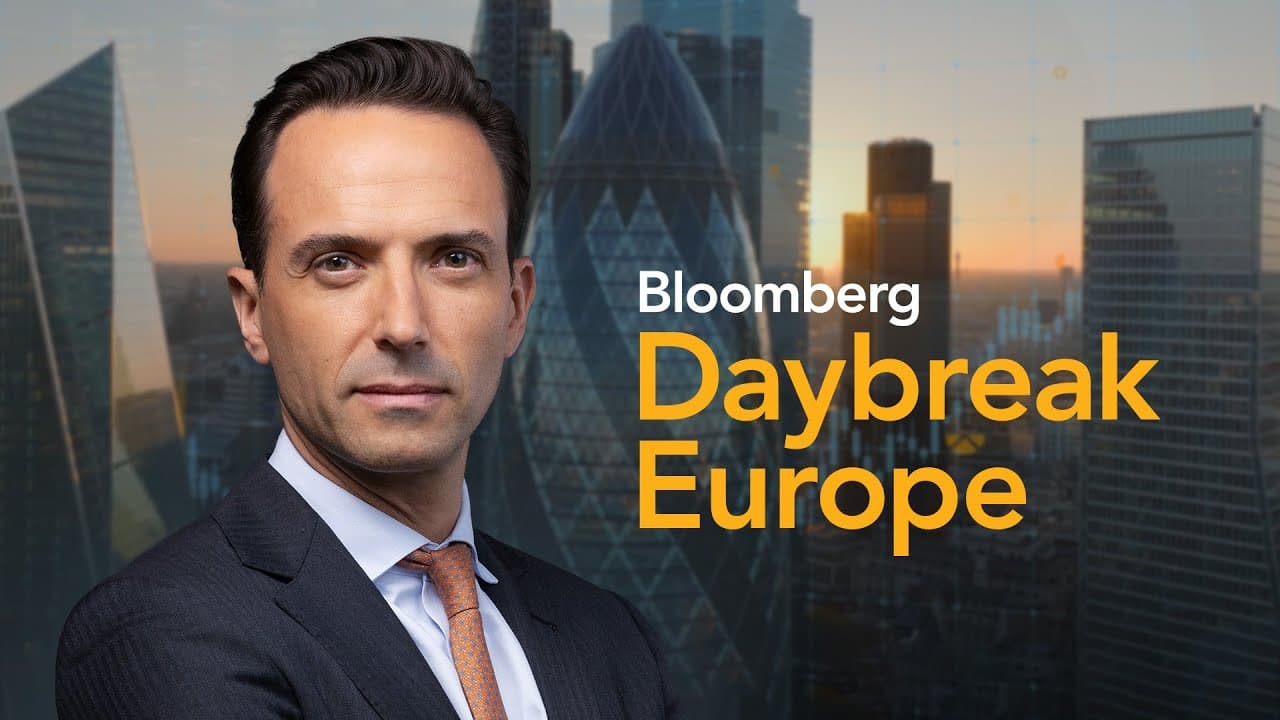
TOM: GOOD MORNING. THIS IS "BLOOMBERG DAYBREAK: EUROPE." THESE ARE THE STORIES THAT SET YOUR AGENDA. GLOBAL STOCKS IN THE GREEN AS INVESTORS AWAIT DELAYED U.S. INFLATION DATA. FED CHAIR FRONT RUNNER KEVIN HAS SET CALLS FOR A CUT NEXT WEEK. MEANWHILE, THE YEN STRENGTHENS WITH THE BOJ SET TO BE LIKELY TO RAISE RATES THIS MONTH. NARENDRA MODI EXTENDS ... Read More
Key Insights
- The Bank of Japan was reportedly ready to raise rates later in the month if financial markets and the economy avoided a major shock, while officials were also considering further increases if the economic outlook developed as expected.
- The yen strengthened past 155 following the Bank of Japan report, adding pressure to Japanese stocks. The benchmark declined by more than 1% because many Japanese companies depend heavily on exporters, which can be affected by a stronger domestic currency.
- India’s central bank cut its key interest rate by 25 basis points for the first time in six months after inflation reached a record low. Indian stocks gained 0.4%, with real estate and automobile companies outperforming other sectors.
- India’s relationship with Russia reflects its effort to maintain strategic autonomy while facing pressure from Washington. Modi personally greeted Putin at the New Delhi airport during the Russian president’s first state visit since Russia’s invasion of Ukraine.
- U.S. pressure on India centers partly on its purchases of Russian crude oil, which reached an all-time high earlier in the year. India later reduced those purchases, but deeper economic cooperation and major defense agreements with Russia were still expected from the visit.
- Kevin Hassett said the Federal Reserve should remain dependent on economic data while pursuing low unemployment and inflation. He also maintained that interest rates need to move much lower over the long run and supported a cut at the following week’s meeting.
- The U.S. labor-market picture remained mixed because weekly jobless claims reached a three-year low while the earlier ADP report appeared weak. Markets placed more weight on the weak report and continued to treat employment conditions as being on a weakening path.
- Warner Bros. Discovery reportedly entered exclusive negotiations to sell its film and television studios and HBO Max streaming service to Netflix. The proposed combination of extensive studio, film, television, and streaming assets could produce a significant restructuring of the entertainment industry.
Install to Summarize YouTube Videos and Get Transcripts
Explore YouTube Video Summarizer or Get YouTube Transcript Extractor
Questions & Answers
Q: Why was the Bank of Japan expected to raise rates?
Bank of Japan officials were reportedly prepared to raise rates later in the month if there was no significant shock to financial markets or the economy. They were also considering continued rate increases if the economic outlook developed as anticipated. The report strengthened the yen past 155 and pressured Japanese stocks, especially because Japan’s market contains many export-dependent companies.
Q: How did Asian markets react to central-bank developments?
Asian markets produced a mixed response to differing monetary-policy signals. Japanese stocks fell more than 1% as the yen strengthened following reports of a possible Bank of Japan rate increase. Indian shares gained 0.4% after the Reserve Bank of India cut its key rate by 25 basis points, with real estate and automobile stocks leading the advance.
Q: Why did Modi give Putin a warm welcome in India?
Modi’s welcome emphasized India’s long-standing economic and defense partnership with Russia and its effort to assert strategic autonomy. He personally greeted Putin at the New Delhi airport, an uncommon gesture. The visit occurred while Russia faced sanctions over the war in Ukraine and India faced U.S. tariffs and pressure connected to its close Russian ties.
Q: How could the Putin visit affect India’s relationship with the United States?
The visit was expected to be viewed unfavorably in Washington because the United States had objected strongly to India’s purchases of Russian crude oil. Washington believed those purchases supported Russia’s prolonged war effort. Although India had recently reduced its Russian oil purchases, anticipated economic cooperation and major defense agreements could add strain while the countries remained without a trade deal.
Q: What did Kevin Hassett say about Federal Reserve interest rates?
Kevin Hassett said the Federal Reserve should respond to economic data and pursue low unemployment and inflation. He supported an interest-rate cut at the following week’s meeting but did not necessarily advocate rapid reductions without supporting data. His longer-term position was that rates should move much lower because he believed Trump’s policies would have a disinflationary effect during the next year.
Q: Why could Kevin Hassett face difficulty becoming Federal Reserve chair?
Hassett could encounter resistance during the Senate confirmation process because of his close relationship with President Trump. A nominee first needs approval from the Senate Banking Committee and then a vote by the full Senate. The committee had a 13-11 Republican-to-Democratic split, meaning one Republican holdout could seriously disrupt the nomination process.
Q: What did the latest U.S. labor data indicate?
The labor data gave conflicting signals. Weekly jobless claims fell to a three-year low, suggesting employment conditions might be firmer than expected, but unusual Thanksgiving timing and comparisons involving the previous year’s Boeing strike complicated the result. Markets gave greater weight to the weak ADP reading and continued to believe that the labor market was weakening.
Q: What assets could Netflix acquire from Warner Bros. Discovery?
Warner Bros. Discovery reportedly entered exclusive negotiations to sell its film and television studios and the HBO Max streaming service to Netflix. The assets included an extensive film and television portfolio alongside major studio and streaming operations. The report characterized the potential transaction as a development that could bring substantial structural change to the broader entertainment industry.
Summary & Key Takeaways
-
Global stocks moved higher as investors awaited delayed U.S. personal consumption expenditures inflation data. European and U.S. futures indicated modest gains, while the dollar softened and the U.S. 10-year yield stood at 4.10%. Markets continued to expect weakening labor conditions despite weekly jobless claims reaching a three-year low.
-
Asian markets reflected diverging monetary-policy expectations. The yen strengthened past 155 after reports that Bank of Japan officials were prepared to raise rates later in the month, pressuring exporter-heavy Japanese stocks. India’s central bank cut its key rate by 25 basis points, while Indian real estate and automobile shares outperformed after record-low inflation.
-
Modi welcomed Putin to New Delhi as India sought to preserve strategic autonomy despite U.S. tariffs and pressure over Russian oil purchases. Separately, Warner Bros. Discovery reportedly entered exclusive negotiations to sell its studios and HBO Max to Netflix, a potential transaction described as capable of significantly reshaping the entertainment industry.
Read in Other Languages (beta)
Share This Summary 📚
Summarize YouTube Videos and Get Video Transcripts with 1-Click
Try YouTube Summary with ChatGPT & Claude or YouTube Transcript Generator
Explore More Summaries from Bloomberg Television 📚



Summarize YouTube Videos and Get Video Transcripts with 1-Click
Try YouTube Summary with ChatGPT & Claude or YouTube Transcript Generator