Why Has Korea Recovered So Quickly From Crises?
TL;DR
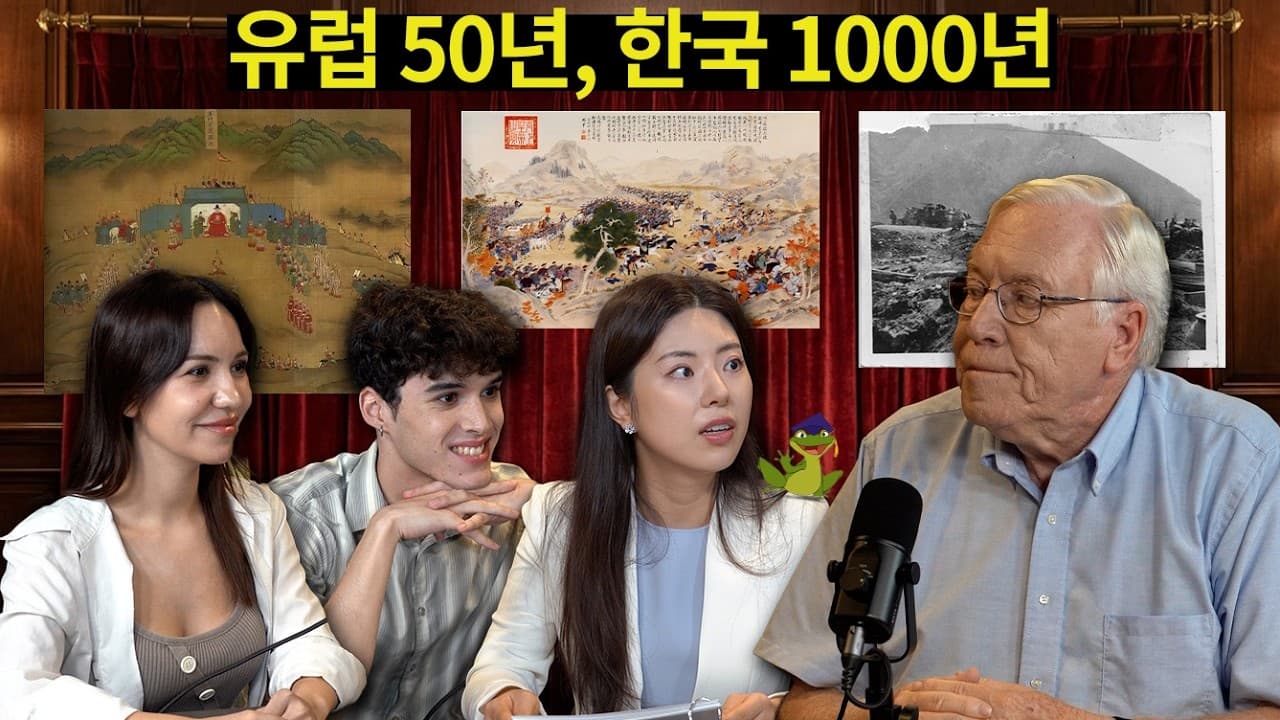
Korea repeatedly recovered from major crises by restoring social order, preserving unity, and relying on a scholarly culture that valued learning and adaptation. Professor Mark Peterson argues that Korea's past contains fewer major invasions than its popular victim narrative suggests, alongside long dynasties, a stable northern border, rapid postwar development, and meaningful political change.
Transcript
coming in the taxi here today, the taxi driver said, "Oh, our politics is so bad." >> And my response was, "Everybody's politics is bad." >> Yeah. >> And that's really a good thing. >> It's a good thing that you can talk about it and say it's bad. It's bad because you want to vote for the other guy. And that's and that's a good thing. Korea only ha... Read More
Key Insights
- Korea's resilience is rooted in its ability to restore social order after chaos. Following the Japanese invasion of 1592, the king, aristocrats, farmers, and enslaved people returned to their previous social positions, even though the disruption could have enabled people to abandon that structure.
- The Japanese invasion of 1592 did not immediately cause Korea's later social changes. The transcript places major changes, such as daughters no longer receiving inheritances equal to sons, in the late 17th century, about a hundred years after the invasion rather than directly after it.
- Seonbi culture is presented as a major source of Korean resilience. Its scholarly mentality emphasized learning how to manage difficult conditions, helping Korean society adjust after the Mongol invasion, the Japanese invasion of 1592, and the Korean War.
- Korea's history includes longer periods of peace and stability than the popular invasion narrative implies. Professor Peterson argues that the severe colonization, division, war, and continued separation of the 20th century have projected a sense of victimization backward onto the country's entire past.
- Claims of hundreds of Korean invasions depend on counting minor incidents as full invasions. One teacher reportedly identified approximately 982 invasions by including events such as small pirate raids, but Peterson argues that such broad classification makes the word invasion lose its meaning.
- The Mongol invasion in the 13th century and the Japanese invasion of 1592 are identified as Korea's two major invasions before the Korean War. Incursions involving groups such as the Khitans and Jurchens are described as smaller skirmishes that did not alter the northern border.
- The Amnok River boundary is described as having remained Korea's border for a thousand years. Peterson contrasts this continuity with European borders that moved repeatedly during wars, using the stable boundary to challenge the idea that Korean history consisted primarily of constant invasion and territorial disruption.
- Modern Korea's economic transformation continued its historical pattern of rapid recovery. Peterson recalls that annual per capita income was $125 when he first arrived in 1965, with no high-rise buildings, yet the country industrialized and became fundamentally different within a relatively short period.
Install to Summarize YouTube Videos and Get Transcripts
Explore YouTube Video Summarizer or Get YouTube Transcript Extractor
Questions & Answers
Q: Why was Korea able to recover quickly after major crises?
Korea recovered quickly because its society prioritized restoring order, maintained unity after major disruptions, and drew on a scholarly culture oriented toward learning and adaptation. Professor Peterson sees this pattern after the Mongol invasion, the Japanese invasion of 1592, and the Korean War. Stable dynasties and a durable border also suggest that Korea possessed strong institutions between periods of chaos.
Q: How did Korea restore society after the Japanese invasion of 1592?
After the Japanese forces left, the established social order largely resumed. The king returned to rule, aristocrats resumed their status, farmers returned to farming, and enslaved people returned to their former positions. Peterson finds the last example especially striking because wartime disorder offered opportunities to escape. Their return shows how strongly Korean society valued restoring its previous structure after the crisis.
Q: Did the Japanese invasion of 1592 immediately transform Korean society?
The interview argues that it did not. Although many people connect the invasion directly to later social changes, Peterson says the established order was restored after the war. Significant changes appeared about a hundred years later, in the late 17th century. His inheritance example is that daughters had received shares equal to sons before that later transformation, so the timing weakens a direct causal connection.
Q: What role did seonbi culture play in Korea's resilience?
Seonbi culture is described as a culture of scholars whose mentality emphasized learning how to do things and adjusting intelligently to disorder. Peterson proposes that this intellectual orientation helped Korea reorganize after severe crises. He applies the idea to recovery following the Mongol invasion, the Japanese invasion of 1592, and the Korean War, treating scholarly adaptability as a recurring source of national resilience.
Q: Was Korea really invaded hundreds of times throughout history?
Peterson disputes that interpretation because extremely high totals count small raids and skirmishes as invasions. He recalls a teacher who found approximately 982 incidents by marking every possible case, including minor pirate raids from the east coast. Peterson argues that classifying every small event as an invasion empties the term of meaning and strengthens an unnecessarily broad historical sense of victimhood.
Q: What were Korea's major invasions before the Korean War?
Peterson identifies two major invasions before the Korean War: the Mongol invasion in the 13th century and the Japanese invasion of 1592. He treats other episodes, including incursions associated with the Khitans and Jurchens, as smaller skirmishes because they did not change Korea's northern border. This distinction supports his argument that Korea experienced substantial stability between its largest crises.
Q: Why does Peterson describe Japan's 20th-century takeover differently from an invasion?
Peterson calls it a political and subtle takeover rather than an invasion involving ships and soldiers landing in a conventional attack. He says Korean political cooperation enabled the takeover, while many ordinary peasants did not initially understand what had happened. The March 1st movement came nine years later, when Koreans asserted that they were an independent country and increasingly resisted Japanese control.
Q: How does Korea's historical resilience relate to its modern development?
Peterson sees modern industrialization as another example of Korea's capacity to recover and transform rapidly. When he first arrived in 1965, annual per capita income was $125, the population was desperately poor, and high-rise buildings were absent. He describes contemporary Korea as a completely different country created within a relatively short period, alongside extensive political, economic, and social change.
Summary & Key Takeaways
-
Korea restored its established social structure remarkably quickly after the Japanese invasion of 1592. The king, aristocrats, farmers, and enslaved people returned to their former positions, indicating that preserving social order mattered deeply. Major social changes, including altered inheritance practices, emerged about a century later rather than immediately after the invasion.
-
Professor Mark Peterson connects Korea's historical resilience to seonbi culture, a scholarly mentality centered on learning and adapting. He sees similar recovery after the Mongol invasion, the Japanese invasion of 1592, and the Korean War. After the Mongol period, Korea eventually moved from the Goryeo dynasty to a fresh start under Joseon.
-
The claim that Korea endured countless invasions can exaggerate minor raids and border skirmishes by labeling every incident an invasion. Peterson emphasizes long periods of peace, stable dynasties, and a northern border maintained for a thousand years. He connects this historical stability and social unity to Korea's exceptionally rapid modern industrialization and transformation.
Read in Other Languages (beta)
Share This Summary 📚
Summarize YouTube Videos and Get Video Transcripts with 1-Click
Try YouTube Summary with ChatGPT & Claude or YouTube Transcript Generator