Why Do You Keep Quitting Online Courses and Then Buying More?
TL;DR
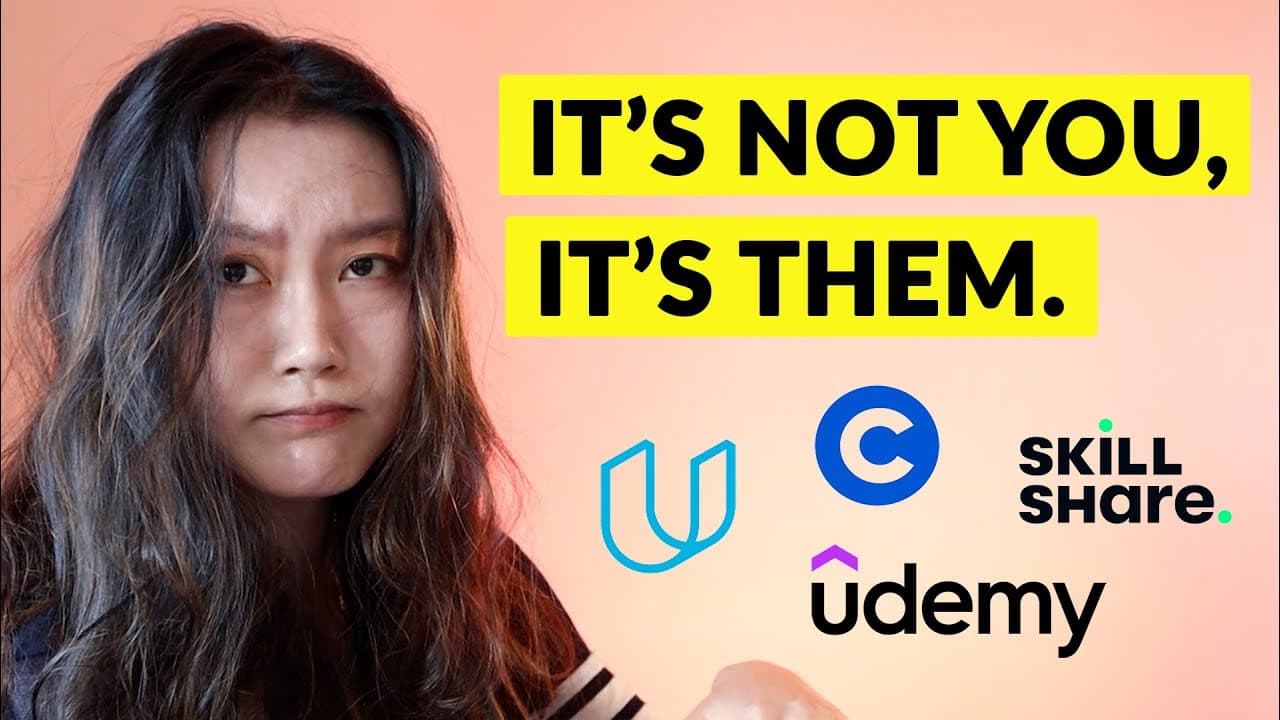
People often quit online courses because many platforms optimize for growth, lower costs, and larger catalogs instead of effective learning experiences. Only an estimated 4% to 10% of learners finish each course, while overwhelming choice and self-improvement marketing encourage repeated purchases. Choosing a genuinely interesting, high-quality course and adding structure, projects, interaction, and community can improve completion. Read on for practical ways to change your learning environment.
Transcript
i'm sure many of you guys have had the experience when you go and buy an online course you are super super excited about it as time goes on the intervals of you actually doing this course starts becoming longer and longer and at some point you stop you quit then you feel very sad and you feel very guilty well you're not alone in this situation in f... Read More
Key Insights
- Online course completion rates are between four and ten percent.
- Platforms prioritize shareholder profit over optimizing learning experiences.
- Many courses exploit human tendencies for self-improvement, similar to gym memberships.
- Udemy and Skillshare focus on expanding course catalogs and lowering costs, impacting quality.
- Coursera and Udacity offer higher quality, more expensive courses with better completion rates.
- None of the major online learning platforms are currently profitable.
- The paradox of choice can overwhelm learners, leading to course abandonment.
- Improving online learning involves adding interactive, project-based elements and engaging communities.
Install to Summarize YouTube Videos and Get Transcripts
Explore YouTube Video Summarizer or Get YouTube Transcript Extractor
Questions & Answers
Q: Why do people keep quitting online courses and then buying more?
Online courses appeal to the desire for self-improvement, creating excitement at the time of purchase. As study sessions become less frequent, learners stop, feel guilty, and may seek the same excitement by buying another course. Platforms can reinforce this cycle by emphasizing extensive catalogs, subscriptions, low prices, and marketing rather than course completion.
Q: What percentage of people finish online courses?
An estimated 4% to 10% of people finish each online course. The transcript describes this low completion rate as evidence that many online learning experiences are not optimized primarily for successful learning.
Q: How do online learning platforms contribute to low completion rates?
Platforms may prioritize shareholder returns, catalog growth, lower costs, and attracting more students over designing the best learning environment. Udemy and Skillshare moved away from more interactive formats toward models that scale more easily, even though virtual classrooms, collaboration, and projects are described as vital components of effective learning.
Q: How do Udemy and Skillshare differ from Coursera and Udacity?
Udemy and Skillshare emphasize scalable access through low-cost courses or a subscription catalog. The existing page material describes Coursera and Udacity as offering higher-quality, more expensive courses, while noting that both began in academia with university-developed online courses.
Q: What is the paradox of choice in online learning?
The paradox of choice occurs when a large course catalog overwhelms learners and makes it harder to commit to one option. That abundance can encourage people to move between courses instead of completing the course they already chose.
Q: What role does marketing play in the online-course business?
Major platforms invest heavily in marketing to attract instructors and students and expand their catalogs and user bases. Marketing can also exploit the desire for self-improvement, much like a gym membership that feels exciting initially but is later abandoned.
Q: How can learners improve their online course completion rates?
Learners should choose a high-quality course that genuinely interests them instead of being guided mainly by low prices or a large selection. They can also create a structured, supportive learning environment and focus on one course rather than repeatedly switching or purchasing more.
Q: How can online learning become more interactive and effective?
Learners can add live interaction, participate in a learning community, and select project-based courses. They can also create their own projects to apply what they study, restoring some of the collaboration and practical work that scalable course catalogs may remove.
Summary & Key Takeaways
-
Online learning platforms often prioritize profit over quality, leading to low completion rates. Most platforms, like Udemy and Skillshare, focus on expanding their course catalogs and reducing costs, which affects course quality. Learners can improve their experience by selecting courses carefully and creating a supportive community.
-
Despite the vast availability of courses, completion rates remain low due to the paradox of choice and marketing strategies that exploit self-improvement desires. Platforms like Coursera and Udacity provide higher quality courses, but they are more expensive. Learners should focus on quality over quantity and add interactive elements to their learning.
-
None of the major online learning platforms, including public companies like Coursera and Udemy, are profitable. They invest heavily in marketing to attract instructors and students. To enhance learning, individuals should create a structured environment and choose courses that genuinely interest them, avoiding the temptation of low-cost, low-quality options.
Read in Other Languages (beta)
Share This Summary 📚
Summarize YouTube Videos and Get Video Transcripts with 1-Click
Try YouTube Summary with ChatGPT & Claude or YouTube Transcript Generator
Explore More Summaries from Tina Huang 📚





Summarize YouTube Videos and Get Video Transcripts with 1-Click
Try YouTube Summary with ChatGPT & Claude or YouTube Transcript Generator