What Are Warren Buffett's 3 Investment Principles? | 글로벌초대석 EP.8 (Texas)
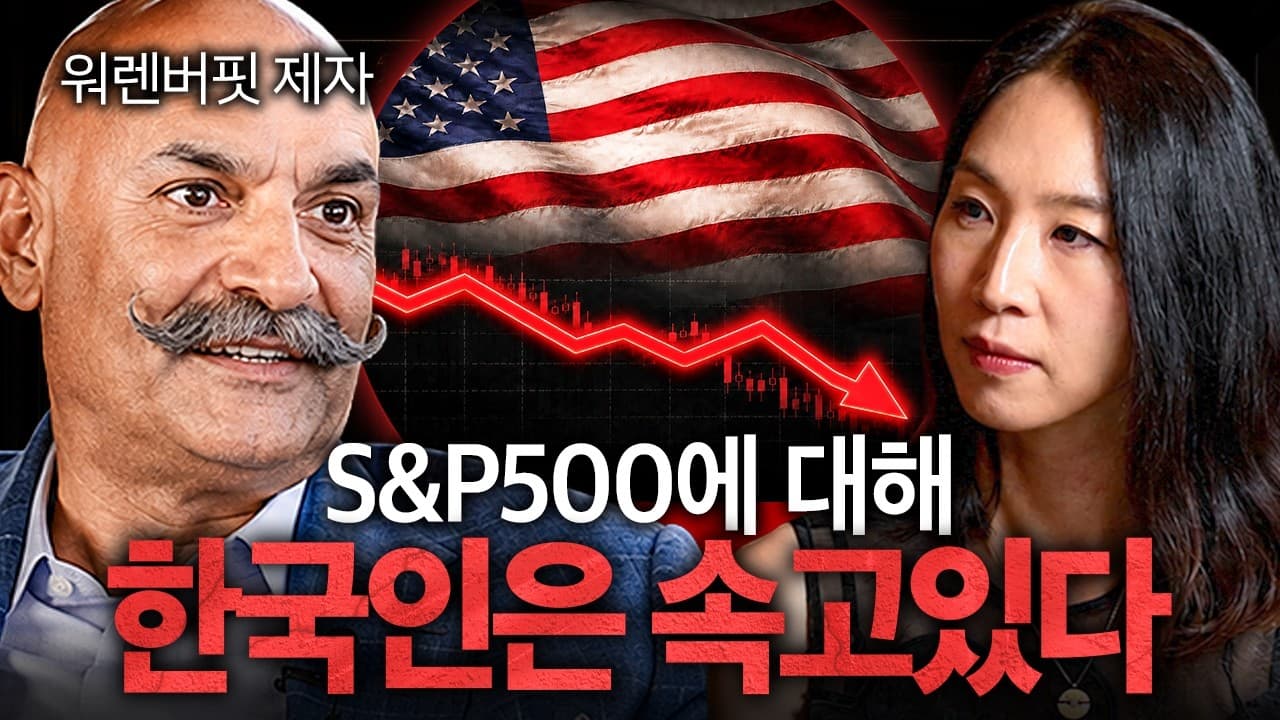
TL;DR
Warren Buffett’s three central investment principles are to avoid leverage, choose businesses with sustainable competitive advantages, and assess management quality carefully. He also advises spending less than you earn; according to a story he shared over lunch, even a slightly above-average investor can become wealthy over a lifetime by following that discipline without leverage. Read on for his views on Berkshire Hathaway, Korean semiconductor stocks, and the S&P 500.
Transcript
When Warren told us this story when we met him for lunch, he said that if you are even a slightly above average investor and you spend less than you earn, you cannot help but get wealthy over a lifetime if you don't use leverage. If I were Korean, I would spend less than I earn and then I would put the different index. In fact, we can be better tha... Read More
Key Insights
- Warren Buffett advises against using leverage, highlighting its potential to cause financial ruin even for skilled investors.
- Investing in businesses with a sustainable competitive advantage, or 'moat', is crucial for long-term success.
- The quality of management and owners is a key factor in evaluating a company's potential for growth and stability.
- Buffett suggests that the best way for retail investors to start is by investing in Berkshire Hathaway as a diversified index.
- The S&P 500 has historically provided strong returns, but specific periods have seen stagnation, emphasizing the need for strategic investment timing.
- Buffett's investment checklist includes over 213 questions, focusing on leverage, competitive advantage, and management quality.
- Retail investors can leverage their consumer experiences to identify potential investment opportunities in companies they personally use and trust.
- Buffett's investment philosophy emphasizes patience and holding onto great businesses even if they appear overvalued.
Install to Summarize YouTube Videos and Get Transcripts
Explore YouTube Video Summarizer or Get YouTube Transcript Extractor
Questions & Answers
Q: What are Warren Buffett’s top three investment principles?
The three principles are avoiding leverage, investing in businesses with sustainable competitive advantages, and evaluating management quality. Together, they aim to reduce the risk of ruin and identify companies capable of producing durable long-term results.
Q: Why does Warren Buffett advise investors to avoid leverage?
Buffett said that a slightly above-average investor who spends less than they earn can become wealthy over a lifetime if they do not use leverage. Avoiding borrowed money reduces the danger that financial pressure will derail an otherwise sound long-term strategy.
Q: What investing approach was recommended for Korean retail investors?
The recommendation was to spend less than you earn and invest the difference in Berkshire Hathaway Class B shares, or BRK.B. Berkshire was presented as an index-like combination of many businesses, stock holdings, and substantial cash that was not considered overvalued.
Q: Why was Berkshire Hathaway suggested instead of the Korean index?
The speaker said the Korean index was unusually dominated by SK Hynix and Samsung, so buying it did not provide the expected index diversification. Berkshire Hathaway was suggested as a different index because it combines numerous operating businesses, stocks, and cash.
Q: How should individual investors approach Korean AI and memory-chip stocks?
The speaker advised individual investors not to play directly in this area because the memory and AI businesses have many fine nuances. SK Hynix, Samsung, and Micron were described as the three companies that basically own the memory market, with cash flows that were not trading at crazy valuations.
Q: How are memory-chip companies trying to secure AI-related revenue?
Micron, SK Hynix, and Samsung were described as offering customers long-term contracts at set prices. These take-or-pay agreements require a customer to pay for an agreed memory volume even if it does not buy that volume, helping lock in revenue and profitability for several years.
Q: What historical returns and stagnant periods were cited for the S&P 500?
The S&P 500 was said to have averaged more than 9% annually over roughly 100 years. However, it produced approximately zero returns from 1965 to 1982 and again from 1999 to about 2010, while the period from 1982 to 1999 delivered an approximately fifteenfold rise.
Q: What was the outlook for the S&P 500 from 2026 through 2035?
The speaker said it would not be surprising if the S&P 500 averaged between minus 2% and plus 2% annually over the next 10 years from 2026. The view presented was that the index might be ready for its next major run around 2035, making Berkshire Hathaway an index-like alternative during the intervening period.
Summary & Key Takeaways
-
Warren Buffett's investment principles focus on avoiding leverage, investing in businesses with sustainable competitive advantages, and assessing management quality. By spending less than you earn and investing wisely, even slightly above-average investors can accumulate wealth over time. Buffett advocates for starting with Berkshire Hathaway as a diversified index for retail investors.
-
Buffett's investment checklist includes over 213 questions, emphasizing the importance of leverage, competitive advantage, and management quality. He highlights the dangers of chasing fads and the value of independent thought in investing. Retail investors can gain an edge by leveraging their consumer experiences to identify promising companies.
-
The S&P 500 has provided strong returns historically, but specific periods have seen stagnation, underscoring the importance of strategic timing. Buffett's philosophy emphasizes patience and holding onto great businesses, even if they appear overvalued, as the market returns often come from a few key companies.
Read in Other Languages (beta)
Share This Summary 📚
Summarize YouTube Videos and Get Video Transcripts with 1-Click
Try YouTube Summary with ChatGPT & Claude or YouTube Transcript Generator
Explore More Summaries from 지식인사이드 📚






Summarize YouTube Videos and Get Video Transcripts with 1-Click
Try YouTube Summary with ChatGPT & Claude or YouTube Transcript Generator