Power of Humor in Public Speaking
TL;DR
Humor makes speakers more likeable, diffuses tension, and helps audiences remember messages by engaging both cognitive and emotional processing. Studies show it lowers blood pressure and creates a level of comfort between speaker and listener. Presenters can use it to introduce levity, strengthen a message, and break the ice.
Transcript
[MUSIC] As you all know, Oscar Wilde is quite One of them goes as follows. If you wanna tell people the truth, make [LAUGH]. >> As you might have guessed, we're gonna And more specifically, about its function its overall significance in effective Let me start first with a story, an Once upon a time, there was a king's And there was a beloved and ve... Read More
Key Insights
- Humor works through a two-step process: a cognitive process kicks in first, followed by an emotional process, so it engages a listener's whole being and makes it effective for engaging an audience.
- Humor benefits the body, as medical studies have shown that when we laugh our blood pressure drops, demonstrating a measurable physiological effect.
- Humor is good for social communication because it allows a speaker to diffuse tension and address a difficult topic in a way that is easier for the audience to receive.
- A UC professor of medicine who contracted a serious illness in the 1960s chose laughter and comedy as part of his treatment, watching funny films, and found laughter had an anesthetic effect.
- Introducing levity is one use of humor, letting a speaker send a message in a nice way to the audience, as seen when Barack Obama opened a White House Correspondents' Dinner.
- Humor makes a message more powerful and memorable, which is why a humorous phrase said in business school is still remembered.
- Breaking the ice with humor reduces anxiety and makes having a conversation with the audience feel more natural and connected.
- Practicing humor produced better posture, more confidence, fewer filler words, and a more compelling presence among classmates by the end of a presentation course.
Install to Summarize YouTube Videos and Get Transcripts
Explore YouTube Video Summarizer or Get YouTube Transcript Extractor
Questions & Answers
Q: How does humor improve public speaking?
Humor improves public speaking by creating a level of comfort between the presenter and the audience, making the presenter more likeable, and helping the audience connect with them. It diffuses tension, allows difficult topics to be addressed more easily, and makes messages more memorable. Practicing humor was also observed to produce better posture, more confidence, fewer filler words, and a more compelling presence in speakers.
Q: What does humor do to our brains and bodies?
Humor is a two-step process in the brain: a cognitive process kicks in first, followed by an emotional process, so it encompasses our whole being, which is why it is so good for engaging an audience. For the body, medical studies have shown that when we laugh our blood pressure drops, demonstrating that humor has a real, measurable physiological effect beyond just feeling good.
Q: How can laughter affect physical health?
A professor of medicine at UC in the 1960s contracted a serious illness and chose to include laughter and comedy as part of his treatment. He watched funny films, listened to comedy, and tried to laugh more, and he realized that laughter and humor had an anesthetic effect. Medical studies referenced in the talk also show that laughter lowers blood pressure, indicating a genuine impact on the body.
Q: What are the three main ways humor helps communication?
Humor helps communication in three ways. First, it is good for our minds by engaging the brain through a combined cognitive and emotional process. Second, it is good for our bodies, lowering blood pressure when we laugh. Third, it is good for our social communication, letting a speaker diffuse tension and address a difficult topic in a way the audience can more readily accept.
Q: When should a speaker use humor in a presentation?
A speaker can use humor to introduce levity, sending a message in a nice way to the audience; to make a message more powerful and memorable, since humorous phrases tend to stick; and to break the ice, which reduces anxiety and makes having a conversation with the audience feel more natural. Each of these situations lets humor improve communication and build a connection with listeners.
Q: Why did Barack Obama use humor at the White House Correspondents' Dinner?
At the White House Correspondents' Dinner, humor was used to introduce levity, a moment where people relax and unwind. The impact was that the speaker came across as very natural and brought a human aspect that helped the audience connect with him. It also helped the whole event flow and kept people engaged, showing how levity makes a presenter relatable while still delivering a message.
Q: How does humor make a message more memorable?
Humor makes a message more memorable because it engages both cognitive and emotional processing, encompassing a listener's whole being. The talk noted that a phrase used in business school is still remembered specifically because of the humor attached to it. By pairing a point with something funny, a speaker can communicate blunt or difficult statements in a way that sticks with the audience long after the presentation ends.
Q: What benefits did students see from practicing humor in presentations?
By the end of the presentation class, students who practiced using humor showed several improvements. They demonstrated great posture, a lot of confidence in how they presented, and much fewer filler words, which suggests greater comfort with the audience. They also displayed a compelling presence. The speakers noted that humor gives a speaker a stronger presence in front of an audience, benefiting both the speaker and the listeners.
Summary
This video discusses the function and significance of humor in effective communication. It explores examples from anecdotes, scientific studies, and practical applications to highlight the impact of humor on our brains, bodies, and social relationships. The video emphasizes how humor can be used to introduce levity, make messages powerful, and break the ice with an audience.
Questions & Answers
Q: What is the anecdote about the jester and the king, and what is the significance of the jester's response?
The anecdote tells the story of a court jester who insulted the king and faced execution. The court, which loved the jester, pleaded with the king to let the jester decide how he should die. The jester cleverly responded with a humorous request to die of old age, ultimately saving his own life. The significance of this response is that humor can be a powerful tool to defuse tension, address difficult topics, and influence the outcome of a situation.
Q: How did Norman Cousins use humor in his treatment for heart disease?
Norman Cousins, a professor of medicine, incorporated laughter and comedy into his therapeutic methods after contracting serious heart disease. He watched funny films, listened to funny clips, and actively sought opportunities to laugh more. Cousins discovered that laughter and humor had an anesthetic effect similar to painkillers. This suggests that humor can have a positive impact on our bodies and even act as a form of medicine.
Q: How does humor engage our brains, and what is the two-step process of enjoying a joke?
Humor engages our entire brain, as evidenced by studies showing increased brain activity from jokes. This engagement is beneficial for attention and memory. The process of enjoying a joke involves two steps. First, cognitive processes kick in, allowing us to understand the joke intellectually. Second, an emotional process occurs, enabling us to experience enjoyment and find the joke funny. This two-step process illustrates how humor encompasses our whole being and affects us in both cognitive and emotional ways.
Q: What impact does humor have on our bodies, according to medical studies?
Medical studies have demonstrated several positive effects of laughter and humor on our bodies. When we laugh, our muscles relax, blood pressure decreases, and our overall immunity is boosted. These findings suggest that humor can have a physiological impact on our well-being, acting as a form of medicine and reducing the negative effects of stress and tension.
Q: How does humor improve our social relationships?
Humor plays a crucial role in improving our social relationships. It helps diffuse tension in difficult situations and allows us to address sensitive topics through shared laughter. By using humor, we can create a more relaxed and positive atmosphere, making it easier to connect with others and strengthen our bonds.
Q: How can humor be used to introduce levity in presentations?
Humor can be used to introduce levity in presentations, particularly when dealing with complex subjects. By delivering messages in a simple and humorous way, presenters can engage the audience and make the content more relatable. Through levity, presentations become more enjoyable and memorable, enhancing the overall impact and effectiveness of the communication.
Q: How can humor make a message more powerful?
Humor has the power to amplify the impact of a message. A prime example is Jon Stewart's use of humor in The Daily Show to highlight specific political issues effectively. By injecting humor, the message becomes more poignant and memorable for the audience. This approach can also be seen in the GSB show, where humor is used to convey statements or critiques in a blunt yet impactful manner.
Q: How does humor help break the ice and engage with an audience?
Humor is a great tool for breaking the ice and fostering engagement with an audience. It helps to reduce anxiety and create a comfortable and relaxed atmosphere. By using humor, presenters can initiate conversations more smoothly, establish rapport, and create a positive connection with their audience.
Q: How does humor create comfort and trust in communication?
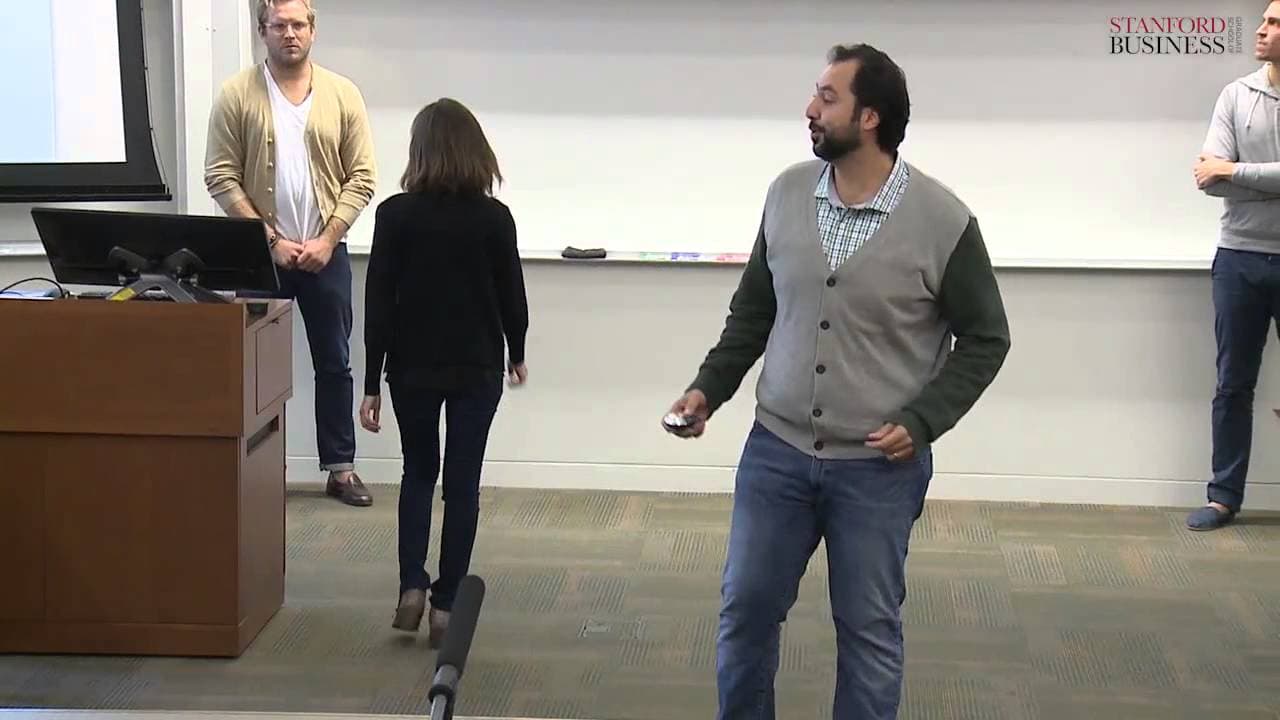
Humor plays a significant role in creating comfort and trust between presenters and audiences. When presenters use humor, they become more likable and relatable to the audience, making it easier for them to connect and establish trust. The exercise with Ken Dagle demonstrates how humor can help reduce anxiety and enhance effective communication.
Q: In what ways can humor transmit and amplify a presenter's intent?
Humor can act as a powerful vehicle for transmitting and amplifying a presenter's intent. The anecdote about the jester who saved his own life through humor illustrates how humor can convey higher intentions in a persuasive and memorable way. By framing messages through humor, presenters can make comments that might otherwise be caustic or blunt, effectively conveying their intended meaning.
Takeaways
Humor has proven to be a powerful agent in communication, benefiting both speakers and audiences. It creates comfort, trust, and likability while transmitting the presenter's intent and amplifying messages. Humor can be employed to introduce levity, make messages powerful, and break the ice with an audience. Various free and easily accessible resources such as YouTube, articles, books, webinars, and videos can provide guidance on effectively using humor in verbal communication. By harnessing the power of humor, speakers can enhance their presentation skills and effectively engage their audience.
Summary & Key Takeaways
-
Humor serves an important function in effective communication. Speakers opened with Oscar Wilde and a jester anecdote, showing how a whimsical response can save a situation, then moved to the science and practical use of humor in presentations and verbal communication.
-
The science shows humor helps in three ways: it is good for our minds by engaging the brain through a combined cognitive and emotional process, good for our bodies by lowering blood pressure, and good for our social communication by diffusing tension.
-
In practice, humor introduces levity, makes a message powerful and memorable, and breaks the ice to reduce anxiety. Examples included Obama at the White House Correspondents' Dinner and the GSB show delivering pointed messages through comedy.
Read in Other Languages (beta)
Share This Summary 📚
Summarize YouTube Videos and Get Video Transcripts with 1-Click
Try YouTube Summary with ChatGPT & Claude or YouTube Transcript Generator
Explore More Summaries from Stanford Graduate School of Business 📚




Summarize YouTube Videos and Get Video Transcripts with 1-Click
Try YouTube Summary with ChatGPT & Claude or YouTube Transcript Generator