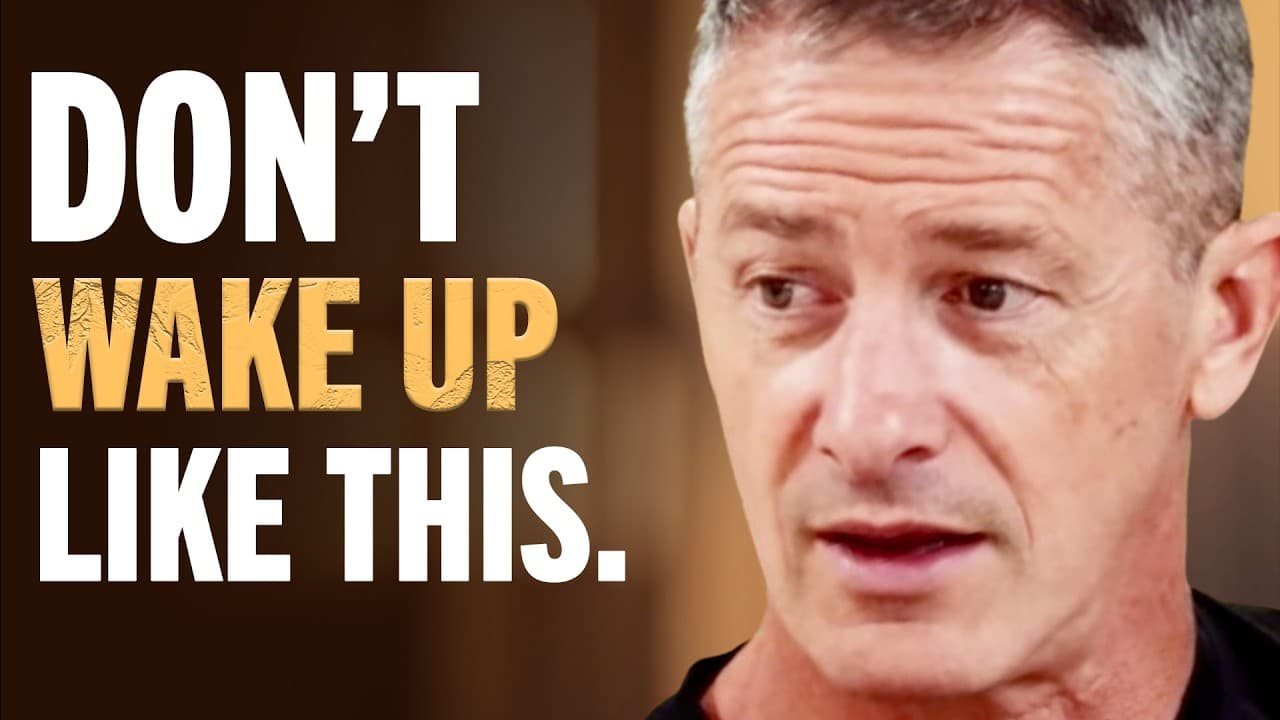
How Can Breathing Help You Recover From Stress? | Brian Mckenzie
TL;DR
Breathing can help you recover from stress by lowering arousal and creating space to choose your next response. Brian Mckenzie explains that stress automatically activates the nervous system and releases adrenaline and norepinephrine, while deliberate breaths can support recovery and clearer interpretation. Breath work cannot resolve pain you refuse to confront, so read on to understand how bodily regulation and cognitive reframing work together.
Transcript
Breathing is not just about your ability to run a fast 5k on Saturday or your ability to relax in yoga. It is metabolic health. It's cognitive health. It's hormonal health. Like your breath is at the center of everything. And therefore, it's striking that so many of us don't pay attention to our breath or even know how to manipulate our breath to c... Read More
Key Insights
- Breathing is connected to metabolic, cognitive, and hormonal health, not only running performance or relaxation. Because breath sits at the center of many physical and psychological processes, awareness of breathing patterns can reveal changes in arousal and provide a practical way to influence one’s state.
- Breath awareness is the ability to let breathing happen while paying attention to it. Deliberate control can regulate arousal at useful moments, but awareness also helps a person notice when breathing is simply following an established physiological, emotional, or defensive pattern.
- Breathing techniques cannot resolve pain that a person refuses to confront. A defensive pattern may have developed in response to a hostile childhood environment, and controlling breath without acknowledging that underlying history can leave the root cause disguised or camouflaged.
- The stress response begins with a stimulus, followed by nervous-system activation and physiological processes that influence behavior. A sudden driving hazard, for example, can automatically produce gripping, braking, sympathetic arousal, and the release of adrenaline and norepinephrine before conscious interpretation occurs.
- Everyone responds physiologically to stress, including calm people and highly trained individuals such as Navy SEALs. The important difference is not eliminating the initial response, but developing the capacity to recover from it and choose behavior instead of remaining trapped in reactivity.
- Breath work is an intervention between emotional activation and subsequent behavior. Taking one or several breaths can reduce arousal enough to reconsider what happened, challenge an impulsive interpretation, and recognize that another person’s action may not have been a deliberate personal attack.
- Emotional reactions can generate stories that justify and prolong the original response. When someone interprets an accidental or impersonal event as intentional hostility, psychology and physiology reinforce each other, while breathing patterns continue to reflect the escalating state.
- Lasting calm can emerge from combining cognitive reframing with bodily practices. Repeatedly examining what insecurity or inadequacy a stimulus activates, while also working on breathing and movement, can gradually change the default response without treating the mind and body as separate systems.
Install to Summarize YouTube Videos and Get Transcripts
Explore YouTube Video Summarizer or Get YouTube Transcript Extractor
Questions & Answers
Q: How can breathing help someone recover from stress?
Breathing can intervene after the body automatically reacts to a stressful stimulus. One or several deliberate breaths may reduce arousal and create enough space to reassess what happened, question an impulsive interpretation, and choose the next behavior.
Q: Can breathing techniques eliminate the automatic stress response?
No. The initial physiological response to sudden stress is described as universal and hardwired, so breath training does not prevent the nervous system from reacting. It can instead improve recovery and help prevent the initial reaction from controlling what happens next.
Q: What happens in the body during a sudden stressful event?
A stimulus first puts the sensory and nervous systems on high alert, producing an immediate action such as gripping the wheel and braking when another driver cuts in front of you. Sympathetic activity then rises as neurotransmitters and hormones, including adrenaline and norepinephrine, are released and influence subsequent behavior.
Q: Why is recovery more important than avoiding stress responses?
Everyone experiences physiological changes when confronted by a sudden threat, so completely avoiding the response is not presented as a realistic goal. Recovery allows arousal to fall after the danger passes, making it possible to interpret the event more clearly and choose a response instead of remaining reactive.
Q: Can breath work resolve unresolved childhood pain?
Breath work may regulate the nervous system enough to help someone look inward, but it cannot replace confronting unresolved pain. If a defensive pattern developed in a hostile childhood environment, controlling breathing without examining that history can leave the root cause disguised or camouflaged.
Q: How do personal stories prolong emotional reactions?
A person can prolong stress by interpreting an impersonal event as intentional hostility. For example, treating another driver’s action as a personal attack can reinforce the emotional reaction, sustain physiological arousal, and keep behavior organized around confrontation.
Q: How can cognitive reframing reduce emotional triggers?
Cognitive reframing involves reconsidering whether an event was truly intentional and examining what insecurity, inadequacy, or unresolved issue it activated. Repeating that reflection after emotionally charged events can gradually support a calmer default response to future stimuli.
Q: Why combine breathing practices with cognitive reframing?
Breathing practices can change arousal, while cognitive reframing can change the story assigned to a stressful event. Used together, they address the linked physiological and psychological processes that sustain reactivity, rather than treating the mind and body as separate systems.
Summary & Key Takeaways
-
Breathing is connected to metabolic, cognitive, and hormonal health, as well as athletic performance and relaxation. Becoming aware of breathing patterns can help people recognize changes in their internal state. Deliberate breaths may then serve as an intervention when stress, emotion, or an unwanted behavioral reaction begins to take control.
-
A stressful stimulus activates the nervous system and produces physiological changes involving muscle tension, sympathetic arousal, neurotransmitters, and hormones such as adrenaline and norepinephrine. This automatic response occurs even in highly trained people. The meaningful difference is their capacity to recover from stress and choose their behavior after the initial reaction.
-
Breath practices can help lower arousal and create room for a more realistic interpretation of events, but they cannot replace confronting unresolved pain. Lasting change may involve both bodily work and cognitive reframing. Regularly examining personal triggers, insecurities, defensive patterns, and inaccurate stories can gradually produce a calmer default response.
Read in Other Languages (beta)
Share This Summary 📚
Summarize YouTube Videos and Get Video Transcripts with 1-Click
Try YouTube Summary with ChatGPT & Claude or YouTube Transcript Generator
Explore More Summaries from Dr Rangan Chatterjee 📚



Summarize YouTube Videos and Get Video Transcripts with 1-Click
Try YouTube Summary with ChatGPT & Claude or YouTube Transcript Generator