Jimmy Corsetti Shares New Evidence for Atlantis Theory
TL;DR
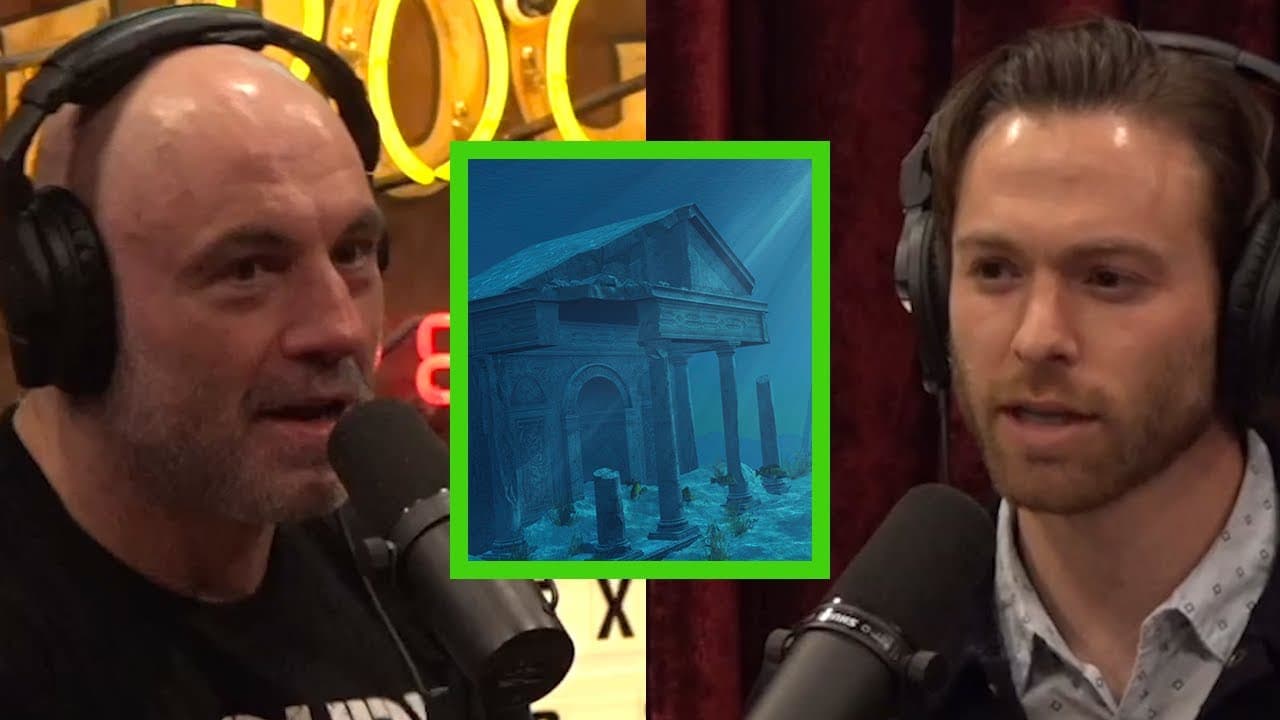
Jimmy Corsetti argues that the Richat Structure, also called the Eye of the Sahara, in Mauritania matches Plato's lost capital of Atlantis by more than a dozen striking similarities. These include concentric rings of three bands of water and two of land, an opening to the sea at its south, and mountains to the north. He also points to the Atlas Mountains, Mauritania's gold, once-abundant elephants, and clear water erosion. Read on for the full case he laid out on Joe Rogan.
Transcript
The Joe Rogan Experience Jimmy I watched your your whole series on Atlanta all day today I've been watching for hours I've been watching the impact videos videos about the the Atlanta structure and so let's just get into it let's do it so the Rashad structure I was on your show a little over a year ago and shared some details about it to people who... Read More
Key Insights
- 🧔 The Rishad structure in Mauritania bears striking resemblances to Plato's description of Atlantis.
- 💦 Geological evidence of water erosion in the Sahara suggests a hidden history of catastrophic events.
- ⛩️ Connections between Egyptian myths and Atlantis hint at shared knowledge across ancient civilizations.
- 👨🔬 Limited research in the Sahara due to harsh conditions and logistical challenges impedes thorough exploration.
- ❤️🩹 The timeline of Atlantis aligns with geological data from cataclysmic events at the end of the Younger Dryas period.
- 👨🔬 The importance of interdisciplinary research in uncovering hidden histories and challenging established narratives.
- 💱 The significance of linguistic and historical changes over millennia in understanding ancient civilizations.
Install to Summarize YouTube Videos and Get Transcripts
Explore YouTube Video Summarizer or Get YouTube Transcript Extractor
Questions & Answers
Q: What is Jimmy Corsetti's evidence that Atlantis was in the Sahara?
Corsetti points to the Richat Structure in the western Sahara Desert of Mauritania, saying it matches more than a dozen striking similarities to Plato's description of the lost capital of Atlantis. He cites its concentric rings, an opening to the sea at the south, nearby mountains, gold, and evidence of water erosion. He shared these details on The Joe Rogan Experience and in his Bright Insight YouTube videos.
Q: What is the Richat Structure and why is it called the Eye of the Sahara?
The Richat Structure is a geological feature in the western Sahara Desert of Mauritania, commonly known as the Eye of the Sahara. Corsetti notes it is said to be volcanic in nature and is so spectacular that astronauts use it as a reference point from space. He says almost no one he meets has ever seen or heard of it before.
Q: How does the Richat Structure match Plato's description of Atlantis?
Plato described the Atlantis capital as made of concentric circles, three of water and two of land, which Corsetti says matches the Richat Structure. Plato also said it had an opening to the sea at the south, and satellite imagery appears to show water that ran through it. Plato placed mountains to the north, matching the nearby Atlas Mountain chain.
Q: What is the connection between Atlas and Atlantis in Corsetti's theory?
Atlas was said to be the very first king of Atlantis, and the mountains just north of the Richat Structure are the Atlas Mountains. Corsetti adds that the first known king of Mauritania, where the structure sits, was also named Atlas. He does not claim it is the same person, but treats the repeated name as another striking similarity.
Q: Why does Corsetti point to gold and elephants as evidence for Atlantis in Africa?
Plato said Atlantis had an abundance of gold with its outer walls lined in it, and Corsetti notes Mauritania is loaded with gold. He mentions Mansa Musa of the Mali Empire, which partly covered modern Mauritania, as the richest person ever known. Plato also described an abundance of elephants, which Corsetti says once lived in Mauritania but are effectively extinct there today.
Q: What happened to the Sahara that fits the story of Atlantis?
Corsetti explains that the Sahara was green and tropical until a few thousand years ago, holding one of the largest networks of rivers ever known and Mega Lake Chad, which he says was larger than all the North American Great Lakes combined. Plato described the aftermath of Atlantis as reeds of grass and a shoal of mud that blocked ships, which Corsetti connects to this drying. He also cites clear water erosion at the site that took place after the volcano.
Q: What colors and stone did Plato describe, and do they match the site?
Plato said Atlantis was made up of red, black, and white colored stone. Corsetti says this is another similarity found at the Richat Structure. He presents it as part of a broader pattern of geological details lining up with Plato's account.
Q: Where can you watch Jimmy Corsetti explain this Atlantis theory in full?
Corsetti discussed the theory on The Joe Rogan Experience, where Rogan praised the depth of his research. Corsetti also directs viewers to his YouTube channel, Bright Insight, and specifically a video titled about a lost ancient Roman map placing Atlantis in Sahara Africa. He says the video goes into far more detail than the conversation alone.
Summary
In this video, Jimmy from the YouTube channel Bright Insight discusses the similarities between the Rasat structure in the Sahara Desert and the description of Atlantis by Plato. He talks about the geological features, historical connections, and evidence of water erosion that support the theory that the Rasat structure could be the lost ancient capital city of Atlantis.
Questions & Answers
Q: Can you provide a brief overview of the Rasat structure and its connection to Atlantis?
The Rasat structure, also known as the Eye of the Sahara, is a site in Mauritania that matches the description of Atlantis given by Plato. It has volcanic origins and features concentric circles of land and water, similar to the layout of Atlantis. Furthermore, there are geological similarities, such as red, black, and white colored stones, gold abundance, and mountains in the region that align with Plato's description.
Q: Why is the Rasat structure considered to be such a significant discovery?
The Rasat structure is significant because it has numerous striking similarities to Plato's description of Atlantis. It has a location that matches, geological features that align, and historical connections that further support the theory. Astronauts even use it as a reference point from space due to its unique appearance.
Q: Why is it surprising that not many people are aware of the Rasat structure?
Despite its spectacular nature and compelling similarities to Atlantis, the Rasat structure remains relatively unknown. This is due to the Sahara Desert being a remote and inhospitable area, making it challenging to study and document. Additionally, the region is poorly studied, making it less likely to gain attention.
Q: What are some of the key connections between the Rasat structure and Plato's description of Atlantis?
Some of the key connections include the matching layout of concentric circles of land and water, the presence of mountains in the region associated with the name Atlas, the abundance of gold, and the presence of elephants. Additionally, the Rasat structure shows evidence of water erosion and aligns with the timeframe and events described by Plato.
Q: How does the existence of the Rasat structure in the Sahara Desert challenge previous beliefs about its history?
The Rasat structure challenges previous beliefs about the Sahara Desert's history by revealing that it was once a lush and green region with rivers and a massive freshwater lake. This counters the common perception of the desert as a barren and arid place. The evidence of water erosion and the existence of salt deposits suggest that the ocean once blasted through the Sahara, significantly more recently than previously known.
Q: What implications does the discovery of the Rasat structure have for climate science and geological study?
The discovery of the Rasat structure and its connections to the history of the Sahara point to significant shifts in climate and cataclysmic events. The evidence of water erosion challenges existing geological timelines and expands our understanding of the region's past. It highlights the importance of further study in the Sahara and its implications for climate change and ancient civilizations.
Q: Are there any other ancient civilizations or myths that correlate with the story of Atlantis?
Yes, there are correlations between the story of Atlantis and ancient Egyptian mythology. Egyptian origin stories mention an island sinking and the migration of civilization to subsequent lands. The connection between Atlantis and Egypt goes beyond Plato's mention, as Solon, Plato's distant relative, also traveled to Egypt in search of knowledge. This suggests that the story of Atlantis might have originated from Egypt and influenced subsequent civilizations.
Q: How does the timeframe of Atlantis align with other historical events?
The timeframe of Atlantis, estimated to be around 11,600 years ago, aligns with other cataclysmic events and shifts in climate. It falls at the end of the Younger Dryas period and marks the transition from a cold spell to the Holocene epoch. This thousand-year timespan is significant and represents a different world in terms of language, culture, and societal development.
Q: What challenges are faced in studying the Sahara Desert and the Rasat structure?
Studying the Sahara Desert, including the Rasat structure, poses several challenges. Firstly, the inhospitable environment with extreme temperatures makes it challenging to conduct detailed research. Additionally, the vast size of the desert and the lack of resources in the surrounding countries make logistics and documentation difficult. The Sahara remains relatively undocumented, limiting our knowledge of the region.
Q: What does the potential existence of Atlantis teach us about ancient civilizations and their legacies?
The potential existence of Atlantis and the evidence supporting it challenge our understanding of ancient civilizations and their legacies. It sheds light on the vastness of history, the impact of cataclysmic events, and the potential for knowledge to be passed down through generations. The story of Atlantis serves as a reminder that our modern world is connected to a complex and often mysterious past.
Takeaways
The discovery of the Rasat structure and its connections to the story of Atlantis challenge our understanding of history and ancient civilizations. The geological features, historical correlations, and evidence of water erosion provide compelling evidence that the Rasat structure may be the lost ancient capital city of Atlantis. This discovery has significant implications for climate science, geological study, and the understanding of our ancient past. The story of Atlantis also highlights the interconnectedness of ancient civilizations and the hidden knowledge that has been handed down through generations.
Summary & Key Takeaways
-
The Rishad structure in Mauritania mirrors Plato's description of the lost ancient capital city of Atlantis.
-
Geological features and historical legends align, suggesting Atlantis may have existed in the Sahara.
-
Evidence of catastrophic water erosion in the Sahara challenges traditional timelines and reveals a hidden history.
Read in Other Languages (beta)
Share This Summary 📚
Summarize YouTube Videos and Get Video Transcripts with 1-Click
Try YouTube Summary with ChatGPT & Claude or YouTube Transcript Generator
Explore More Summaries from PowerfulJRE 📚





Summarize YouTube Videos and Get Video Transcripts with 1-Click
Try YouTube Summary with ChatGPT & Claude or YouTube Transcript Generator