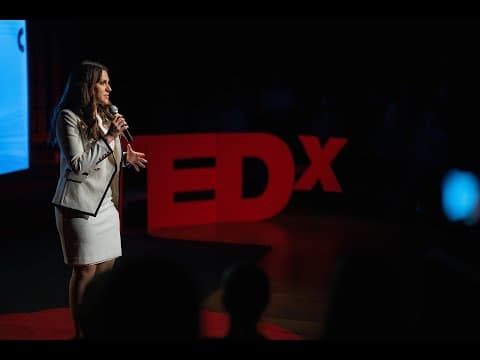
Neuroplasticity: Your Brain Can Do Anything | Daria Coman | TEDxYouth@BSB

TL;DR
Neuroplasticity is the brain's ability to adapt and change, shaping our potential and abilities through experiences and stimulation.
Transcript
uh I would like to introduce our third student speaker Daran from the Georg kbook internet bilingual college and she has a speech about neuroplasticity that your brain can do [Applause] anything what if I told you that the very essence of who we are our thoughts our abilities and our potential is not set in stone in fact these are constantly changi... Read More
Key Insights
- 🧠 Neuroplasticity enables the brain to adapt structurally after experiences, shaping our abilities and potential.
- ❓ Synaptic plasticity strengthens connections between neurons, enhancing learning and cognitive abilities.
- 🆘 Understanding neuroplasticity can help us overcome limitations, cultivate healthy habits, and shape our destinies.
- 💨 Children have higher synaptic plasticity, enabling faster learning during critical periods.
- 🥺 Synaptic pruning helps refine neural connections, leading to more efficient brain function.
- ⛔ Harnessing neuroplasticity requires a growth mindset, stimulation through activities, and overcoming limiting beliefs.
- 🖐️ Neuroplasticity is about more than learning; it also plays a role in healing and memory.
Install to Summarize YouTube Videos and Get Transcripts
Explore YouTube Video Summarizer or Get YouTube Transcript Extractor
Questions & Answers
Q: What is neuroplasticity and how does it impact our abilities?
Neuroplasticity is the brain's ability to change and remodel itself after experiences, allowing us to adapt, learn, and grow. It impacts our abilities by shaping our potential and enabling us to overcome limitations through stimulation and practice.
Q: Why is neuroplasticity important in neuroscience?
Neuroplasticity challenges the misconception that our abilities are fixed, showing that our brains can constantly evolve. It is crucial in neuroscience as it allows for the understanding of how our brain processes information, learns, and heals.
Q: How does synaptic plasticity contribute to learning?
Synaptic plasticity strengthens connections between neurons through practice, making learning faster and more efficient. Children have higher synaptic plasticity, enabling quicker learning, while adults can still enhance their abilities through engagement and stimulation.
Q: How can we harness neuroplasticity to improve our lives?
By adopting a growth mindset, embracing challenges, persisting through setbacks, stimulating our brains through activities, and overcoming limiting beliefs, we can harness neuroplasticity to enhance our abilities, heal, and shape our destinies.
Summary & Key Takeaways
-
Neuroplasticity is the brain's ability to change and adapt structurally after each life experience.
-
Synaptic plasticity allows for stronger connections between neurons through practice and engagement.
-
Understanding neuroplasticity can help us overcome limitations, cultivate healthy habits, and shape our destinies.
Read in Other Languages (beta)
Share This Summary 📚
Summarize YouTube Videos and Get Video Transcripts with 1-Click
Try YouTube Summary with ChatGPT & Claude or YouTube Transcript Generator
Explore More Summaries from TEDx Talks 📚




Summarize YouTube Videos and Get Video Transcripts with 1-Click
Try YouTube Summary with ChatGPT & Claude or YouTube Transcript Generator