Was Jeffrey Epstein a Mossad Asset? Ex-CIA Officer Explains
TL;DR
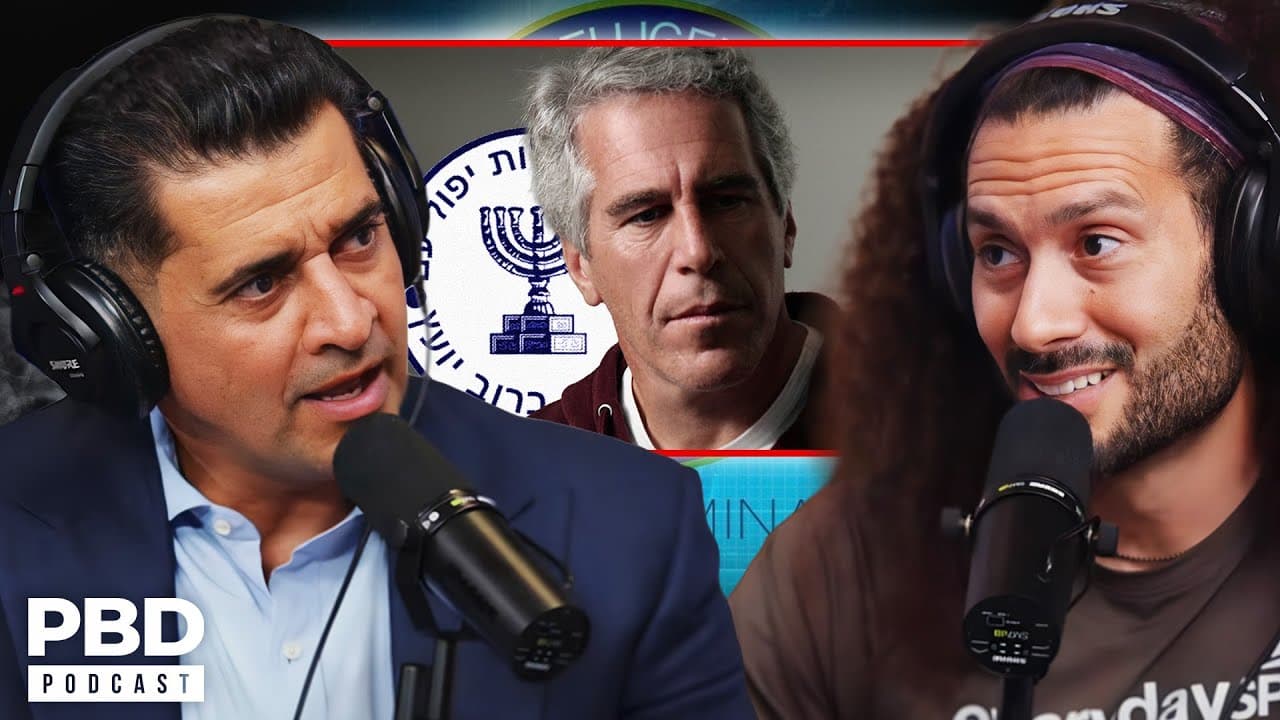
The most likely intelligence connection Jeffrey Epstein had was with Mossad, not the CIA, according to former CIA officer Andrew Bustamante. Epstein was too high-risk for the CIA, which cannot openly assassinate or sex-traffic, while Mossad is far more flexible and risk-tolerant. Mossad operates like the 1960s-era CIA: experimental, aggressive, and with very little oversight.
Transcript
CIA. Uh, Andrew, so guy calls me. He says, "Pat, I'm being offered to be part of CIA to give intel." Okay. He's in a niche industry that a lot of people have access to him and he meets a lot of people. Think money, finance, you're a lot of in front of a lot of different uh interesting people. Why is that appealing to somebody like him to say yes, I... Read More
Key Insights
- Mossad is the most risk-tolerant and aggressive of the major intelligence agencies, a fact known to all Five Eyes members (Canada, America, UK, Australia, New Zealand). Its flexibility comes from operating with very little oversight while surrounded by an ocean of threats.
- The most likely intelligence connection Jeffrey Epstein had was with Mossad, not the CIA. Epstein was too high-risk for the CIA, and Mossad could supply things the CIA could not, whether sex trafficking or something else.
- CIA assets say yes for two reasons: genuine patriotic belief in helping America, or the mistaken hope that the CIA will help them close a deal or gain intel. The second motive never materializes because the agency will never help them.
- The average useful reporting lifespan of a CIA asset is about five years. Within that window the CIA typically leaks information or fails to brief the right office, leading to internal investigations and even the asset's wrongful arrest.
- Mossad differs from the CIA in method mainly through flexibility: Mossad openly assassinates and advocates for regime change, while legal authorities and permissions that handcuff the CIA do not restrict Mossad in the same way.
- Mossad actively tries to penetrate the CIA, collecting intelligence on its own Western partners. Operatives are described as professional, quiet, impeccably dressed, and deliberately attractive to exploit human primal instincts and distract targets from better judgment.
- The CIA was as reckless in the 1960s as Mossad is today, but without equivalent training, funding, or technology. Examples cited include MKUltra, Operation Midnight Climax drugging Americans in brothels, and the Bay of Pigs.
- September 11th, 2001 ended the CIA's reckless era. After the CIA and FBI failed to collaborate to prevent the attacks, the 9/11 Commission report, completed in 2003, imposed heavy congressional oversight, strict budget control, and reporting lines through the DNI.
Install to Summarize YouTube Videos and Get Transcripts
Explore YouTube Video Summarizer or Get YouTube Transcript Extractor
Questions & Answers
Q: Was Jeffrey Epstein a Mossad asset?
Former CIA officer Andrew Bustamante openly says the most likely intelligence connection Jeffrey Epstein had was with Mossad. He argues Epstein was too much of a high risk for the CIA, and that if Epstein was an intelligence asset it was probably for Mossad. What Epstein would have wanted was something Mossad could supply where the CIA could not, whether that was sex trafficking or something else, because Mossad is far more flexible in what it will bring to an intelligence operation.
Q: Why do US citizens agree to become CIA assets?
According to Bustamante, there are two big reasons. First, some people are genuinely patriotic and truly believe in helping America. Second, others believe the CIA will help them somehow, such as closing a deal or getting intel, though that assistance never actually comes. He notes the bureaucracy is horrible even for badged officers and worse for encrypted civilian assets living under layers of confidentiality and compartmentalization.
Q: How long does a CIA asset typically last?
Bustamante says the average lifespan of a CIA asset is about five years, referring to their useful reporting life rather than their physical life. Within that window the CIA usually mishandles things, leaks the asset's information, or fails to brief the right office. This can trigger an internal investigation and even an arrest, where the asset ends up explaining in an interrogation room that they were only talking to foreign contacts because the CIA paid them to.
Q: How is Mossad different from the CIA?
In methodology the two are not that different, but in flexibility they diverge sharply. Mossad openly assassinates and openly advocates for regime change, actions the CIA does not take. The legal authorities and permissions that handcuff the CIA do not really exist for Mossad. Bustamante describes Mossad as the modern-day version of the 1960s CIA: very experimental, very flexible, with very little oversight because it is surrounded by an ocean of threats.
Q: Why is Mossad so aggressive and risk-tolerant?
Bustamante attributes it to threat profile. Israel and Mossad are surrounded by an ocean of threats, whereas the United States is bordered by literal ocean, Canada, and Mexico. That different threat profile informs a greater willingness to take high-risk actions. He compares it to a schoolyard bully: the one willing to go crazy when approached is less likely to get muscled around than the one trying to play by the rules, which is exactly why Mossad's approach works.
Q: How reckless was the CIA in the past?
Bustamante says the 1960s CIA was as reckless and aggressive as today's Mossad, but without being as well trained, funded, or technologically advanced. His examples include MKUltra and Operation Midnight Climax, where the CIA actively drugged Americans and placed them in brothels with prostitutes to test mind control agents. He also cites attempts to make Castro's beard fall off and the Bay of Pigs as reckless, dumb, and ill-informed operations the CIA still cannot shake.
Q: What experiences did Bustamante have working with Mossad?
He says he had only a few experiences because his operations were too sensitive to expose to Mossad, with most overlap coming in his years as a middle manager on joint operations. He describes Mossad operatives as always super professional, smart, quiet, impeccably dressed, and shockingly good-looking. CIA officers were briefed to expect a bombshell to walk in, placed there deliberately, because Mossad leverages primal instincts that surpass religious belief, education, and age.
Q: What event made the CIA less reckless?
Bustamante points to September 11th, 2001. When the CIA and FBI failed to collaborate effectively to prevent 9/11, Congress stepped in and created heavy oversight for both intelligence agencies. The 9/11 Commission, completed in 2003, outlined how the agencies would be forced to cooperate and grow, and how their budgets and operations would be strictly overseen by a group in Congress and briefed up through the executive branch. Afterward the CIA also gained a hard reporting line to the DNI.
Summary & Key Takeaways
-
Andrew Bustamante explains that US citizens become CIA assets for two reasons: sincere patriotism, or a false hope the agency will help them personally. The bureaucracy is brutal for encrypted, compartmentalized civilian assets, and the agency's compartmentalization frequently causes leaks, blown operations, and even wrongful arrests.
-
The average CIA asset has a useful reporting life of about five years before the agency mishandles their information. Bustamante states the most likely intelligence tie Epstein had was Mossad, not CIA, because he was too high-risk and Mossad offered flexibility the CIA could not, including sex trafficking.
-
Mossad openly assassinates and pursues regime change, operating like the experimental 1960s CIA with little oversight because it faces constant regional threats. The CIA reined in its own recklessness, examples being MKUltra and the Bay of Pigs, only after 9/11 prompted the 2003 commission to impose congressional oversight.
Read in Other Languages (beta)
Share This Summary 📚
Summarize YouTube Videos and Get Video Transcripts with 1-Click
Try YouTube Summary with ChatGPT & Claude or YouTube Transcript Generator
Explore More Summaries from Valuetainment 📚


Summarize YouTube Videos and Get Video Transcripts with 1-Click
Try YouTube Summary with ChatGPT & Claude or YouTube Transcript Generator