How Will AI Reshape Jobs, Markets, and Growth?
TL;DR
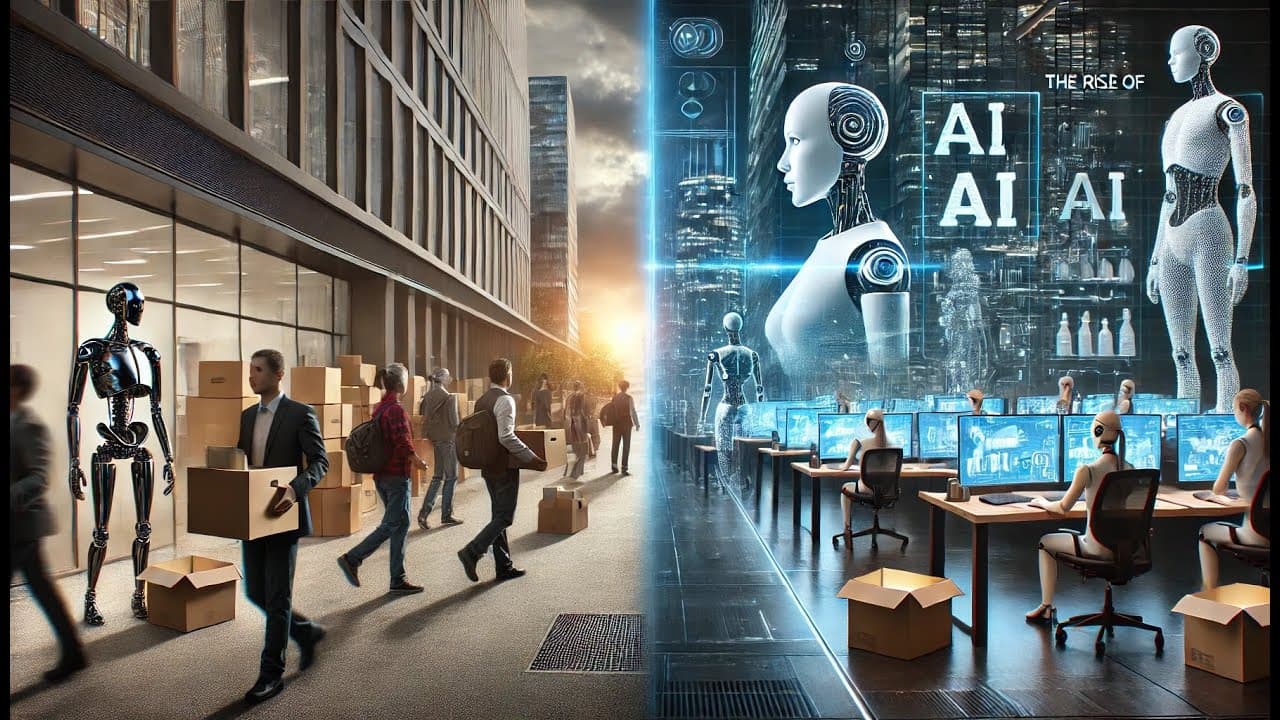
AI reasoning could raise corporate productivity and margins by enabling revenue growth without proportional headcount growth, but the resulting displacement may produce a severe labor shock. Businesses are rapidly increasing paid AI use and infrastructure investment, while vulnerable incumbents, white-collar workers, middle managers, recent graduates, and energy systems face growing pressure.
Transcript
quiet week for the markets as we come to the end of the first half of the year got through expiration on Friday. Uh this week uh I'm going to go through and kind of build around a report that was released by CO2. uh it's their east meets west 2025 report and it's the first uh let's say technology focused or AI focused report that in my opinion real... Read More
Key Insights
- AI reasoning is presented as the primary engine of the coming productivity boom because it can perform cognitive and middle-management work, not merely automate routine processes or generate code. This broader capability could transform corporate structures and significantly reduce the labor required for growth.
- Corporate margin expansion is expected to come from increasing revenue while holding headcount steady or reducing it. Wall Street rewards this efficiency, but the same process creates tension between capital and labor as employees face layoffs, diminished bargaining power, and uncertainty about their future relevance.
- AI adoption is accelerating across consumers and businesses, with ChatGPT described as growing faster than anything previously observed and paid business subscriptions rising. Microsoft processed more than 100 trillion tokens during one quarter, five times the prior-year amount, including 50 trillion in one month.
- Smaller AI-native organizations can challenge large incumbents because they carry less bureaucracy and fewer employees. OpenAI’s 2,700 employees are contrasted with Google’s 187,000, illustrating why established companies may struggle to respond quickly when reasoning systems allow competitors to operate with much leaner structures.
- Technology companies are not expected to capture every benefit from AI because adoption can spread productivity gains across the broader economy. Energy, construction, semiconductors, memory, networking, cloud infrastructure, edge computing, self-driving platforms, humanoid robots, AI-native devices, and other sectors may participate in the expansion.
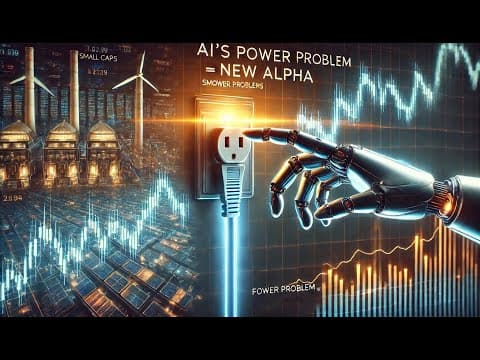
- Energy demand is likely to become a more visible constraint as reasoning models and AI agents generate rapidly increasing inference workloads. The discussion links growing token usage with pressure on electricity and energy markets, especially during summer periods that may include hurricanes or possible blackouts.
- Labor-market stress is already visible through rising WARN notices, falling quit rates, deteriorating consumer confidence, and the highest unemployment rate for recent college graduates in nearly a decade. These signals support concern that AI-related efficiency gains may arrive alongside substantial white-collar displacement.
- Bitcoin, Ethereum, and stablecoins are portrayed as emerging parts of an AI-led financial system. The report treats Bitcoin and stablecoins as increasingly systemic assets, while the discussion suggests stablecoin adoption could accelerate after the Genius Act and highlights Bitcoin’s relatively small share of fiat assets.
Install to Summarize YouTube Videos and Get Transcripts
Explore YouTube Video Summarizer or Get YouTube Transcript Extractor
Questions & Answers
Q: How could AI reasoning change corporate employment?
AI reasoning could allow companies to perform cognitive, administrative, and middle-management work with fewer employees. Businesses may therefore increase revenue without expanding headcount, or deliberately reduce their workforces while maintaining growth. This can improve margins and attract favorable market reactions, but it also creates a labor shock as white-collar workers face displacement and fewer clear replacement careers.
Q: Why could AI create a conflict between labor and capital?
AI can increase productivity and corporate margins while reducing the number of workers needed to produce revenue. Investors and companies benefit when costs fall and profits rise, while employees bear the risks of layoffs, weaker bargaining power, and declining relevance. The conflict intensifies when markets reward headcount reductions even as consumer confidence and labor-market conditions deteriorate.
Q: What evidence suggests businesses are adopting AI rapidly?
Paid business subscriptions to AI services are rising, and token processing has expanded sharply since reasoning models and agents became more prominent. Microsoft reported processing more than 100 trillion tokens in one quarter, five times the year-earlier level, including 50 trillion in the latest month. ChatGPT is also described as growing faster than any previous consumer product.
Q: Why are large technology incumbents vulnerable to AI disruption?
Large incumbents carry substantial workforces, bureaucracy, and established business models that can make rapid adaptation difficult. The contrast between OpenAI’s 2,700 employees and Google’s 187,000 illustrates how lean AI-native companies may attack individual parts of an incumbent’s business. Google and Apple are absent from the report’s selected group of anticipated 2030 AI beneficiaries, implying disruption risk.
Q: Which industries could benefit from expanding AI use?
AI’s benefits may extend beyond traditional technology companies because every sector can apply reasoning and automation to improve operations. The expansion also requires semiconductors, memory, networking, cloud capacity, power, and edge computing. AI agents, AI-native phones and PCs, self-driving platforms, humanoid robots, construction, engineering, and energy infrastructure may all experience increased demand as inference workloads grow.
Q: Why could AI place more pressure on energy markets?
Reasoning models and AI agents require growing amounts of inference, and rapidly rising token usage translates into greater demand for computing infrastructure and electricity. The discussion expects energy to receive more attention during the second half of the year, particularly in summer when hurricanes and possible blackouts can constrain supply. Semiconductors, networking, memory, and power are therefore closely linked.
Q: What signs point to an approaching AI labor shock?
The cited warning signs include rising WARN notices, falling quit rates, deteriorating consumer confidence, and the highest unemployment rate for recent college graduates in nearly a decade. Companies are also publicly discussing opportunities to reduce headcount by 10–50 percent. Together, these signals suggest that AI-related efficiency is already affecting employment expectations, especially in white-collar and middle-management roles.
Q: How might digital assets fit into an AI-led economy?
Bitcoin, Ethereum, and stablecoins are presented as potential components of the financial infrastructure developing alongside AI. The Coatue report treats Bitcoin and stablecoins as increasingly systemic assets, and the discussion suggests stablecoin growth could accelerate after the Genius Act. Bitcoin is also framed as small relative to fiat assets, with a value of two trillion compared with 500 trillion.
Summary & Key Takeaways
-
Coatue’s East Meets West 2025 report connects artificial intelligence with macroeconomics, corporate productivity, markets, infrastructure, and digital assets. The central thesis is that rapidly improving reasoning models and AI agents will spread throughout the economy, raising efficiency while creating substantial demand for semiconductors, memory, networking, electricity, and edge computing.
-
Corporate adoption is accelerating as paid AI subscriptions rise and token processing expands sharply. This supports a model in which businesses grow revenue while limiting headcount, creating a potential golden age of margin expansion. However, layoffs, declining quit rates, weaker confidence, and graduate unemployment suggest that the benefits may favor capital over labor.
-
The market implications extend beyond technology companies. AI infrastructure spending may support energy, construction, cloud computing, and semiconductor businesses, while intense competition threatens established firms such as Google and Apple. Bitcoin, Ethereum, and stablecoins are also presented as emerging components of an AI-led financial system, although their future importance remains uncertain.
Read in Other Languages (beta)
Share This Summary 📚
Summarize YouTube Videos and Get Video Transcripts with 1-Click
Try YouTube Summary with ChatGPT & Claude or YouTube Transcript Generator
Explore More Summaries from Jordi Visser 📚




Summarize YouTube Videos and Get Video Transcripts with 1-Click
Try YouTube Summary with ChatGPT & Claude or YouTube Transcript Generator