What is Concrete?
TL;DR
Concrete's complexity underlies its ubiquitous use in construction.
Transcript
Concrete is as much a part of the urban landscape as trees are to a forest. It’s so ubiquitous that we rarely even give it any regard at all. But, underneath that drab grey exterior is a hidden world of complexity. Hey I’m Grady and this is Practical Engineering. On today’s episode - it’s concrete 101. This video is sponsored by Brilliant. More on ... Read More
Key Insights
- Concrete is a fundamental component of modern infrastructure, valued for its strength, durability, and low cost compared to other materials.
- The four main ingredients of concrete are water, sand, gravel, and cement, with cement being the most complex component.
- Portland cement, a key ingredient in concrete, undergoes a hydration process to transform concrete from a liquid to a solid.
- Water content in concrete significantly affects its strength and workability, with more water increasing workability but reducing strength.
- The mix design of concrete is crucial, as it involves selecting the right proportions of ingredients to achieve desired properties for specific applications.
- Concrete's versatility allows it to be used in a wide range of applications, from massive structures to small, everyday items.
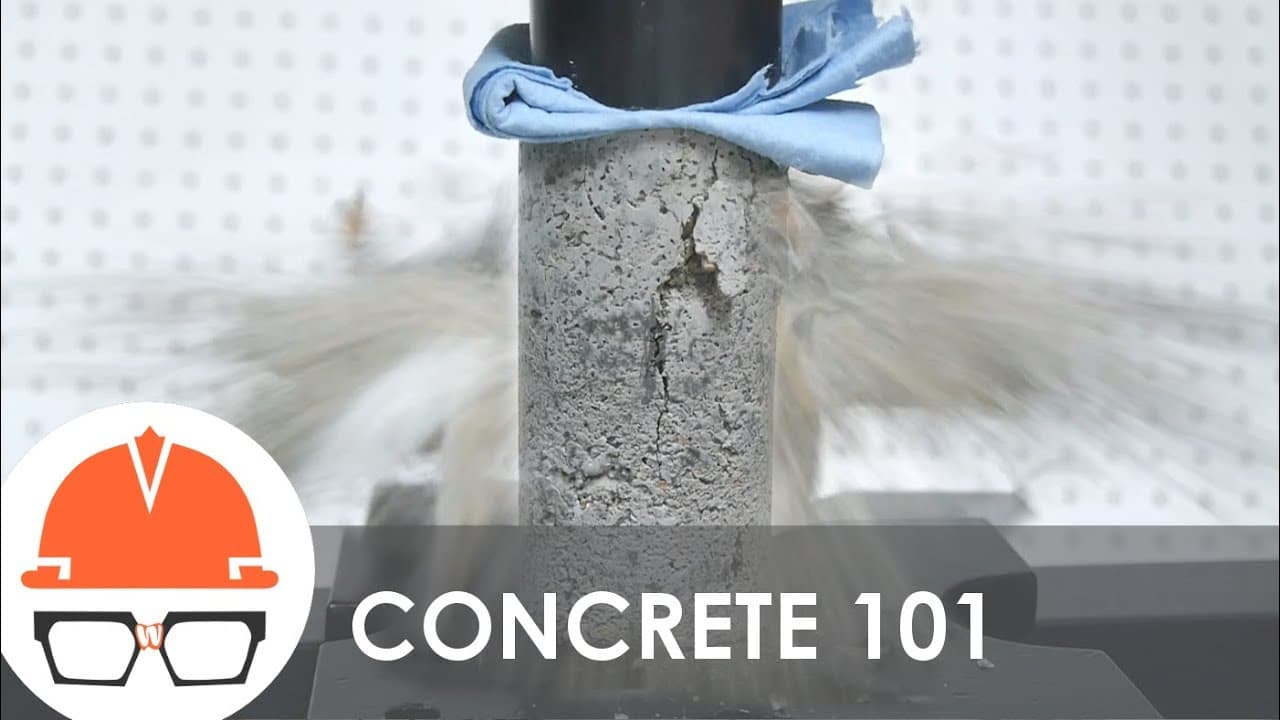
- Testing concrete's compressive strength involves breaking samples and measuring the pressure at failure, illustrating the impact of water content on strength.
- Despite its simple ingredients, concrete's complexity and significance make it a subject worthy of detailed exploration and understanding.
Install to Summarize YouTube Videos and Get Transcripts
Explore YouTube Video Summarizer or Get YouTube Transcript Extractor
Questions & Answers
Q: What are the primary ingredients of concrete?
The primary ingredients of concrete are water, sand (fine aggregate), gravel (coarse aggregate), and cement. Cement acts as a binder, holding the other ingredients together, while sand and gravel serve as filler materials to enhance the structural properties and reduce costs.
Q: How does water content affect concrete?
Water content significantly affects concrete's properties. More water increases workability, making it easier to place, but reduces strength by diluting the cement paste. Conversely, less water results in stronger but less workable concrete. Therefore, balancing water content is crucial in concrete mix design.
Q: What is Portland cement, and why is it important?
Portland cement is a common type of cement used in concrete. It is made by heating quarried materials like limestone and grinding them into a fine powder. Its importance lies in its role in the hydration process, transforming concrete from a liquid to a solid, thus providing strength and stability.
Q: Why is the difference between cement and concrete significant?
The difference is significant because cement is just one component of concrete. Understanding this distinction is crucial for mix design, as it involves selecting the right proportions of ingredients. Mistaking cement for concrete can lead to misconceptions about their roles and the complexity involved in concrete formulation.
Q: What is the hydration process in concrete?
The hydration process in concrete is a chemical reaction between water and cement. Unlike drying, hydration involves water becoming part of the cured concrete, forming a solid structure. This process is essential for concrete to reach its full strength and is why maintaining adequate moisture during curing is critical.
Q: How is concrete tested for compressive strength?
Concrete is tested for compressive strength by creating cylindrical samples and applying pressure until they fail. The pressure at failure indicates the concrete's strength. This testing method helps determine how different mix designs, particularly water content, affect the structural integrity of the concrete.
Q: What is mix design in concrete?
Mix design in concrete refers to the process of selecting the right proportions of ingredients to achieve specific properties for a given application. It involves adjusting variables like water content and aggregate type to optimize strength, workability, and appearance, highlighting the complexity and precision required in concrete formulation.
Q: Why is concrete considered a versatile material?
Concrete is considered versatile because it can be tailored to fit any size or shape, from massive structures like dams and skyscrapers to small items like stepping stones. Its adaptability to different applications, combined with its strength and cost-effectiveness, makes it an indispensable material in construction.
Summary & Key Takeaways
-
Concrete is a versatile and widely-used construction material, known for its strength, durability, and cost-effectiveness. It consists of water, sand, gravel, and cement, with cement being the most complex component due to its chemical reaction during curing.
-
The mix design of concrete is crucial for achieving desired properties, with water content playing a significant role in determining strength and workability. Different applications require specific concrete formulas to meet structural and aesthetic requirements.
-
Concrete's ubiquitous presence in modern infrastructure underscores its importance. Understanding its complexity, from ingredient selection to curing processes, is essential for engineers and construction professionals to optimize its use in various projects.
Read in Other Languages (beta)
Share This Summary 📚
Summarize YouTube Videos and Get Video Transcripts with 1-Click
Try YouTube Summary with ChatGPT & Claude or YouTube Transcript Generator
Explore More Summaries from Practical Engineering 📚



Summarize YouTube Videos and Get Video Transcripts with 1-Click
Try YouTube Summary with ChatGPT & Claude or YouTube Transcript Generator