What Is a Culvert?
TL;DR
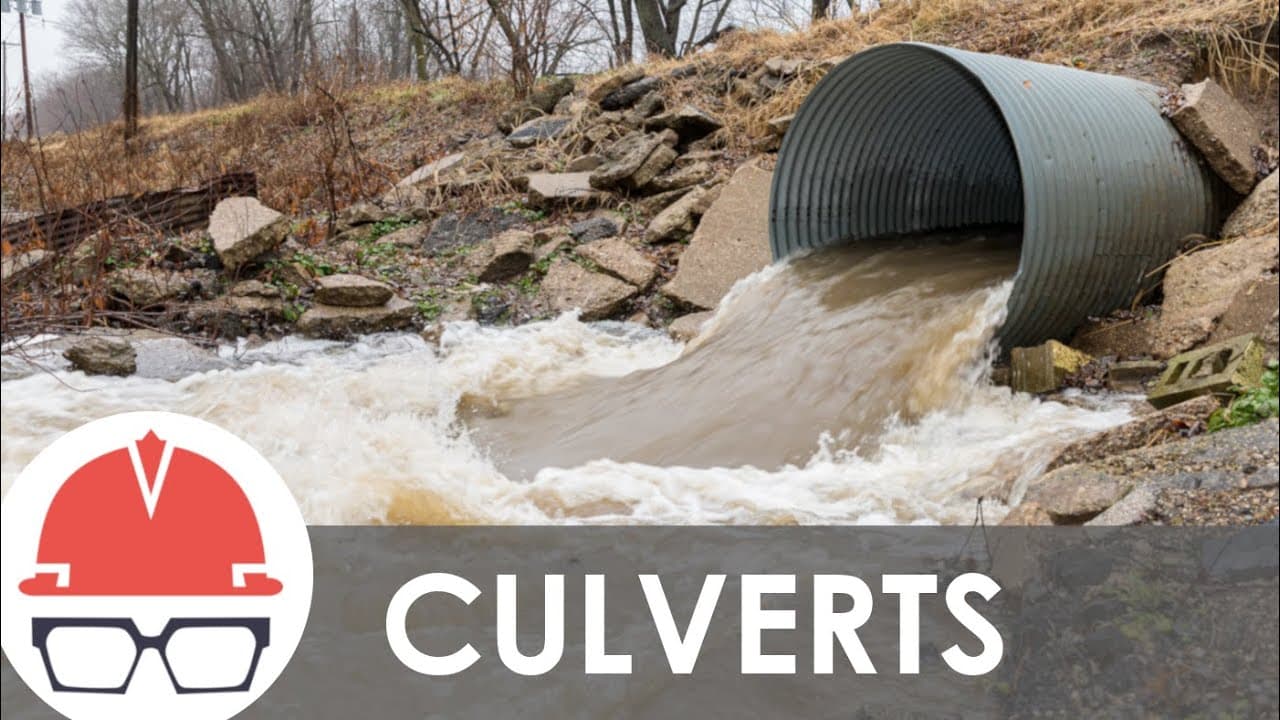
Culverts are crucial for managing water flow under roadways.
Transcript
A surprising amount of engineering is just avoiding conflicts. I’m not talking about arguments in the office, I mean conflicts when two or more things need to be in the same place. There are a lot of challenges in getting facilities over, under, around, or between each other, and there’s a specific structure, ubiquitous in the constructed environme... Read More
Key Insights
- Culverts are essential structures in infrastructure, allowing water to flow under roadways and preventing roadway damage and danger to motorists.
- Designing culverts involves complex engineering considerations, including balancing cost and efficiency with the need to handle water flow effectively.
- The U.S. Federal Highway Administration provides extensive guidelines for culvert design, highlighting the complexity involved in these seemingly simple structures.
- Culverts must withstand the weight of traffic while allowing water to pass through without causing roadway overtopping.
- Factors affecting culvert hydraulics include headwater depth, cross-sectional area, inlet configuration, barrel roughness, and more.
- Culvert flow regimes are categorized into outlet control and inlet control, each with distinct characteristics and implications for water flow.
- Various inlet configurations, such as projecting, mitered, and headwall, impact culvert efficiency and flow dynamics.
- Culvert design requires a balance between cost and performance, with options to enhance inlet efficiency or increase pipe size.
Install to Summarize YouTube Videos and Get Transcripts
Explore YouTube Video Summarizer or Get YouTube Transcript Extractor
Questions & Answers
Q: What are the primary functions of a culvert?
Culverts serve two primary functions: supporting the weight of traffic passing over them and allowing water to flow through without overtopping the roadway. These functions are crucial for maintaining infrastructure integrity and ensuring motorist safety by preventing water accumulation and potential roadway damage.
Q: How do outlet and inlet control affect culvert flow?
Outlet control occurs when water can enter the culvert faster than it can exit, influenced by downstream conditions like barrel roughness and tailwater depth. Inlet control is when the inlet restricts flow more than other factors, meaning changes in barrel roughness or downstream conditions won't affect flow rate. Each regime impacts how water flows through the culvert.
Q: Why are culverts considered complex engineering structures?
Culverts are complex due to the need to balance cost, efficiency, and water flow management. Factors like headwater depth, inlet configuration, and barrel roughness must be considered to ensure culverts can handle varying water flows without causing roadway damage or safety hazards. The complexity is reflected in extensive design guidelines and hydraulic calculations.
Q: What factors influence the hydraulics of a culvert?
Culvert hydraulics are influenced by factors such as headwater depth, cross-sectional area and shape of the barrel, inlet configuration, barrel roughness, culvert length, slope, and tailwater depth. These factors determine how effectively water flows through the culvert, impacting its ability to prevent roadway overtopping and maintain structural integrity.
Q: How do different inlet configurations affect culvert efficiency?
Inlet configurations, such as projecting, mitered, and headwall, impact culvert efficiency by influencing how water enters the culvert. For example, a projecting inlet may be less efficient due to lack of flow guidance, while a headwall with smooth edges can enhance efficiency by directing water smoothly into the barrel, reducing headwater pressure and improving flow.
Q: What role does the Federal Highway Administration play in culvert design?
The Federal Highway Administration provides comprehensive guidelines for culvert design, addressing the complex engineering involved in managing water flow under roadways. Their guidelines cover factors affecting culvert hydraulics, flow regimes, and design considerations, helping engineers create efficient and cost-effective culvert solutions for infrastructure projects.
Q: Why is it important to balance cost and performance in culvert design?
Balancing cost and performance in culvert design is crucial because it ensures that culverts are both economically feasible and effective in managing water flow. Spending excessively on elaborate designs may not be practical, while underdesigning can lead to inefficiencies and potential infrastructure failures. Engineers must weigh these factors to achieve optimal results.
Q: What tools are used to simplify culvert hydraulic calculations?
To simplify culvert hydraulic calculations, engineers use tools like nomographs, which condense complex hydraulic equations into quick visual calculations. These tools allow engineers to determine flow rates and other parameters efficiently, aiding in the design process. Modern software also assists in handling the complexity of culvert hydraulics, streamlining design efforts.
Summary & Key Takeaways
-
Culverts are critical infrastructure components that manage water flow under roadways, preventing damage and ensuring safety. Despite their simplicity, culverts involve complex engineering to balance cost and efficiency while handling water effectively.
-
The Federal Highway Administration provides detailed guidelines for culvert design, addressing factors like headwater depth, inlet configuration, and barrel roughness. These factors influence the hydraulics of culverts, determining whether they operate under outlet or inlet control.
-
Culvert design is an exercise in balancing cost with performance. Different inlet configurations affect efficiency, and engineers must decide whether to enhance inlet design or increase pipe size to achieve desired water flow performance.
Read in Other Languages (beta)
Share This Summary 📚
Summarize YouTube Videos and Get Video Transcripts with 1-Click
Try YouTube Summary with ChatGPT & Claude or YouTube Transcript Generator
Explore More Summaries from Practical Engineering 📚






Summarize YouTube Videos and Get Video Transcripts with 1-Click
Try YouTube Summary with ChatGPT & Claude or YouTube Transcript Generator