What Really Happened During the Texas Power Grid Outage?
TL;DR
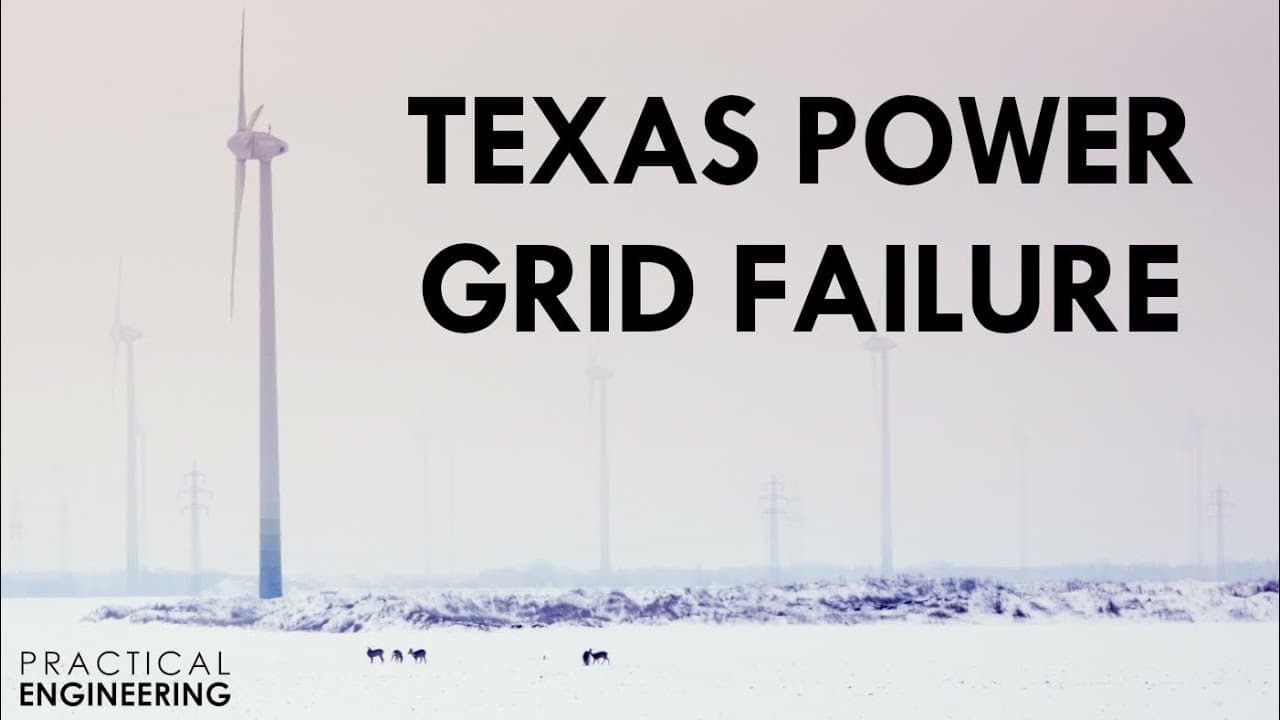
Texas suffered major power outages during a 2021 winter storm.
Transcript
This February of 2021, a major winter storm made its way through the U.S. central plains, setting all-time records for low temperatures across the country. One of the biggest impacts of the storm happened here in Texas where people across the state suffered extended outages of electricity and water. It was one of the worst winter weather events in ... Read More
Key Insights
- The 2021 Texas winter storm set all-time low temperature records, causing widespread power and water outages across the state.
- The storm highlighted the volatility and challenges of managing supply and demand in the Texas power grid, particularly during extreme weather conditions.
- ERCOT, the entity responsible for managing Texas's power grid, took preemptive measures to prepare for the storm but faced unprecedented challenges.
- The Texas power grid relies heavily on natural gas and wind power, both of which were significantly impacted during the storm.
- Natural gas supply was disrupted due to frozen pipelines, and wind turbines were immobilized by ice, contributing to the power outages.
- The storm caused a spike in wholesale electricity prices, reaching the cap of $9,000 per megawatt-hour, leading to financial strain on providers and consumers.
- Load shedding was implemented to prevent a total grid collapse, which would have resulted in a prolonged and complex recovery process.
- The event exposed vulnerabilities in Texas's energy market model, which relies on scarcity pricing and lacks incentives for securing future capacity.
Install to Summarize YouTube Videos and Get Transcripts
Explore YouTube Video Summarizer or Get YouTube Transcript Extractor
Questions & Answers
Q: What was the primary cause of the Texas power outages during the 2021 winter storm?
The primary cause was the extreme cold weather that led to a significant mismatch between electricity supply and demand. Natural gas pipelines froze, wind turbines were immobilized by ice, and other power sources also faced challenges, resulting in widespread outages.
Q: How did ERCOT prepare for the anticipated strain on the power grid before the storm?
ERCOT took several preemptive measures, including issuing public communications about high expected demand, canceling scheduled outages, working with the Texas Railroad Commission to prioritize natural gas delivery, and obtaining permission to temporarily exceed emission limits at power plants.
Q: Why did natural gas supply become a critical issue during the storm?
Natural gas supply was disrupted due to frozen pipelines and wells, which are particularly vulnerable to cold temperatures. This was exacerbated by impassable roads, making it difficult for suppliers to maintain the flow of natural gas, despite soaring prices and demand.
Q: What is load shedding, and why was it necessary during the storm?
Load shedding involves turning off parts of the power grid to reduce demand and prevent a total grid collapse. It was necessary during the storm to maintain the balance between supply and demand, as the grid was on the brink of a complete failure due to rapidly dropping frequency levels.
Q: How did the storm impact electricity pricing in Texas?
The storm caused wholesale electricity prices to spike to the cap of $9,000 per megawatt-hour, far exceeding normal rates. This resulted in financial strain for providers and consumers, with some residential bills reaching thousands of dollars due to exposure to wholesale rates.
Q: What role did wind and solar energy play during the Texas power outages?
Wind energy, which makes up about 30% of Texas's power capacity, was significantly impacted as turbines were immobilized by ice. Solar panels were also less effective due to being covered in snow, contributing to the overall reduction in power supply during the storm.
Q: What are the potential long-term impacts of the 2021 Texas power outage?
The long-term impacts include economic losses, a push for infrastructure improvements, and potential reforms in the energy market to enhance resilience and prevent future outages. The event highlighted the need for better preparedness and investment in reliable energy sources.
Q: How does the Texas energy market model contribute to grid vulnerabilities?
The Texas energy market operates on an energy-only model, relying on scarcity pricing without compensating for future capacity. This model incentivizes short-term profits over long-term investments in grid resilience, leaving the system vulnerable to extreme events like the 2021 storm.
Summary & Key Takeaways
-
The 2021 Texas winter storm caused unprecedented power outages, affecting millions and highlighting vulnerabilities in the state's power grid system.
-
ERCOT, responsible for managing the grid, faced challenges due to the storm's severity, leading to significant demand and supply issues.
-
The event underscored the need for improved infrastructure resilience and market reforms to prevent future crises of this magnitude.
Read in Other Languages (beta)
Share This Summary 📚
Summarize YouTube Videos and Get Video Transcripts with 1-Click
Try YouTube Summary with ChatGPT & Claude or YouTube Transcript Generator
Explore More Summaries from Practical Engineering 📚






Summarize YouTube Videos and Get Video Transcripts with 1-Click
Try YouTube Summary with ChatGPT & Claude or YouTube Transcript Generator