Why Did the Fern Hollow Bridge Collapse?
TL;DR
The Fern Hollow Bridge in Pittsburgh collapsed due to a combination of poor maintenance and oversight, despite being classified in poor condition for years. Corrosion, drainage issues, and structural miscalculations were key factors. The collapse highlights systemic flaws in bridge inspection and maintenance practices, emphasizing the need for improved procedures and accountability.
Transcript
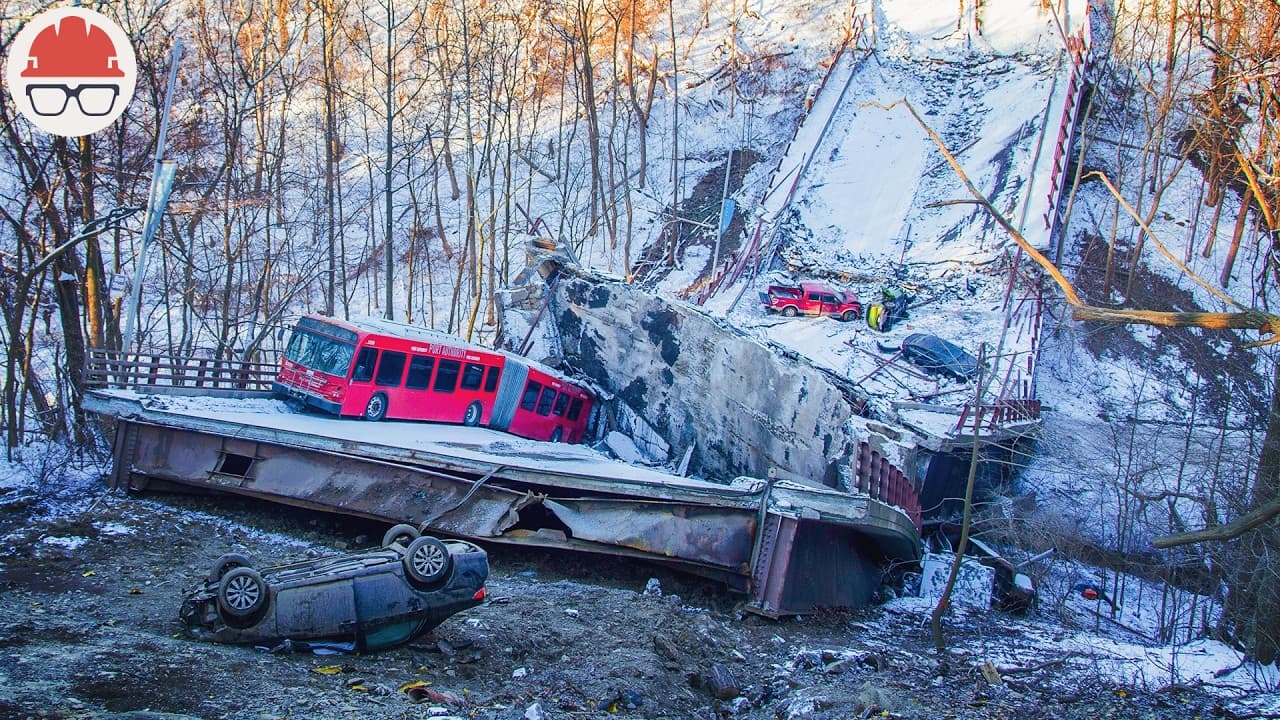
On January 28, 2022, about an hour before dawn, the four-lane Fern Hollow Bridge in Pittsburgh, Pennsylvania, collapsed without warning. Five vehicles, including an articulating bus, fell with the bridge, and another car drove off the abutment after the collapse, not realizing the bridge was gone. Although there were no fatalities, several peop... Read More
Key Insights
- The Fern Hollow Bridge collapsed on January 28, 2022, due to structural failure.
- The bridge had been in poor condition for over a decade before its collapse.
- Corrosion and drainage issues were significant contributors to the bridge's deterioration.
- Inspection reports repeatedly noted problems, but necessary repairs were not made.
- A critical structural element, the transverse tie plate, was not identified as fracture-critical.
- Load rating errors underestimated the impact of corrosion and overestimated bridge capacity.
- The collapse occurred during low traffic, preventing fatalities despite the bridge's failure.
- Post-collapse, the NTSB issued recommendations to improve inspection and maintenance practices.
Install to Summarize YouTube Videos and Get Transcripts
Explore YouTube Video Summarizer or Get YouTube Transcript Extractor
Questions & Answers
Q: Why did the Fern Hollow Bridge collapse?
The Fern Hollow Bridge collapsed primarily due to unaddressed structural issues, including severe corrosion and drainage problems. Despite being in poor condition for years, necessary repairs were not made, and critical structural elements were not identified as fracture-critical, leading to the bridge's failure. The incident highlights systemic flaws in bridge inspection and maintenance practices.
Q: What were the main structural issues with the Fern Hollow Bridge?
The main structural issues with the Fern Hollow Bridge included severe corrosion, particularly at the legs and transverse tie plates, and drainage problems that exacerbated the corrosion. These issues were documented in inspection reports for years but were not properly addressed, leading to significant structural weakening and eventual collapse.
Q: How did drainage problems contribute to the bridge's collapse?
Drainage problems on the Fern Hollow Bridge led to water pooling and exacerbated corrosion on the structural steel. Clogged drainage grates prevented proper water runoff, causing salty meltwater and rainwater to leak through the bridge deck and pool in areas that accelerated corrosion. This contributed significantly to the weakening of the bridge's structural integrity.
Q: What role did inspection reports play in the bridge's collapse?
Inspection reports consistently documented the deteriorating condition of the Fern Hollow Bridge, noting severe corrosion and drainage issues. However, despite these reports, necessary repairs were not made, and critical warnings were not acted upon. This lack of action and oversight contributed to the bridge's eventual collapse, demonstrating systemic failures in maintenance procedures.
Q: What were the errors in the load rating of the Fern Hollow Bridge?
The load rating of the Fern Hollow Bridge contained significant errors, including incorrect assumptions about the amount of asphalt on the bridge deck and the extent of corrosion. Engineers failed to account for the actual thickness of the remaining steel and overestimated the bridge's capacity, leading to a load rating that did not reflect the bridge's true condition, contributing to its collapse.
Q: How did the collapse of the Fern Hollow Bridge highlight systemic flaws in bridge maintenance?
The collapse of the Fern Hollow Bridge highlighted systemic flaws in bridge maintenance, such as inadequate follow-up on inspection recommendations, misidentification of critical structural elements, and errors in load rating assessments. These issues underscore the need for improved procedures, accountability, and proactive maintenance to prevent similar incidents in the future.
Q: What were the recommendations made by the NTSB after the bridge collapse?
After the Fern Hollow Bridge collapse, the NTSB recommended improvements in bridge inspection and maintenance practices, including better identification of fracture-critical elements, more accurate load rating assessments, and increased oversight and accountability. These recommendations aim to prevent future incidents and ensure the safety and reliability of bridge infrastructure.
Q: What changes were implemented after the Fern Hollow Bridge collapse?
Following the Fern Hollow Bridge collapse, several changes were implemented, including increased spending on bridge inspection and maintenance, revised load ratings for other bridges, and enhanced oversight procedures. The NTSB's recommendations led to a reassessment of similar bridges and improvements in inspection protocols to prevent future infrastructure failures.
Summary & Key Takeaways
-
The Fern Hollow Bridge collapsed due to long-standing structural issues that were not addressed, despite being documented in multiple inspection reports. Corrosion and drainage problems were key factors, and a critical structural element was not properly assessed for fracture risk. The collapse underscores the need for improved bridge maintenance and oversight.
-
Despite multiple inspections identifying significant deterioration, essential repairs to the Fern Hollow Bridge were not executed, leading to its eventual collapse. The bridge's condition was exacerbated by drainage issues and miscalculations in load capacity. The incident highlights systemic flaws in bridge management and the importance of proactive maintenance.
-
The collapse of the Fern Hollow Bridge was attributed to ignored inspection recommendations and structural misjudgments. Corrosion and drainage failures significantly weakened the bridge, and critical structural components were not given due attention. The event serves as a cautionary tale for infrastructure maintenance and the need for better inspection protocols.
Read in Other Languages (beta)
Share This Summary 📚
Summarize YouTube Videos and Get Video Transcripts with 1-Click
Try YouTube Summary with ChatGPT & Claude or YouTube Transcript Generator
Explore More Summaries from Practical Engineering 📚




Summarize YouTube Videos and Get Video Transcripts with 1-Click
Try YouTube Summary with ChatGPT & Claude or YouTube Transcript Generator