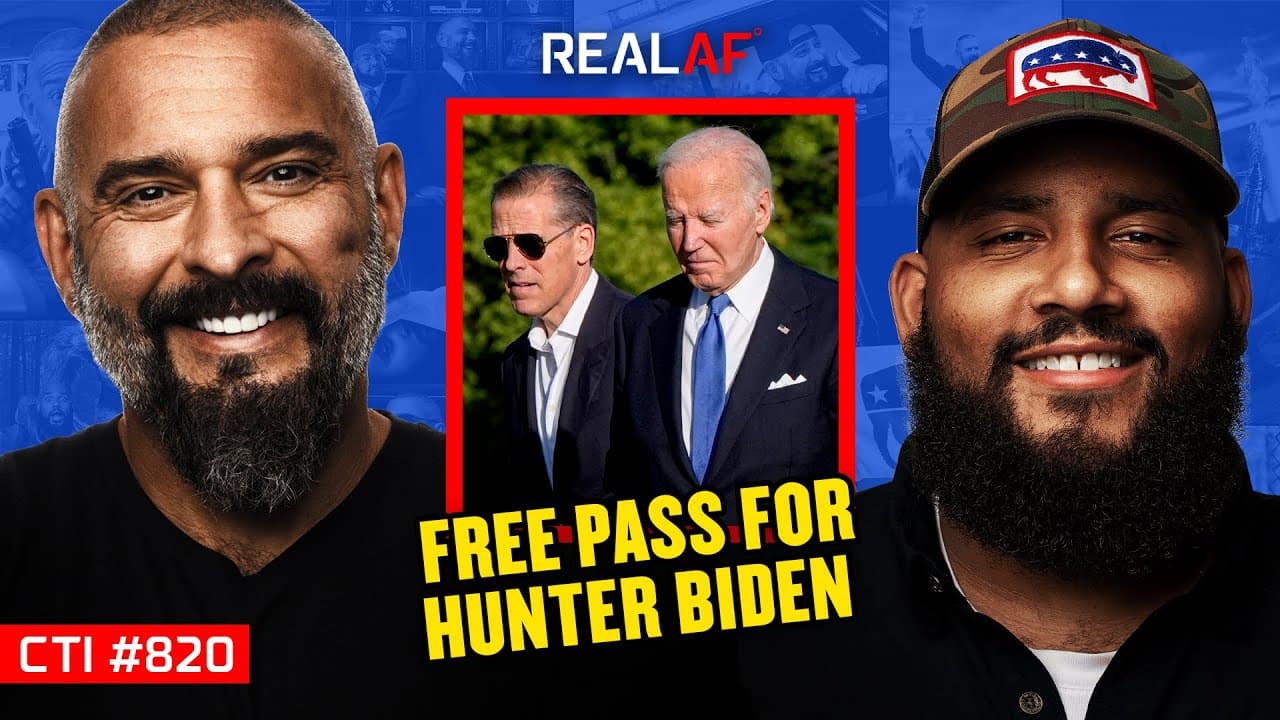
What Is Joe Biden Hiding with Hunter’s Unconditional Pardon? - Ep 820 CTI
TL;DR
Biden's pardon of Hunter raises ethical and political questions.
Transcript
Biden issues a full and unconditional pardon of his son Hunter Biden it's very bizarre and it's very bizarre that anyone would be okay with anybody in this country selling their influence for money the only reason I think they think it's okay it's because they all do it too right well I mean here's the interesting thing right like if if if if it wa... Read More
Key Insights
- President Biden issued a full and unconditional pardon for his son, Hunter Biden, which has sparked controversy and debate about political ethics and legal standards.
- The pardon covers a 10-year window for any crimes Hunter may have committed, raising questions about potential undisclosed activities, particularly around 2014.
- Critics argue that the pardon sets a dangerous precedent for political influence and nepotism within the U.S. justice system.
- Supporters of the pardon claim it was necessary due to politically motivated charges against Hunter Biden, suggesting a miscarriage of justice.
- The media's portrayal of the pardon has been mixed, with some outlets highlighting potential conflicts of interest and others focusing on political motivations.
- The pardon has reignited discussions about the role of presidential clemency and its implications for future legal and political accountability.
- Comparisons have been drawn between Biden's actions and those of other political figures facing legal challenges, highlighting perceived double standards.
- The situation has intensified partisan divides, with Republicans and Democrats offering sharply contrasting views on the pardon and its broader implications.
Install to Summarize YouTube Videos and Get Transcripts
Explore YouTube Video Summarizer or Get YouTube Transcript Extractor
Questions & Answers
Q: What are the main criticisms of Biden's pardon of Hunter?
Critics argue that Biden's pardon of Hunter sets a dangerous precedent for political influence and nepotism within the U.S. justice system. They contend that it undermines legal accountability and raises ethical concerns about using presidential clemency for personal or familial gain.
Q: Why is the 10-year window in Hunter's pardon significant?
The 10-year window in Hunter's pardon is significant because it covers a broad range of potential undisclosed activities, particularly around 2014. This has led to speculation about what specific actions or events might be included, raising questions about transparency and accountability.
Q: How have supporters of the pardon justified it?
Supporters of the pardon argue that it was necessary due to politically motivated charges against Hunter Biden, suggesting a miscarriage of justice. They claim that the investigations were driven by political opponents seeking to damage President Biden's reputation and undermine his administration.
Q: What impact has the pardon had on partisan divides?
The pardon has intensified partisan divides, with Republicans and Democrats offering sharply contrasting views. Republicans see it as an example of nepotism and political corruption, while Democrats argue it was a necessary response to politically motivated investigations, further polarizing political discourse.
Q: How has media coverage of the pardon varied?
Media coverage of the pardon has been mixed, with some outlets highlighting potential conflicts of interest and ethical concerns, while others focus on the political motivations behind the investigations. This variation reflects broader media biases and contributes to differing public perceptions of the issue.
Q: What are the broader implications of Biden's pardon for future accountability?
Biden's pardon could have implications for future legal and political accountability by setting a precedent for using presidential clemency to shield family members from legal consequences. It raises questions about the balance between executive power and judicial independence in the U.S. legal system.
Q: How does Biden's pardon compare to other political figures facing legal challenges?
Comparisons have been drawn between Biden's actions and those of other political figures, such as former President Trump, who faced legal challenges. These comparisons highlight perceived double standards and the complexities of navigating legal and political accountability in high-profile cases.
Q: What ethical concerns does the pardon raise?
The pardon raises ethical concerns about the potential abuse of presidential power for personal or familial benefit. It questions the integrity of the justice system and the potential for political influence to override legal accountability, challenging the principles of fairness and impartiality in governance.
Summary & Key Takeaways
-
President Biden's full pardon of Hunter Biden has sparked significant controversy, raising questions about political ethics and the role of presidential clemency in the justice system. Critics argue the pardon could set a dangerous precedent for political influence.
-
The pardon covers a broad 10-year window, leading to speculation about potential undisclosed activities by Hunter Biden, particularly in 2014. Supporters claim the charges against Hunter were politically motivated, while critics see it as nepotism.
-
Media coverage of the pardon varies, with some focusing on conflicts of interest and others on political motivations. The issue has deepened partisan divides, with contrasting views on the pardon and its implications for future accountability.
Read in Other Languages (beta)
Share This Summary 📚
Summarize YouTube Videos and Get Video Transcripts with 1-Click
Try YouTube Summary with ChatGPT & Claude or YouTube Transcript Generator
Explore More Summaries from Andy Frisella 📚
Summarize YouTube Videos and Get Video Transcripts with 1-Click
Try YouTube Summary with ChatGPT & Claude or YouTube Transcript Generator