What Is the Social Media Filter Bubble?
TL;DR
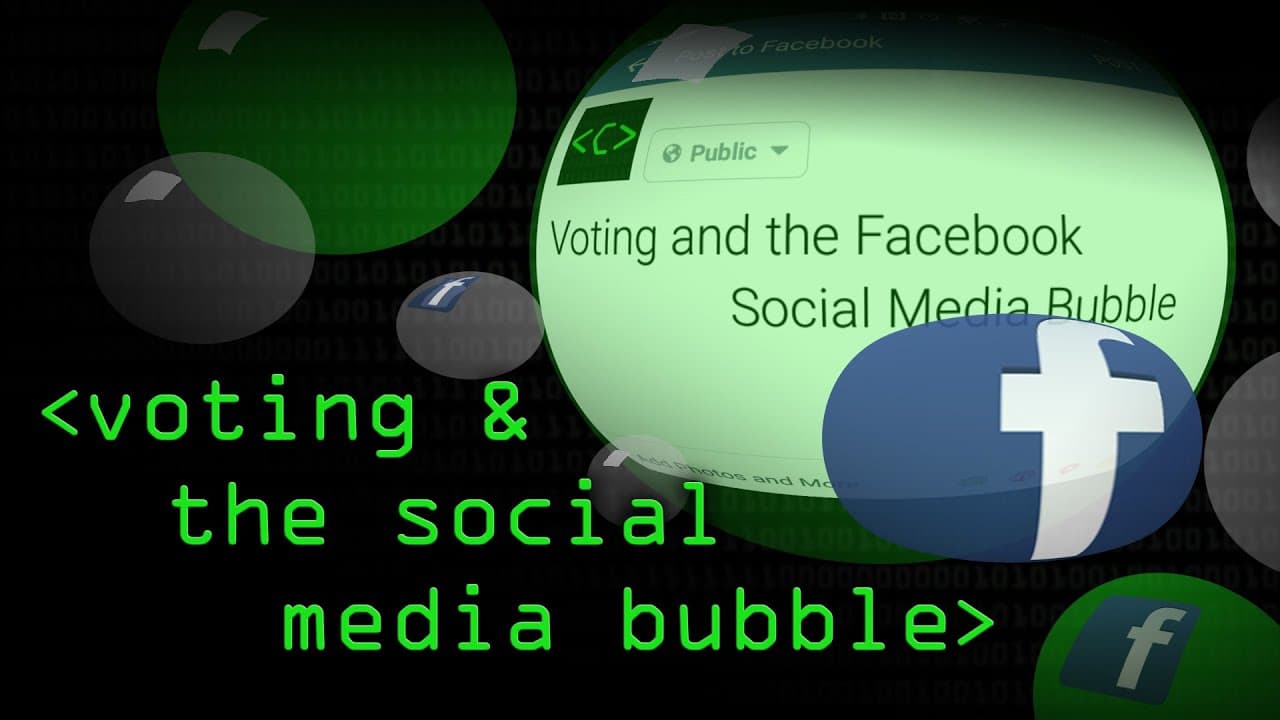
The social media filter bubble is a phenomenon where users predominantly see posts from friends who share similar opinions, resulting in a distorted perception of reality. This effect is driven by the choices in friendships we make, influenced by shared interests and values. Addressing this issue requires designing algorithms that provide a more diverse range of viewpoints to counteract the existing biases.
Transcript
if i'm looking at my newsfeed how come the outcome of the vote or a referendum is so different to what i'm expecting it to be all right so it's because all the people that post their opinions of what's going to happen are people that you've made friends with and they're producing a kind of filter bubble which is showing you all the same information... Read More
Key Insights
- 👁️🗨️ The social media filter bubble phenomenon occurs when we primarily see content from friends who have similar opinions.
- 🧑🏭 Factors like similarity and location influence who we become friends with on social media.
- 👁️🗨️ Social media platforms optimize algorithms to show content we are likely to like, which further reinforces the filter bubble.
- 🧡 Balancing technology to provide a more diverse range of opinions and combat filter bubbles is an ongoing area of research.
- 🥺 The filter bubble exaggerates divides and can lead to a distorted view of the world.
- 🫵 Algorithms need to be designed to introduce variation, sample different opinions, and provide balanced views.
- 🖐️ Technology plays a significant role in mediating communication but is currently optimized in a one-sided manner.
Install to Summarize YouTube Videos and Get Transcripts
Explore YouTube Video Summarizer or Get YouTube Transcript Extractor
Questions & Answers
Q: Why is there often a discrepancy between the outcome of a vote or referendum and what we see on our social media newsfeeds?
This is due to the filter bubble phenomenon, where social media platforms show us content primarily from friends who share similar opinions, creating a distorted view of reality.
Q: What factors influence who we become friends with on social media?
Factors like similarity in attitudes, values, interests, socio-economic status, education, and attractiveness influence our choice of friends on social media.
Q: How does the size of our friendship networks affect our social media experience?
The Dunbar number suggests that we can manage around 150 friendships, but social media allows us to have a much larger audience. This encourages mass communication and affects how we communicate online.
Q: How can technology help address the filter bubble phenomenon?
Designing algorithms that sample different people's viewpoints and bring in varied content at the right times can help provide a more balanced view on social media.
Summary & Key Takeaways
-
Social media creates a filter bubble where we primarily see information from friends with similar opinions, leading to a distorted view of reality.
-
Similarity, including shared interests, values, and beliefs, influences who we become friends with and shapes the information we are exposed to on social media.
-
Technology needs to be designed to provide a more balanced view by considering theories of communication and managing the size of our friendship networks.
Read in Other Languages (beta)
Share This Summary 📚
Summarize YouTube Videos and Get Video Transcripts with 1-Click
Try YouTube Summary with ChatGPT & Claude or YouTube Transcript Generator
Explore More Summaries from Computerphile 📚




Summarize YouTube Videos and Get Video Transcripts with 1-Click
Try YouTube Summary with ChatGPT & Claude or YouTube Transcript Generator