Is the 3E Audio A5 Worth More Than the Douk A5?

TL;DR
The 3E Audio A5 delivers better stereo imaging, three-dimensional placement, and instrument separation than the cheaper Douk Audio A5, especially with a dedicated DAC and revealing speakers. Its dual TPA3251 chips, high-current PBTL configuration, balanced input stage, larger total filter capacitance, and shielded inductors help justify its $236 price, while the $99 Douk remains the stronger budget choice.
Transcript
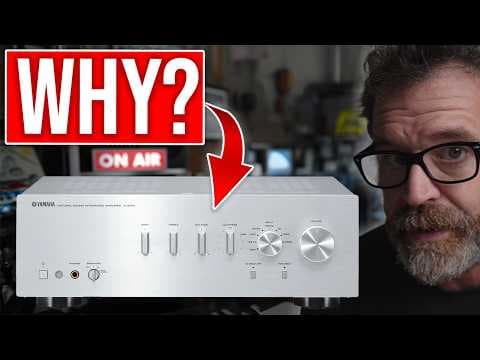
I could not believe what I saw when I got under the hood of this amplifier. When I first got this, I thought, "Oh, another class D amplifier. This is going to be fun." But what I found inside truly shocked me. Actually, in this case, it did truly it surprised me. Dual chips, balanced inputs, huge capacitors, shielded components, a little bit differ... Read More
Key Insights
- The 3E Audio A5 uses two Texas Instruments 3251 amplifier chips, with one chip assigned to each channel in PBTL mode. This architecture increases current delivery and distinguishes it from the Douk Audio A5, which uses a 3255 chipset.
- PBTL mode combines an amplifier chip's internal outputs to double current delivery. In the reviewed configuration, that additional current allows the 3E Audio A5 to drive 2-ohm loads and helps it remain clean and articulate during demanding, highly dynamic musical passages.
- The 3E Audio A5 has four 1,000-microfarad filter capacitors, giving it more total capacitance than the Douk Audio A5 and its single 3,300-microfarad Rubycon capacitor. Greater available capacitance is associated in the review with cleaner dynamics and improved transient performance.
- The balanced input stage of the 3E Audio A5 provides common-mode noise rejection, even though the amplifier is not balanced through to the speaker outputs. Its separate amplifier chips for the left and right channels also make the internal architecture resemble two amplifiers in one enclosure.
- Shielded inductors are used inside the 3E Audio A5, while the Douk model has open inductors in a standard layout. The component choice and layout are intended to reduce electromagnetic interference, improve noise control, and support better separation between the two channels.
- Post-filter feedback is included in both A5 amplifiers. The reviewer associates this feature with improved linearity and better overall sound from the 3255 and 3251 chipsets, so it is not an advantage exclusive to the more expensive 3E Audio model.
- The primary audible advantage of the 3E Audio A5 is its spatial presentation. It produced marginally better instrument separation, substantially better stereo imaging, and more convincing three-dimensional placement, allowing subtle background sounds and individual elements to occupy clearer positions.
- The audible difference between the amplifiers depends on the supporting system. A dedicated DAC, such as the Modi or SMSL SU1 mentioned in the review, and revealing speakers make the 3E Audio A5's strengths clearer, while warm speakers or a WiiM Pro may obscure them.
Install to Summarize YouTube Videos and Get Transcripts
Explore YouTube Video Summarizer or Get YouTube Transcript Extractor
Questions & Answers
Q: How does the 3E Audio A5 differ from the Douk Audio A5?
The 3E Audio A5 uses two Texas Instruments 3251 amplifier chips, one for each channel in PBTL mode, while the Douk Audio A5 uses a 3255 chipset. The 3E model also includes a balanced input stage, four 1,000-microfarad filter capacitors, shielded inductors, and three replaceable op amps. It can drive 2-ohm loads and produced better imaging, spatial depth, and instrument separation in the review.
Q: Why does the 3E Audio A5 use two amplifier chips?
The 3E Audio A5 assigns one Texas Instruments 3251 chip to each channel and operates them in PBTL mode. PBTL combines each chip's internal outputs to increase current delivery. This design helps the amplifier drive 2-ohm loads, handle difficult speakers, and maintain cleaner, more articulate reproduction during dynamic or stressful musical passages. It also contributes to stronger separation between the left and right channels.
Q: What does PBTL mode do in the 3E Audio A5?
PBTL, described in the transcript as parallel bridge tied load, combines an amplifier chip's internal outputs to double current delivery. In the 3E Audio A5, each channel receives its own 3251 chip operating in this configuration. The resulting current capability supports 2-ohm speaker loads and helps the amplifier respond to demanding musical peaks without making performance solely a question of headline wattage.
Q: Does the 3E Audio A5 sound better than the Douk Audio A5?
The 3E Audio A5 sounded more articulate in the comparison, primarily because of its spatial performance. Instrument separation was marginally better, while stereo imaging and three-dimensional placement were substantially better. Subtle background sounds were easier to locate and remained more clearly separated. However, these advantages require sufficiently revealing associated equipment, and they may be less noticeable with a basic source or warm-sounding speakers.
Q: What equipment reveals the differences between the two A5 amplifiers?
A dedicated DAC and revealing speakers make the differences easier to hear. The reviewer specifically mentions affordable dedicated DACs such as the Modi and SMSL SU1 as sources that can expose the 3E Audio A5's strengths. Revealing Emotiva speakers are also presented as suitable examples. By contrast, a WiiM Pro or warm speakers such as the ELAC Debut 3 may make the improvements less obvious.
Q: Why are the capacitors inside the 3E Audio A5 important?
The 3E Audio A5 contains four 1,000-microfarad filter capacitors, for a higher total capacitance than the Douk Audio A5's single 3,300-microfarad Rubycon capacitor. According to the review, having more available filter capacitance is supposed to support cleaner and more dynamic sound, along with better transient response. The large group of capacitors was also the first internal detail that drew attention to the amplifier's design.
Q: What benefits do the balanced inputs and shielded inductors provide?
The balanced input stage provides common-mode noise rejection, although the signal path is not balanced all the way to the speaker outputs. The shielded inductors and their layout are intended to reduce electromagnetic interference and improve noise control. Combined with the separate amplifier chips for each channel, these features are presented as contributors to better channel separation and the amplifier's stronger stereo imaging.
Q: Who should buy the 3E Audio A5 instead of the Douk A5?
The 3E Audio A5 is better suited to listeners with a dedicated DAC, revealing speakers, difficult low-impedance loads, or a strong interest in stereo imaging and three-dimensional sound placement. The Douk Audio A5 is the clearer budget option at $99 and still offers strong dynamics, good sound, post-filter feedback, and a high-pass filter. The 3E model costs $236 and rewards systems capable of exposing its additional resolution.
Summary & Key Takeaways
-
The 3E Audio A5 costs $236 through AliExpress, compared with $99 for the Douk Audio A5 on Amazon. The higher price buys a notably different internal design, including two Texas Instruments 3251 amplifier chips, a balanced input stage, four filter capacitors, shielded inductors, and three replaceable op amps.
-
Each channel uses its own 3251 chip in PBTL mode, which combines internal outputs to increase current delivery. This enables the 3E Audio A5 to handle 2-ohm loads, while the Douk is described as suitable for 4-ohm loads. Higher current also supports demanding musical passages and difficult speakers under stressful conditions.
-
The clearest audible advantages of the 3E Audio model are stronger stereo imaging, better three-dimensional placement, and marginally improved instrument separation. Those differences become more apparent with a dedicated DAC and revealing speakers. The Douk Audio A5 remains an appealing $99 option with strong dynamics, good sound, and a high-pass filter.
Read in Other Languages (beta)
Share This Summary 📚
Summarize YouTube Videos and Get Video Transcripts with 1-Click
Try YouTube Summary with ChatGPT & Claude or YouTube Transcript Generator
Explore More Summaries from cheapaudioman 📚




Summarize YouTube Videos and Get Video Transcripts with 1-Click
Try YouTube Summary with ChatGPT & Claude or YouTube Transcript Generator